
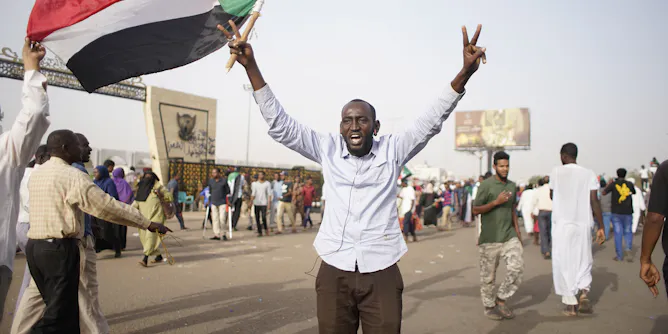
Songs provided motivation and guidance to protesters in Sudan during their uprising against Omar al-Bashir.
Articles on Omar al-Bashir
Displaying 61 - 80 of 86 articles
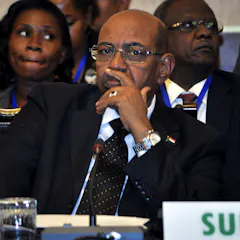
Al-Bashir’s ability to play a skillful combination of internal and external balancing acts, plus ruthless repression and a divided opposition, kept him in power for three decades.
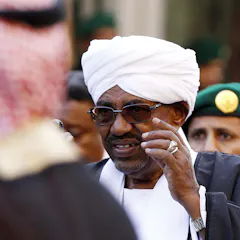
Sudanese protesters against al-Bashir’s regime have scored an important victory. But there’s a long way to go before democracy is restored.
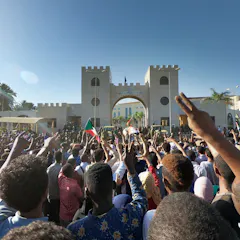
Sudan’s academics have been instrumental in bringing regime change and negotiating transitions.
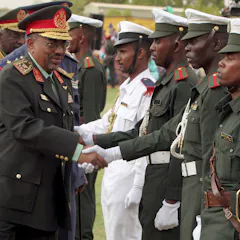
Sudanese President Omar al-Bashir’s long rule can be attributed to three main pillars of support: the military, ruling party and political Islam.
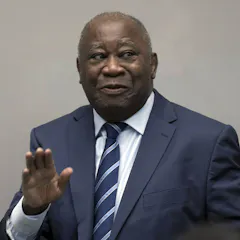
The recent acquittals should be seen as a vindication of the ICC as an independent and impartial judicial institution.
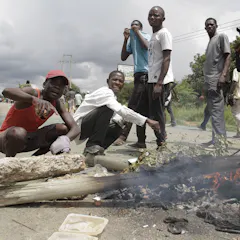
President Emmerson Mnangagwa’s decision to double the price of petrol shows very poor judgement and bad leadership.
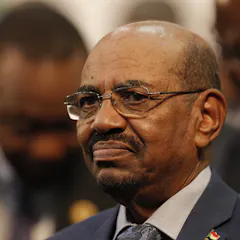
Given the range of support for President Omar al-Bashir it isn’t surprising that he’s managed to resist pressure to step down.
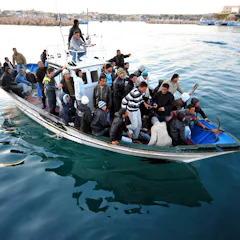
It is difficult to see how the EU can allow its key African migration work to be supervised by Eritrea.
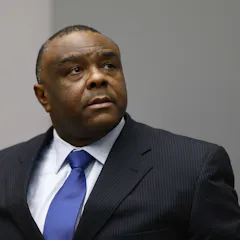
An African court with international criminal jurisdiction which has been debated but never been put into operation could be an option if Africa withdraws from the ICC.
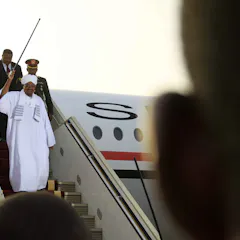
The ICC has been criticised for not acting against South Africa after it failed to arrest Sudan’s president in 2015. But, the court actually acted sensibly given the challenges it faces.
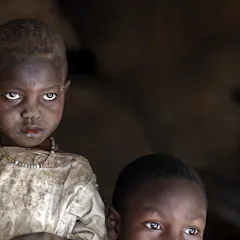
The world has turned its back on the Nuba people of Sudan. Despite the critical need for food, none of the organisations involved in helping people in dire need have attempted to deliver aid to them.
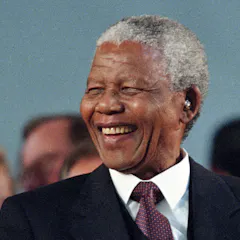
The ICC has made important advances by investigating cases outside Africa and completing ones that further define what is not allowed in war. South Africa’s withdrawal is concerning, but not fatal.
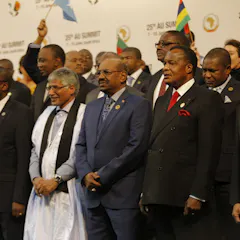
Arguably Africa’s most powerful diplomatic player, South Africa is now backing out of the world’s most important mechanism for bringing war criminals to justice.
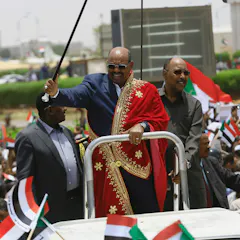
The South African government’s decision to withdraw from the ICC should not be seen in isolation. The African Union has called on its member states to withdraw from the court.

Students at the University of Khartoum are protesting about a secretive plan to move the institution from its historic buildings.
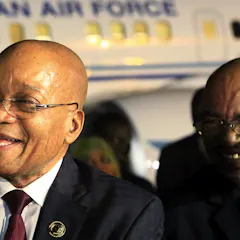
South Africa’s withdrawal from the ICC could have mere symbolic value. The country will continue to have obligations to binding decisions taken by the UN Security Council – including those pertaining to the court.
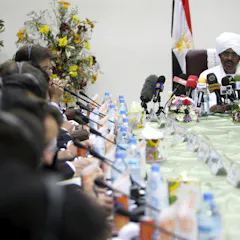
Omar al-Bashir’s planned trip to New York to address a summit on sustainable development at the UN General Assembly involves considerable reputational risk for the US.
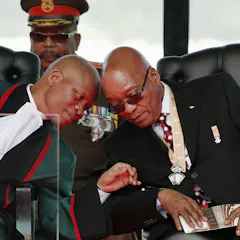
Tensions are probably inevitable in any constitutional democracy that empowers the courts to overrule the executive and legislature. But, judges are worried cabinet undermines the rule of law.
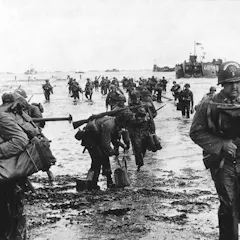
The ICC has not lived up to its noble intentions of making the world more just. Its failure echoes that of the 1928 Kellogg-Briand Pact, which set out to banish wars and to settle disputes peacefully.
Top contributors
-

Senior Research Fellow, Norwegian Institute of International Affairs and Visiting Professor University of Buckingham, Norwegian Institute of International Affairs
-
Associate Professor of International Studies, University of Nottingham
-
Professor of History, Durham University
-
Senior Research Fellow, Horn of Africa and Southern Africa, Institute of Commonwealth Studies, School of Advanced Study, University of London
-
Lecturer in History, Newcastle University
-
Research Professor and Executive Director of the World Peace Foundation at The Fletcher School, Tufts University
-
PhD Candidate, Middle Eastern Studies, University of Exeter
-
Researcher at the Austrian Institute for International Affairs, Österreichisches Institut für Internationale Politik (OIIP)
-
Professor Emeritus, University of Arkansas
-
Lecturer in Criminal and Military law and the Law of Armed Conflict at the Faculty of Military Science, Stellenbosch University
-
Senior Lecturer in International Relations, University of Tasmania
-
Associate Professor International Law, Roskilde University
-
Professor in International Law, NRF Research Chair in International Law, University of Johannesburg
-
Professor of History, Colgate University
-
Extraordinary Lecturer, University of Pretoria