
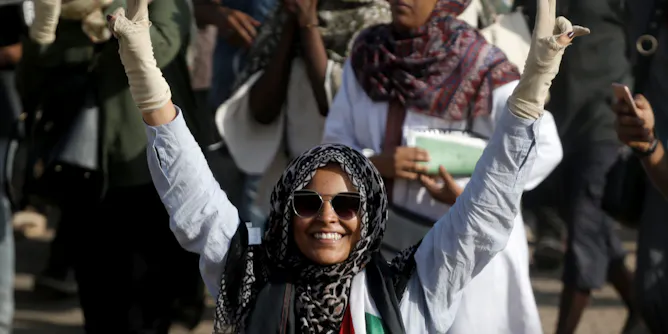
Remaining nonviolent despite enormous provocation made it difficult for the regime to depict the movement in a negative light
Articles on Omar al-Bashir
Displaying 41 - 60 of 86 articles
The African Union’s staunch support for al-Bashir, cloaked in criticism of the International Criminal Court, denied justice to the millions affected by the conflict in Sudan.
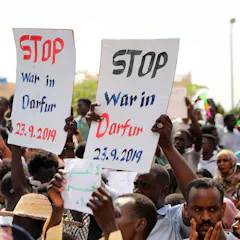
Ousted president Omar al-Bashir could face the International Criminal Court for his role in Sudan’s clampdown on the non-Arab people of Darfur.
Taking Sudan off America’s list of terror is just one step in the country’s journey to economic recovery

The ICC must not further destroy its credibility by cooperating with the sorts of bad actors who should be before a court themselves.
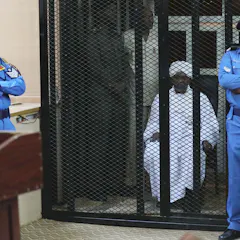
Despite the dismantling of Sudan’s ruling party, the country’s autocratic leanings still pose a threat to democracy.
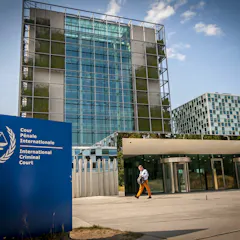
Cooperation with the Sudanese government to try al-Bashir could amount to legitimising those who themselves have been implicated in genocide
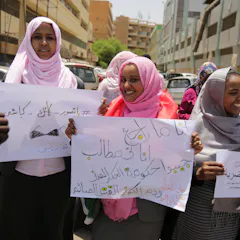
Ensuring meaningful participation of women in the transitional government can be a first step toward achieving gender equality in a future Sudan.
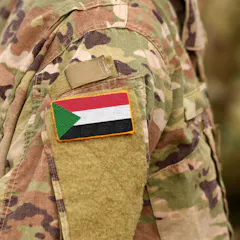
When the establishment retains some leverage over reformers change can be slow, superficial, and short-lived. Sudan appears to be a textbook case of this scenario.

History shows that when government elites believe that there is a risk that they may lose control of the capital, they escalate targeted violence against civilians.
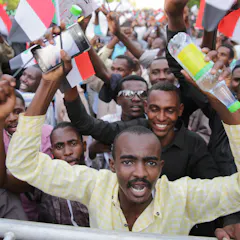
The killing of protesters by the Sudanese military signifies its reluctance to hand over power, as demanded by the African Union.
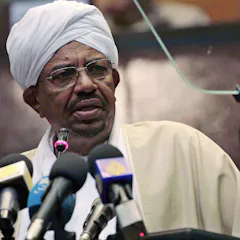
The African Union and its member states are creating their own interpretation of immunity which will protect its heads of state from courts abroad.
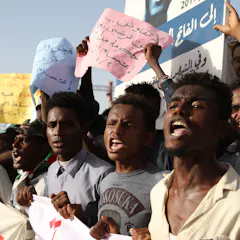
The African Union’s policy offers no wriggle room for a discretionary response to coups, a scourge that imperils the consolidation of democracy.
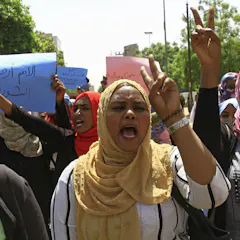
There are challenges that Sudan must overcome before power is transferred to its people.
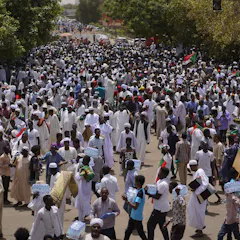
The immediate cause of the economic crisis that brought many thousands of Sudanese onto the streets and continued beyond al-Bashir’s downfall lay in the structure of the economy itself.

Women in Sudan have been resisting the controls placed on them for some time - by using their smart phones and social media to trade.
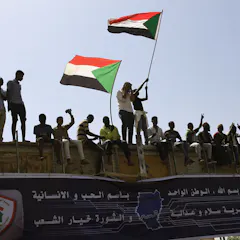
The role of the military in toppling authoritarian rulers, after intensive popular protests, raises questions about how the AU’s policy against coups should be applied.
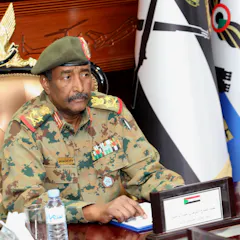
There are concerns that the transition to civilian rule in Sudan won’t be smooth.
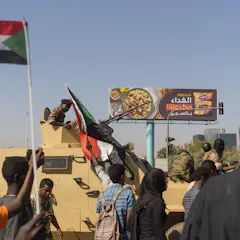
The time for fundamental political reforms in Sudan is now with the end of al-Bashir’s rule.
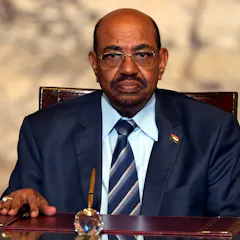
The fact that al-Bashir has been deposed will again raise questions about the former Sudanese president facing trial at the ICC.
Top contributors
-

Senior Research Fellow, Norwegian Institute of International Affairs and Visiting Professor University of Buckingham, Norwegian Institute of International Affairs
-
Associate Professor of International Studies, University of Nottingham
-
Professor of History, Durham University
-
Senior Research Fellow, Horn of Africa and Southern Africa, Institute of Commonwealth Studies, School of Advanced Study, University of London
-
Lecturer in History, Newcastle University
-
Research Professor and Executive Director of the World Peace Foundation at The Fletcher School, Tufts University
-
PhD Candidate, Middle Eastern Studies, University of Exeter
-
Researcher at the Austrian Institute for International Affairs, Österreichisches Institut für Internationale Politik (OIIP)
-
Professor Emeritus, University of Arkansas
-
Lecturer in Criminal and Military law and the Law of Armed Conflict at the Faculty of Military Science, Stellenbosch University
-
Senior Lecturer in International Relations, University of Tasmania
-
Associate Professor International Law, Roskilde University
-
Professor in International Law, NRF Research Chair in International Law, University of Johannesburg
-
Professor of History, Colgate University
-
Extraordinary Lecturer, University of Pretoria