
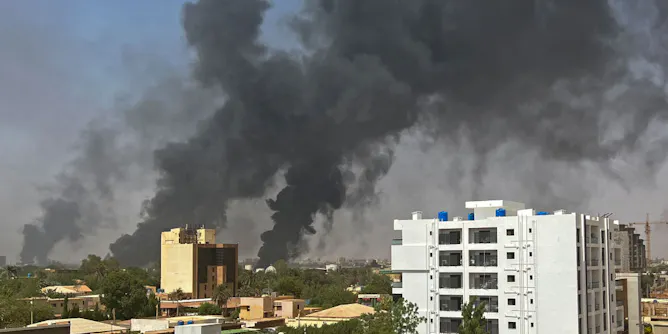
The Sudan army’s superiority is in its air force and arsenal of ground forces while the rival paramilitary force relies on nimble mobile units.
Articles on Omar al-Bashir
Displaying 21 - 40 of 86 articles
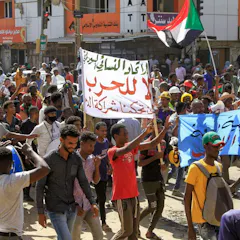
Sudan’s civilian protesters have gained a form of political power that traditional elites have struggled to attain.
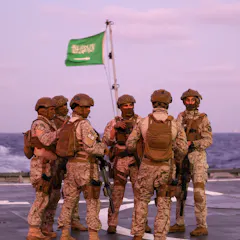
There is a risk that Sudan’s conflict could spill over into neighbouring countries.
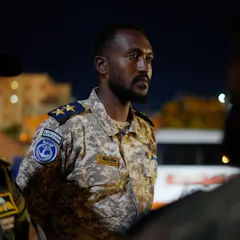
Sudan was formed by conquest, and its politics and, increasingly, its wealth have been controlled by the military ever since.

Omar al-Bashir fell in 2019, but his military successors have preserved much of the authoritarian infrastructure of his regime.
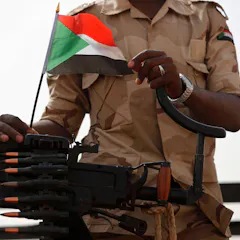
Armed group, mercenaries, mining, power struggles. It’s a familiar story in Africa, sadly.
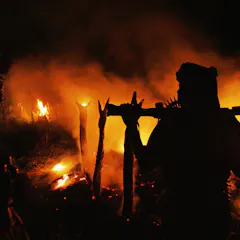
The Rapid Support Forces were created by former president Omar al Bashir to protect his regime from rebels - but they soon became a threat to both him and the future government.
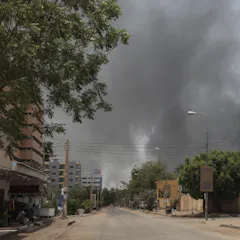
Sudan’s neighbours are urging restraint, favouring more business, less war. Both generals are aware the longer the situation goes on, the more unsustainable it will become.
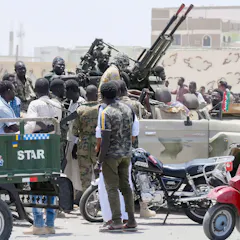
Violence in Sudan threatens to throw the troubled nation into chaos. A scholar of the region explains what is going on and what’s at stake.
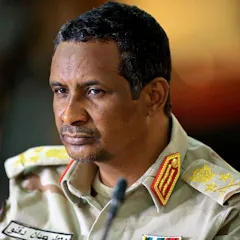
Hemedti ably used his commercial acumen and military prowess to build his militia into a force more powerful than the waning Sudanese state.
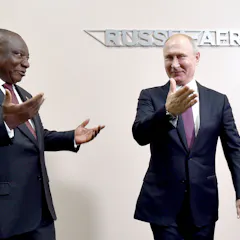
The government must not trample on its own laws and court decisions. Compliance with the constitution must be the priority.

The spy watchdog needs to make its findings on complaints against the country’s intelligence agencies public as a matter of principle.
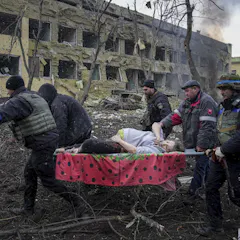
Vladimir Putin has a history of flattening cities in time of conflict. But alleged war crimes in Chechnya and Syria never resulted in charges, let alone prosecutions. Will Ukraine be any different?

Leaders typically spread power among their ‘rival allies’ to keep it and co-opt enough of those elites in exchange for political support.
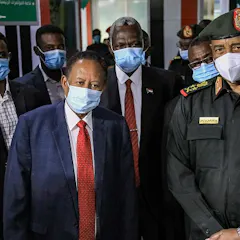
Competing visions of Sudan’s future are coming to a head with the democratic aspirations of millions hanging in the balance.

Just as Algeria and South Africa could not stop Morocco’s entry into the AU, neither can they stop Israeli accreditation.

Sudan’s new government came to power after a people-driven process to oust former President Omar al-Bashir. It must be careful to place ordinary Sudanese at the centre of the reforms process.
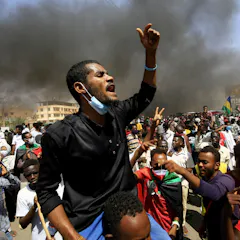
The people are frustrated with a reform agenda that is unfolding at snail’s pace.
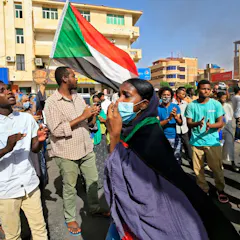
Despite its dire health and economic situation, Sudan has yet to access emergency funding to combat COVID-19.
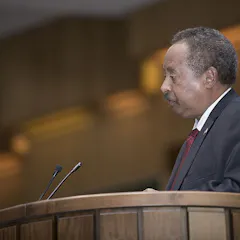
Omar al-Bashir may be gone but Sudan still has a way to go before it enjoys a functioning democracy.
Top contributors
-

Senior Research Fellow, Norwegian Institute of International Affairs and Visiting Professor University of Buckingham, Norwegian Institute of International Affairs
-
Associate Professor of International Studies, University of Nottingham
-
Professor of History, Durham University
-
Senior Research Fellow, Horn of Africa and Southern Africa, Institute of Commonwealth Studies, School of Advanced Study, University of London
-
Lecturer in History, Newcastle University
-
Research Professor and Executive Director of the World Peace Foundation at The Fletcher School, Tufts University
-
PhD Candidate, Middle Eastern Studies, University of Exeter
-
Researcher at the Austrian Institute for International Affairs, Österreichisches Institut für Internationale Politik (OIIP)
-
Professor Emeritus, University of Arkansas
-
Lecturer in Criminal and Military law and the Law of Armed Conflict at the Faculty of Military Science, Stellenbosch University
-
Senior Lecturer in International Relations, University of Tasmania
-
Associate Professor International Law, Roskilde University
-
Professor in International Law, NRF Research Chair in International Law, University of Johannesburg
-
Professor of History, Colgate University
-
Extraordinary Lecturer, University of Pretoria