
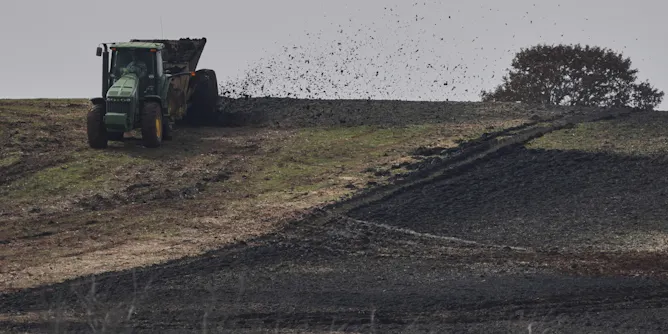
Plants need phosphorus, and other nutrients, to grow. But soil tests can’t tell if there’s too much.
Articles on Nutrient runoff
Displaying all articles

Phosphorus and nitrogen contribute to water pollution and cause harmful algal blooms. New research shows how mats of floating flower beds can take advantage of these nutrients while cleaning the water.
While the Great Barrier Reed needs nutrients to support the ecosystem, it is possible to have too much of a good thing.

Well-designed residential developments with abundant tree cover can help protect cities against urban heat and flooding.
An international agreement has set an ambitious deadline for action on some of the biggest problems facing the world’s oceans.
Feeding pigs seaweed could make them, us and the planet healthier without contributing to antibiotic resistance in bacteria.
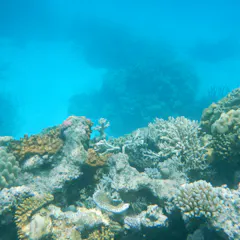
The federal government’s new $500 million funding package for the Great Barrier Reef seems predominantly focused on the tactics that are already being tried, without much success.
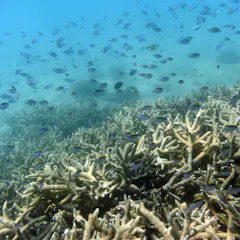
The updated plan for improving water quality on the Great Barrier Reef still doesn’t address the need to curb intensively farmed crops such as sugar cane, and to enforce existing environmental laws.
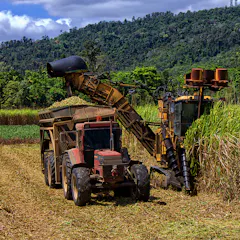
You’ve heard of cap-and-trade schemes for greenhouse gases. Perhaps we also need one to limit the amount of fertiliser runoff onto the Great Barrier Reef.
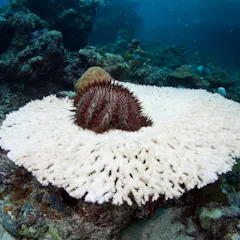
To fix pollution on the Great Barrier Reef, some farming practices will have to change.
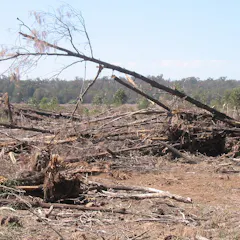
Land clearing in Queensland has tripled in the past five years.

The same conditions – ultimately tied to nutrient runoff – that created the damaging toxic blooms and dead zones in US waterways of recent years are forecast to return this year.
Top contributors
-

Professorial Fellow, ARC Centre of Excellence for Coral Reef Studies, James Cook University
-
Professor, Conservation Biology, The University of Queensland
-
Professor of Environmental Management, The University of Queensland
-
Principal research scientist, Australian Institute of Marine Science
-
Professor & Director, QUT Centre for Environment and Society, Queensland University of Technology
-
Professor Emeritus of Environment and Sustainability, University of Michigan
-
Distinguished Research Professor and Australian Laureate, James Cook University
-
Professor, The University of Queensland
-
Manager International Partnerships and Co-ordinator of the Global Coral Reef Monitoring Network (GCRMN), Australian Institute of Marine Science
-
Professor in Conservation Science, School of the Environment, The University of Queensland
-
Griffith University
-
Research fellow, Griffith University
-
Emeritus Professor of Environmental Management, The University of Queensland
-
Senior Lecturer, Griffith School of Environment, Griffith University
-
Associate Professor, Griffith University