
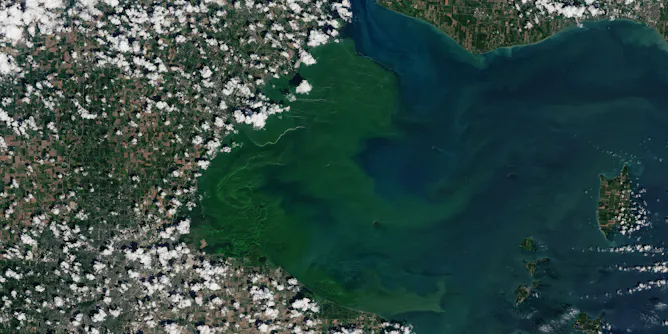
Should lakes, rivers and other resources have legal rights? New Zealand, Ecuador and other countries have taken this step. Now Toledo, Ohio is a US test case.
Articles on Nutrient pollution
Displaying 21 - 33 of 33 articles

Scientists are predicting major algae blooms in Lake Erie and large dead zones in the Chesapeake Bay and Gulf of Mexico this summer. Nutrient pollution from industrial corn farming is a major driver.

The Trump administration wants to end federal protection under the Clean Water Act for many small streams and wetlands. But as a geoscientist explains, these are critical parts of large river systems.

Fertilizer is a key source of nitrogen pollution which fouls air and water worldwide. Current regulations target farmers, but focusing on producers could spur them to develop greener products.

Drastic oxygen losses in the world’s oceans millions of years ago coincided with mass extinctions. Scientists see this as a warning about how climate change could affect oceans today.

Red tide and a blue-green algae outbreak are fouling hundreds of miles of coast, killing fish and driving tourists away from beaches. Some of the causes are natural, but human actions play a big role.
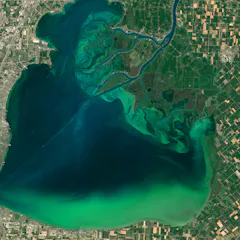
Scientists have mapped a huge dead zone in the Gulf of Oman, without enough oxygen in the water to support life. This Speed Read explains why dead zones form in waters around the world.
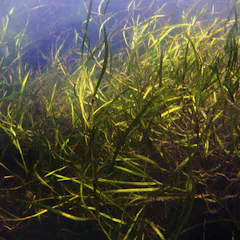
An ambitious plan to cut the flow of nutrients into the Chesapeake Bay has produced historic regrowth of underwater seagrasses. These results offer hope for other polluted water bodies.
America’s drinking water infrastructure is aging and needs billions of dollars in upgrades. Two extension educators urge consumers to monitor their water and have it tested if they suspect problems.

Nitrogen and phosphorus are polluting US waters, creating algae blooms and dead zones. New research confirms that voluntary steps are failing in the Gulf of Mexico and unlikely to work in Lake Erie.

Excess nutrients from farm fields cause widespread water pollution across the U.S. Bioreactors – essentially, ditches filled with wood chips – are emerging as a way to reduce nutrient pollution.
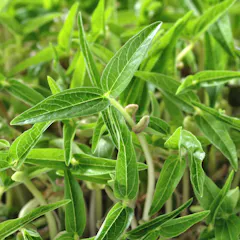
Growing enough food to feed 9 billion people by 2050 will require huge amounts of energy and water. Using nanoparticles to boost plant growth and yield could save resources and reduce water pollution.
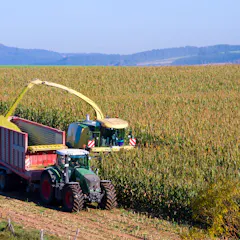
A law signed into effect last week seeks to reduce fertilizer runoff that causes toxic algae blooms. But to really address the problem requires taking a hard look at how America farms.
Top contributors
-

Professor Emeritus of Environment and Sustainability, University of Michigan
-
Extension Educator, Renewable Natural Resources, Penn State
-
Associate Professor, College of Charleston
-
Professor of Marine Science and Vice President for Science Applications, University of Maryland Center for Environmental Science
-
Extension Educator, Water Resources, Penn State
-
Research Scientist, Washington University in St. Louis
-
Professor, Director of Florida Sea Grant, University of Florida
-
Chairman, Department of Energy, Environmental and Chemical Engineering, Washington University in St. Louis
-
Research Assistant Professor of Crop Sciences, University of Illinois Urbana-Champaign
-
Assistant Professor of Earth, Ocean and Atmospheric Science, Florida State University
-
Associate Professor of Environmental Studies, New York University
-
Associate Professor of Computer Science and Electrical and Computer Engineering, University of Southern California
-
Research Professor of Environmental Science, Sweet Briar College
-
Associate Professor of Geology, Oberlin College and Conservatory
-
Emeritus Professor of Marine Science, Virginia Institute of Marine Science