

Children benefit enormously from regular, cognitively stimulating interactions with their caregivers.
Articles on Numeracy
Displaying 21 - 40 of 100 articles
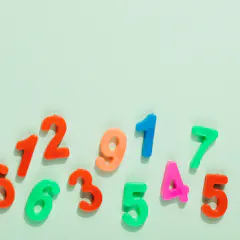
Multiplication facts typically describe the answers to multiplication sums up to 10x10. They are called “facts” as it is expected they can be easily and quickly recalled.

Overall, differences in teachers’ subject knowledge could explain a third of the differences in student learning between the 14 countries.
According to this year’s NAPLAN results, one third of Australian students do not meet minimum achievement levels in literacy and numeracy.

Students who perform below standards in Year 3 require more support to catch up to their peers.

In the past, maths teaching has focussed on procedures and right answers. Today, teachers want students to form connections between concepts and solve problems.

School students can fall behind for many reasons. From missing school to learning difficulties and problems at home.

The effect of NZ’s abysmal literacy and numeracy rates can be seen in employment, health and justice outcomes. Education policy must address improving in these basic skills.

A new study looked at NAPLAN results in reading and numeracy and tracked the same students all the way from from Year 3 to Year 9.
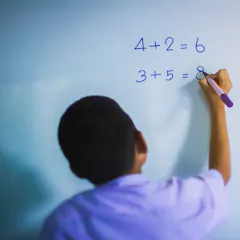
From ‘slacking’ to ‘stalling’, ‘faking’ and ‘mimicking’, students use a wide variety of behaviours to avoid doing their maths lessons.

The ‘back to basics’ debate over curriculum policy obscures what teachers say they really need: clear guidelines and benchmarks of progress.

NAPLAN testing has been brought forward from May to March and results will be reported against just four levels of achievement.

A new report from the Grattan Institute calls for tutoring at school, in school hours to be rolled out across Australia.

How to make a ‘fortune teller’ or ‘chatterbox’ with children, and why the paper activity targets many developmental domains at once.

A new report comes at a critical time. Every year, between 5% and 9% of Australian students do not meet year-level expectations in literacy or numeracy.
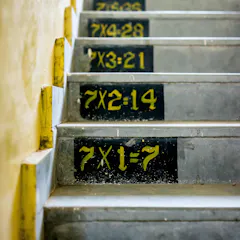
Horizontal number lines are often the default option – but our brains may process numbers more quickly in a vertical arrangement.

A study of thousands of students hospitalised with an injury or illness confirms they are likely to fall behind their classmates. But good management and targeted help with learning cut the risk.

The brain can count small numbers or compare large ones. But it struggles to understand the value of a single large number. This fact may be influencing how people react to numbers about the pandemic.

Compared to people who aren’t as good at math, people who are better at math are more happy when they have high incomes and less happy when they have lower incomes.

People who struggle with numbers are also likely to struggle in life, new research shows.
Top contributors
-

Professor of Education Futures, The University of Melbourne
-
School Education Program Director, Grattan Institute
-
Senior Lecturer in Education, University of New England
-
Senior Research DECRA Fellow, Institute for Learning Sciences and Teacher Education, Australian Catholic University
-
Senior lecturer, University of Ghana
-
Director, Center for Science Communication Research, University of Oregon
-
Senior Lecturer in Mathematics Education, University of Sydney
-
Professor, School of Education, University of Southern Queensland
-
Research Scientist, African Population and Health Research Center
-
Lecturer in Mathematics Education, University of Sydney
-
Professor, Werklund School of Education, University of Calgary
-
Associate Professor in Language, Literacy and TESL, University of Canberra
-
Professor, Southern Cross University
-
Emeritus professor, The University of Western Australia
-
Deputy CEO (Research), Australian Council for Educational Research