
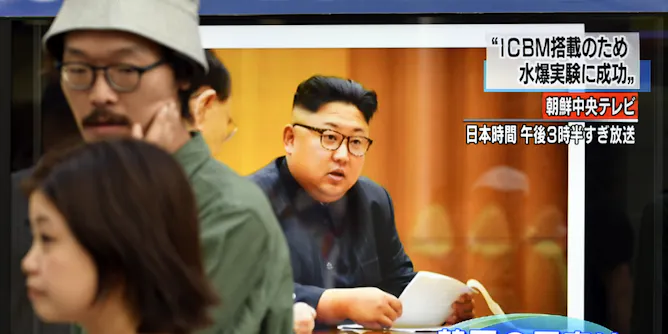
Pyongyang’s latest test isn’t the great leap forward it purports to be.
Articles on Nuclear weapons
Displaying 201 - 220 of 329 articles
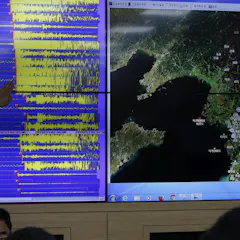
Within hours of North Korea’s latest underground nuclear test, Japan and South Korea were both able to independently confirm it had happened. How?
A nuclear physicist and disarmament expert recommends reading on nuclear disasters, weapons, authoritarianism and climate change.
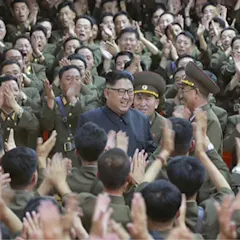
A former Department of Defense and State Department official explains why a hardline approach on North Korea will likely fail, as it did with Iran.
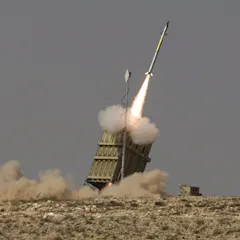
There is much debate over how to react to North Korean missile threats. What can we learn from Israel’s responses to actual rocket attacks?
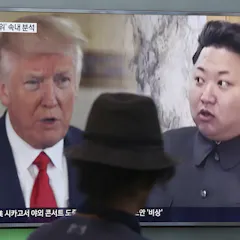
The international community has been trying to stop North Korea from developing long-range missiles for decades. So how did North Korea get them?
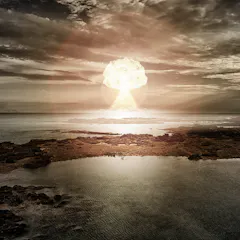
Soot thrown into the atmosphere would block out the sun, causing crops to fail and people to go hungry.
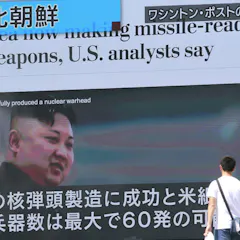
The most viable nonmilitary solution to the standoff with North Korea is to get China to apply pressure. But that’s not so easy.
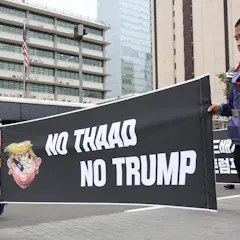
South Korea has a very particular part to play in handling Pyongyang, but Moon Jae-in has a different one in mind.
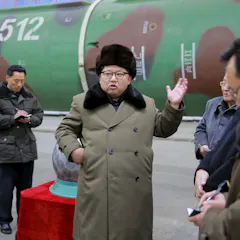
While some countries were taking a major step toward the elimination of nuclear weapons, the US and its allies were focusing on ineffective, counter-productive sanctions against North Korea.
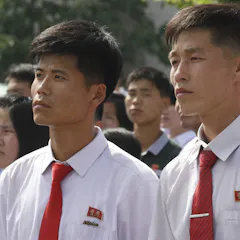
North and South Korea explained in four questions and answers.
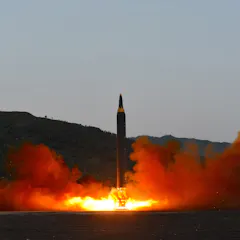
Pyongyang’s latest missile test sparked a surprising reaction from the Russian leader.
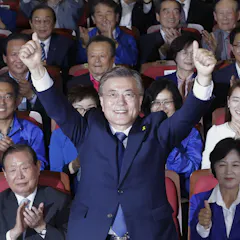
An aggressive neighbor to the north, a sputtering economy at home – and two more thorny issues facing South Korea’s new president.
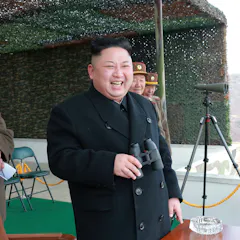
Regardless of how the US sending an aircraft carrier group to the Korean Peninsula plays out, the international community will ultimately have to accept and learn to manage a nuclear North Korea.

Talks begin today at the United Nations to negotiate a total ban of nuclear weapons. Over 3,600 scientists have signed an open letter supporting the ban.
The use of nuclear weapons – arguably the most devastating of all weapons of mass destruction – is currently not necessarily prohibited under international law.

Tensions in Asia may soon boil over. If U.S. leaders fail to seek pathways to peace, the consequences may be grim, warns former National Security Council member.
Claims of the destructive powers of nuclear weapons have, for good reasons, been greatly exaggerated.
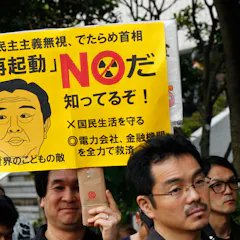
Nuclear power was a cornerstone of Japan’s energy strategy for decades, until the Fukushima disaster. The current government wants to keep some nuclear reactors open, but has lost public support.
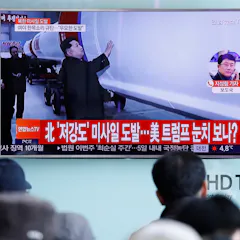
Sanctions and warnings have failed to stop Pyongyang’s belligerence.
Top contributors
-

Honorary Principal Fellow, School of Population and Global Health, The University of Melbourne
-
Online Learning Advisor - Security and International Relations, Swinburne University of Technology
-
Professor of the Practice of Political Science and International Relations, USC Dornsife College of Letters, Arts and Sciences
-
Senior Fellow, James Martin Center for Nonproliferation Studies, Middlebury College
-
Professor in International Relations, Head of Inclusion and Development, Aston University
-
Professor, Department of Politics & International Relations, University of York
-
Professor of International Security & Director of the Queen's Institute for Peace, Security and Justice, Queen's University Belfast
-
Timothy J. Jorgensen is a Friend of The Conversation.
Director of the Health Physics and Radiation Protection Graduate Program and Professor of Radiation Medicine, Georgetown University
-
Simons Chair in Disarmament, Global and Human Security at the Liu Institute for Global Issues, University of British Columbia
-
Professor of International Politics, University of Leicester
-
Lecturer in Peace Studies and International Development, University of Bradford
-
Associate Professor of Physics, The University of Melbourne
-
Visiting Research Fellow, King's College London
-
Assistant Professor, Università di Bologna
-
Professor of International Politics, Clinton Institute, University College Dublin