
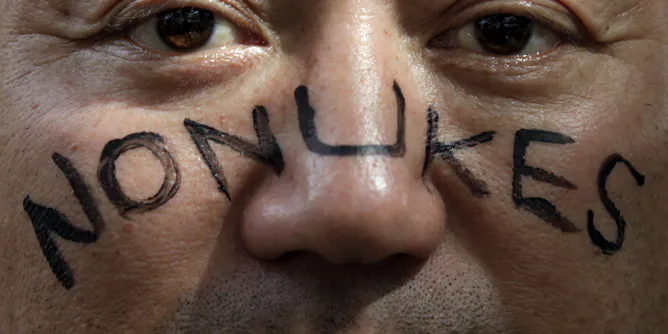
People have been rising up against nuclear weapons ever since the first one was used – and it hasn’t been for nothing.
Articles on Nuclear weapons
Displaying 221 - 240 of 329 articles
The country plays by different rules.
A useful avatar for threats both real and perceived, the notion of a pan-Islamic nuclear weapon has little to do with reality.
Nuclear bunkers are familiar Cold War artefacts, but many have been re-purposed or lie derelict.
Beijing has traditionally retained its nuclear weapons on a no-first-use basis, but it’s ready to deploy them more assertively.
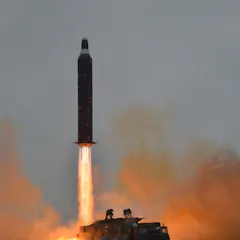
One of the world’s worst nightmares could in fact be an unexpected opportunity.
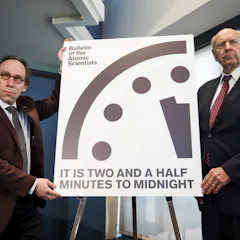
It’s two and a half minutes to midnight according to the Doomsday Clock. But what is the clock and why should we pay attention?
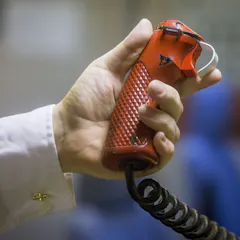
The entire concept of nuclear deterrence depends on the assumption that everything will always work perfectly.
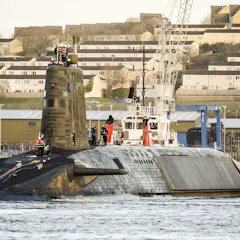
Reports of a failed Trident missile launch have all sorts of political and security implications – but they don’t necessarily spell catastrophe.

Former Texas Gov. Rick Perry has experience with energy, but if confirmed as secretary of energy, he should get ready to learn a lot about DOE’s big jobs: nuclear security and basic science research.

This year saw nuclear weapons tested, stockpiles renewed, and disasters remembered.
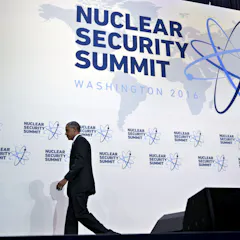
The global nuclear non-proliferation regime depends on American leadership. What if Donald Trump loses interest?
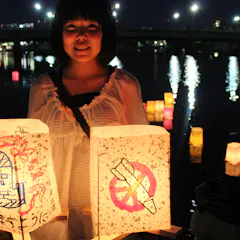
In early December, the nations of the world are poised to take an historic step on nuclear weapons. Yet Australia sticks out like a sore thumb among Asia-Pacific nations in arguing against change.
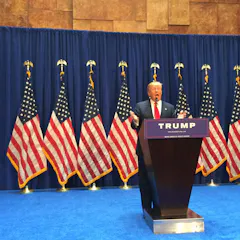
Donald Trump will soon have command of thousands of nuclear weapons. This presents a new and unknown threat to global security - and an urgent incentive for all states to ban nuclear weapons.
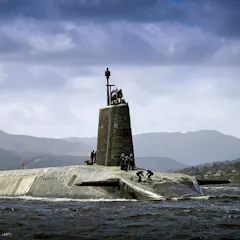
An industry in crisis needs a government that can deliver help where it’s needed.
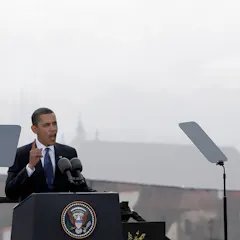
With a $1 trillion modernisation programme signed off and atomic scientists deeply worried about the future, American policy on nuclear weapons is pretty much business as usual.
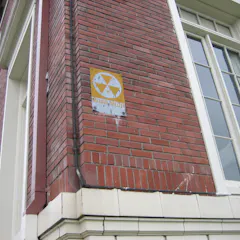
Is the U.S. prepared for nuclear attacks from terrorists or rogue nations? A radiation expert explains how Cold War-style fallout shelters could help protect us from this growing threat.

On September 27, 1956, an atomic mushroom cloud rose above the Maralinga plain - the first of seven British bomb tests. Why was Australia so keen to put UK military interests ahead of its own people?
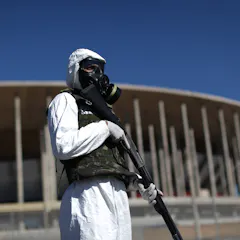
Governments often have limited knowledge of chemical production as it is the preserve of the private sector. Often these facilities are not as well secured as government facilities.
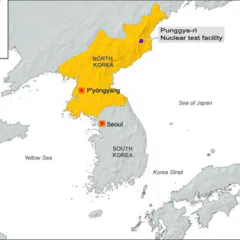
After North Korea’s fifth nuclear test on Sept. 9, the U.S. is calling for tighter global sanctions. New research shows that this strategy actually helps North Korea.
Top contributors
-

Honorary Principal Fellow, School of Population and Global Health, The University of Melbourne
-
Online Learning Advisor - Security and International Relations, Swinburne University of Technology
-
Professor of the Practice of Political Science and International Relations, USC Dornsife College of Letters, Arts and Sciences
-
Senior Fellow, James Martin Center for Nonproliferation Studies, Middlebury College
-
Professor in International Relations, Head of Inclusion and Development, Aston University
-
Professor, Department of Politics & International Relations, University of York
-
Professor of International Security & Director of the Queen's Institute for Peace, Security and Justice, Queen's University Belfast
-
Timothy J. Jorgensen is a Friend of The Conversation.
Director of the Health Physics and Radiation Protection Graduate Program and Professor of Radiation Medicine, Georgetown University
-
Simons Chair in Disarmament, Global and Human Security at the Liu Institute for Global Issues, University of British Columbia
-
Professor of International Politics, University of Leicester
-
Lecturer in Peace Studies and International Development, University of Bradford
-
Associate Professor of Physics, The University of Melbourne
-
Visiting Research Fellow, King's College London
-
Assistant Professor, Università di Bologna
-
Professor of International Politics, Clinton Institute, University College Dublin