
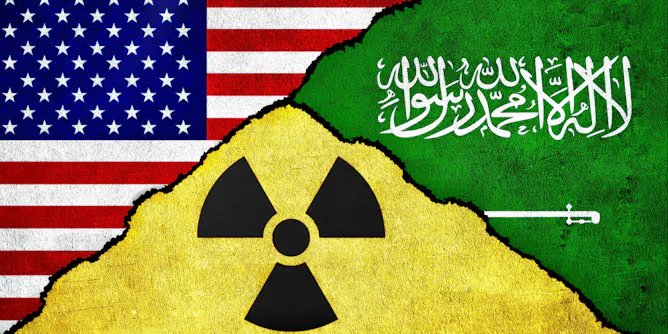
US pressure and economic factors have historically prevented Saudi Arabia from developing a nuclear arsenal.
Articles on Nuclear non-proliferation
Displaying 1 - 20 of 42 articles
Based on past performance, economic sanctions will never be strong enough to denuclearise North Korea. There’s a better way.
The Doomsday Clock is closer to midnight than at any point in its history.
The war in Iran has exposed fundamental problems within the nuclear ‘non-proliferation’ project.

Little or no progress on a ceasefire as Ukraine suffers its coldest winter in a decade.
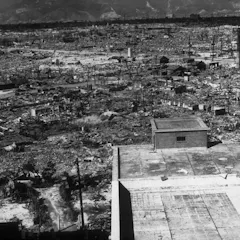
In the wake of the US attacks, the international community asked itself how it could ensure that such horrors were never repeated.
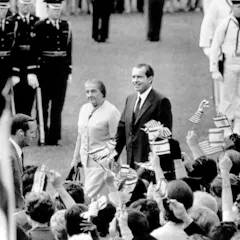
Israeli nuclear expert Avner Cohen talks to The Conversation Weekly podcast about how Israel has been allowed to continue with its nuclear ambiguity.

In the majority of cases, diplomacy has played a pivotal role in convincing nuclear-seeking nations to relinquish their pursuit of nuclear weapons.
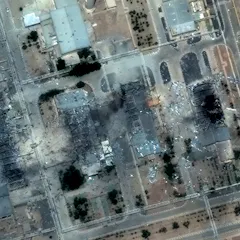
The US and Israel bombing campaigns may only delay an Iranian bomb by a few years. Could this signal the death of the nuclear non-proliferation treaty?

The latest attacks have come amid growing concern over Iran’s nuclear program, prompting questions over what this means for the global non-proliferation regime.
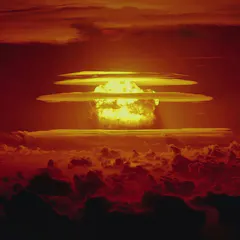
Listening for underground nuclear explosions amid the constant rumble of earthquakes is like looking for a needle that may not exist in a haystack the size of a planet.

The United States and Russia, the two biggest nuclear powers, have no imminent plans for talks on a nuclear deal. That should change, writes a former US diplomat.
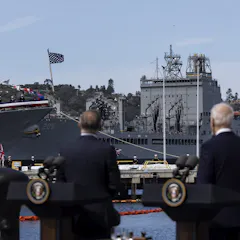
On the face of the announcements made so far, the deal complies with international law, despite accusations to the contrary from China and other critics.

Policymakers often think of their decisions about nuclear weapons as moral, a nuclear ethicist explains – which is key to understanding their motives.
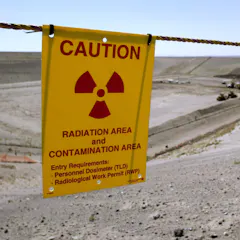
Despite decades of progress on nonproliferation, Russia’s new threats of nuclear strikes bring to mind that convincing countries to reduce their nuclear weapons has long been very difficult.
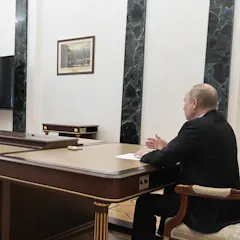
Experts around the world have been warning nuclear weapons are increasingly being seen as ‘usable’ by the political and military leaders who wield them.
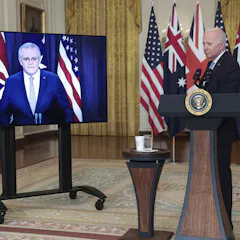
PR exercise, elaborate purchasing agreement or genuine security pact? The new AUKUS agreement raises plenty of questions about why New Zealand missed out.
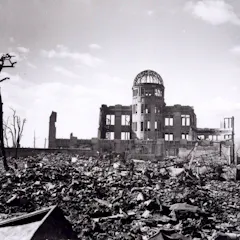
Kwame Nkrumah and Ali Mazrui associated nuclear weapons with imperialism and racism, but proposed different approaches to address the problem they present.
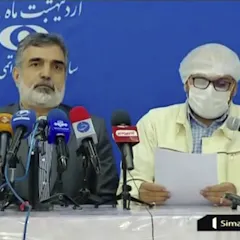
Nearly 50 years old, the treaty has been signed by 190 countries – more than any other arms limitation treaty. But now Iran is threatening to withdraw.
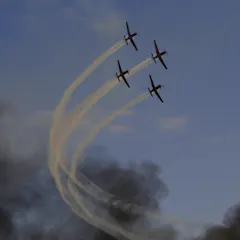
The US isn’t the only country considering a military response to Iranian aggression.
Top contributors
-

Honorary Principal Fellow, School of Population and Global Health, The University of Melbourne
-
Emeritus Professor, School of Environment and Science, Griffith University
-
Professor of International Politics, University of Leicester
-
Senior Fellow, Belfer Center for Science and International Affairs, Harvard Kennedy School, Harvard University
-
Senior Research Associate, Nautilus Institute, and Honorary Professor in the School of Political and Social Studies, The University of Melbourne
-
Associate Professor in US History, University of Nottingham
-
Researcher, Social History/Tutor in Medical Education, University of Dundee
-
Associate, German Institute for International and Security Affairs
-
Director, Middle East Nonproliferation Program, Middlebury Institute, Middlebury College
-
Assistant Professor of Political Science, Louisiana State University
-
Professor of International Relations, Lancaster University
-
Timothy J. Jorgensen is a Friend of The Conversation.
Director of the Health Physics and Radiation Protection Graduate Program and Professor of Radiation Medicine, Georgetown University
-
Professor of Non-Proliferation & International Security, King's College London
-
Distinguished Professor of Energy and the Environment, University of Delaware (USA); Honorary Professor, The University of Queensland
-
Director, Korea Working Group, Harvard Kennedy School