

Fusion companies claim they can deliver power in a decade or less – but the reality may be more difficult.
Articles on Fusion
Displaying all articles
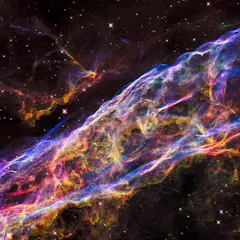
Almost everything on Earth is made up of atoms, but where do these fundamental building blocks come from?
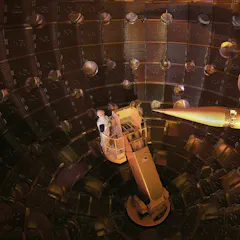
Even once researchers can reliably get more power out of a fusion reaction than they put in, they’ll still need to overcome engineering challenges to scale up fusion energy.
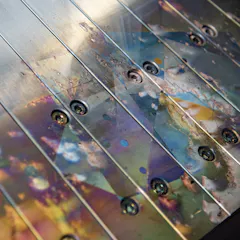
Fusion reactors get hot − scientists need materials that can take the heat without deforming and deteriorating.
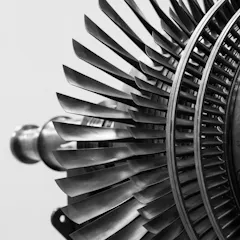
In the 19th century, the world ran on steam. In the 21st century, little has changed. Every thermal power plant still relies on steam as a final stage.
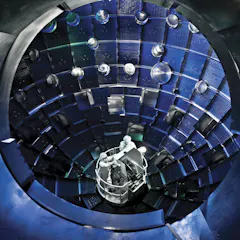
The promise of abundant, clean energy powered by nuclear fusion is one big step closer thanks to a new experiment. The results are a historic scientific milestone, but energy production remains a ways off.
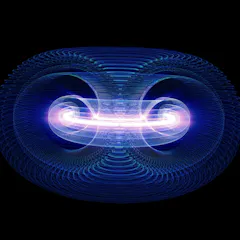
In January 2022, the JET fusion experiment produced more power over a longer period of time than any past attempt. Two physicists explain the engineering advancements that made the result possible.
The fastest things ever made by humans are spacecraft, and the fastest spacecraft reached 330,000 mph – only 0.05% the speed of light. But there are ways to go faster.
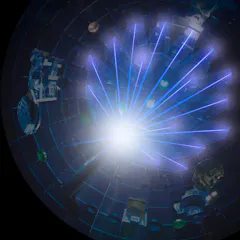
Scientists are working on ways to make lots of energy by converting matter into energy. The trick is keeping the process under control. One possibility is nuclear fusion – the Sun’s power source.
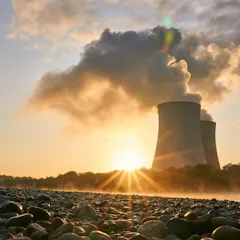
Why do nuclear plants produce radioactive water – and what happens when that water gets into the ocean?

Davis’s 1970 album Bitches Brew turned jazz on its head and paved the way for fusion. More recently, Radiohead cited it as a key influence.
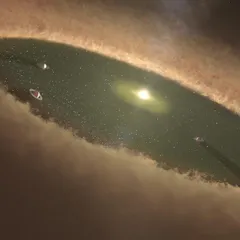
Why isn’t there an endless variety of planets in the universe? An astrophysicist explains why planets only come in two flavors.
People long assumed all the elements we see now were created during the Big Bang. But on May 2, 1952, an astronomer reported spotting new elements coming from an old star and changed our origin story.
Top contributors
-

Professor of Nuclear Physics, Michigan State University
-
University Distinguished Professor of Nuclear Astrophysics, Michigan State University
-
Assistant Professor of Physics, Rutgers University - Newark
-
Associate Professor, Electro-Mechanical Engineering, University of Southern Queensland
-
Professor of Genetic Toxicology and Ecotoxicology, University of Plymouth
-
Planetary Astrophysicist, Assistant Professor, Louisiana State University ; Arizona State University
-
University Distinguished Professor of Astronomy, University of Arizona
-
Reader in Music, Politics and Society, Newcastle University
-
Associate Professor of Nuclear Engineering, University of Tennessee
-
Associate Professor of Nuclear Engineering, University of Michigan
-
Assistant Professor of Nuclear Engineering, Zinkle Faculty Fellow, University of Tennessee
-
Research Assistant Professor of Nuclear Engineering, University of Tennessee
-
Professor of Mechanical and Aerospace Engineering, University of California, San Diego
-
Professor of Mechanical and Aerospace Engineering, University of California, San Diego
-
Associate Professor of Physics and Applied Physics and Astronomy, Binghamton University, State University of New York