
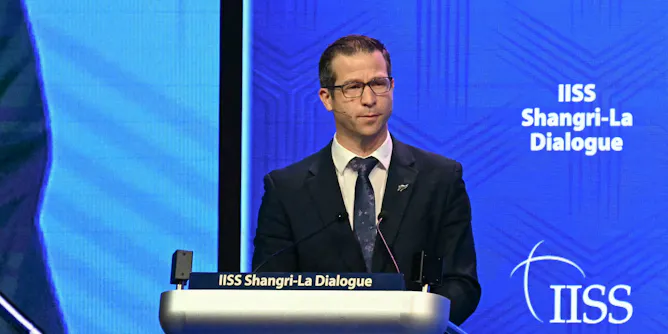
Defence Minister Chris Penk has inadvertently highlighted a major tension between increased defence spending and New Zealand’s nuclear-free policy.
Articles on Nuclear-free New Zealand
Displaying all articles

The election of the Lange-Douglas government on July 14, 1984, was the moment the old New Zealand gave way to a new New Zealand. Its historic influence is still felt in most areas of life today.
The protracted deliberations over joining AUKUS pillar two suggest New Zealand is hoping questions of security, trade and domestic opinion will be solved in time. That’s unlikely.
We now know official New Zealand meetings to discuss ‘AUKUS Tier 2’ took place much earlier than previously disclosed – raising questions about the security pact’s underlying purpose.
Potential economic gains are partly driving interest in joining pillar two of AUKUS. The risks and rewards need to be more widely debated before any decision is made.
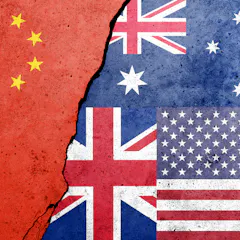
Does New Zealand have more to lose than gain by joining ‘pillar two’ of the AUKUS security pact? The next government will have to decide, with serious implications for the country’s foreign policy.
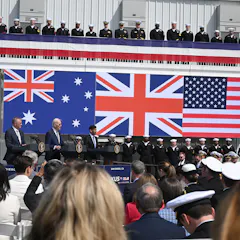
China’s global ambitions are real but they should not be over-hyped. New Zealand’s strategic interests lie outside any direct participation in AUKUS.
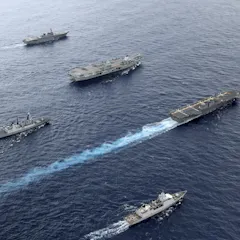
With the recent AUKUS agreement increasing tensions in the Indo-Pacific region, the time is right for nuclear-free New Zealand to take a lead.
Top contributors
-

Professor of International Relations, University of Otago
-
Professor of Law, University of Waikato
-
Adjunct Senior Fellow, School of Global, Urban and Social Studies, RMIT University
-
Lecturer, Law School, Auckland University of Technology
-
Postdoctoral Fellow, Political Science and International Relations, University of Canterbury
-
Professor of Politics, Te Kunenga ki Pūrehuroa – Massey University