
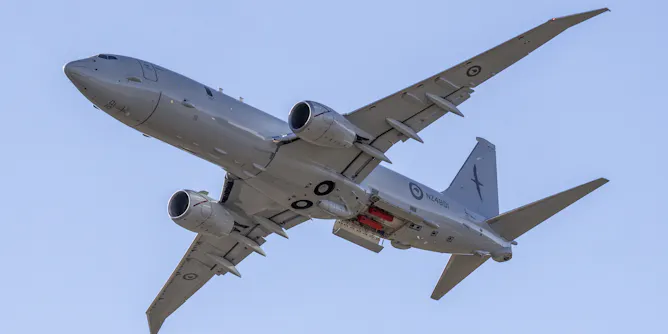
NZ appears to be widening its defence and surveillance capabilities across the region, raising questions about strategic alignment, transparency and independence.
Articles on AUKUS pillar two
Displaying all articles

By adopting a different military philosophy as its guide, Australia could manage its security largely on its own.
The protracted deliberations over joining AUKUS pillar two suggest New Zealand is hoping questions of security, trade and domestic opinion will be solved in time. That’s unlikely.
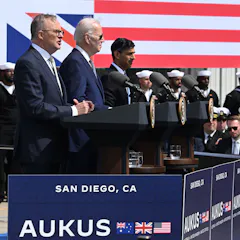
We now know official New Zealand meetings to discuss ‘AUKUS Tier 2’ took place much earlier than previously disclosed – raising questions about the security pact’s underlying purpose.

Remaining outside of AUKUS will mean New Zealand is increasingly vulnerable to global political instability.
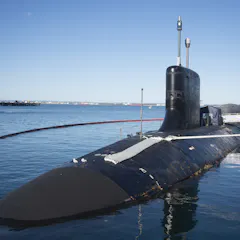
Potential economic gains are partly driving interest in joining pillar two of AUKUS. The risks and rewards need to be more widely debated before any decision is made.
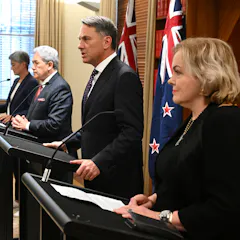
Signing up to ‘pillar two’ of the AUKUS alliance sits uneasily with New Zealand’s distinctive worldview – and could aggravate its wider foreign policy challenges.

With the rise of China and shifting international power dynamics, New Zealand needs to find its place in a complex system of alliances and partnerships.
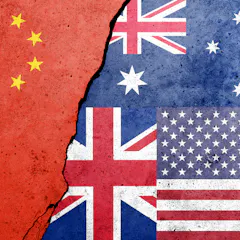
Does New Zealand have more to lose than gain by joining ‘pillar two’ of the AUKUS security pact? The next government will have to decide, with serious implications for the country’s foreign policy.

While the technologies being explored under ‘pillar two’ of the AUKUS security pact are becoming clearer, New Zealand’s policy on autonomous weapons and military AI has become increasingly murky.
Top contributors
-

Professor of International Relations, University of Otago
-
Associate Professor of International Politics and Principal Research Fellow, Institute for Indo-Pacific Affairs (Christchurch), University of Otago
-
Postdoctoral Fellow, Political Science and International Relations, University of Canterbury
-
Senior Tutor and PhD Candidate, Centre for Defence and Security Studies, Te Kunenga ki Pūrehuroa – Massey University
-
Associate Professor in International Relations, University of Canterbury
-
Adjunct Professor in the School of Humanities and Social Sciences at UNSW Canberra, UNSW
-
Adjunct Senior Fellow, School of Global, Urban and Social Studies, RMIT University
-
Lecturer, Law School, Auckland University of Technology