

Across the Indo-Pacific, countries are trying different approaches to men’s behaviour change programs for domestic violence. There are lessons for Australia.
Articles on Indo-Pacific
Displaying 1 - 20 of 55 articles

As China projects power further into the Pacific, New Zealand can no longer treat distance as a substitute for defence strategy.
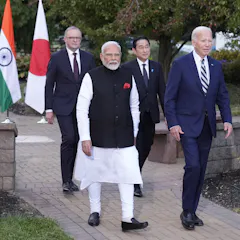
The Quad leaders may not meet again this year, but that doesn’t mean the partnership is any weaker than it used to be.

As authoritarian influence and disinformation grow across the Indo-Pacific, Australia is still failing to back one of its strongest assets: trusted journalism.
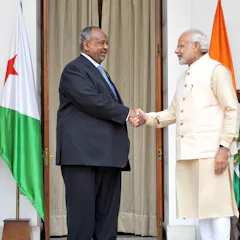
Over the past decade, India has come to see the Horn of Africa as a primary theatre of influence.
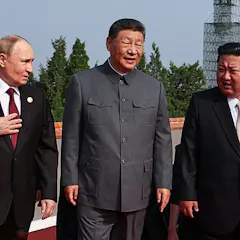
China’s carefully staged display of unity with Vladimir Putin and Kim Jong Un at a parade marking China’s victory over Japan in WWII projected strength abroad, but it also risks unintended consequences.
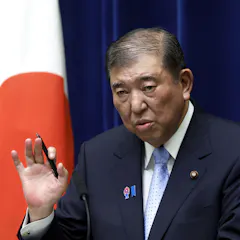
Japan has been under pressure from the US on tariffs and defence spending. And the new prime minister is under pressure domestically to hold firm with Trump.
The term can be traced back to the 1920s, but it only began to gain currency in the late 20th and early 21st centuries.

Utu is commonly misunderstood to mean violent revenge, but it really describes reciprocity, harmony and balance – ideas central to New Zealand’s international relations.

The strength of these alliances depends on whether Trump views Tokyo and Seoul as bulwarks against China’s rise or vassals that can be extorted for financial gain.
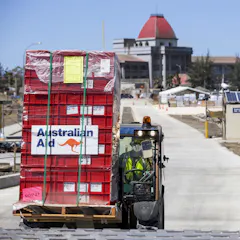
Three-quarters of Australia’s foreign assistance budget is flowing to the Indo-Pacific, showing a commitment to remaining a reliable partner as USAID cuts bite.
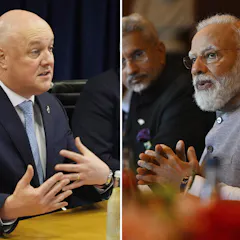
As Christopher Luxon meets India’s Narendra Modi, his pledge to secure a trade deal in his first term still looks optimistic. But he can already claim some success.
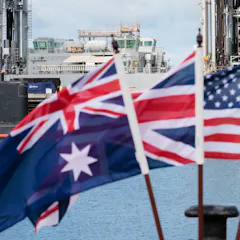
Backed by the US, Australia has been increasingly asserting its power in the Indo-Pacific region. Has this strategy served it well?

The US and Australia are increasingly attaching defence and security conditions to aid for Pacific nations – but that aid is not seeing any real progress on development goals.

India is where China was economically 15 years ago. With new talk of trade negotiations, a clear view of India’s present and future power will be vital.

More than ever, Canada needs to remember its human security roots as it looks to navigate an increasingly complex world.
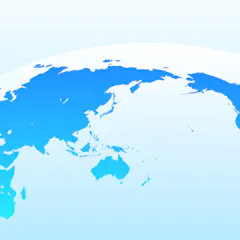
The term ‘Indo-Pacific’ has become central to foreign policy debates. But it oversimplifies geopolitical reality and fuels ideas of a ‘New Cold War’.
It’s the biggest naval exercise in the world. But for the region’s Indigenous people, it brings exploitation and environmental damage.

Vance’s foreign policy views could prove influential if Trump is re-elected in November.
The protracted deliberations over joining AUKUS pillar two suggest New Zealand is hoping questions of security, trade and domestic opinion will be solved in time. That’s unlikely.
Top contributors
-

Professor of Law, University of Waikato
-
Professor of International Relations, University of Otago
-
Professorial Fellow, University of Canberra
-
Professor of Political Science, Macalester College
-
Associate Professor in Global Studies, University of Auckland, Waipapa Taumata Rau
-
University Fellow in Law, Charles Darwin University
-
Senior Lecturer in International Relations, University of Waikato
-
Senior Fellow, Graduate School of Public and International Affairs, L’Université d’Ottawa/University of Ottawa
-
Professor of International Relations and Political Science, St. Thomas University (Canada)
-
Head of Global Security, Center for Security Studies, ETH Zurich; University of Sydney
-
Professor and Associate Dean (Education), University of Nottingham
-
Director of the Climate Hazards Center, University of California, Santa Barbara
-
Senior research fellow, School of Arts and Humanities, Edith Cowan University
-
Research Associate, Foreign Policy and Defence, United States Studies Centre, University of Sydney
-
Associate Professor and Chair of the Discipline of Politics & International Relations, Macquarie University, Macquarie University