

New Zealand is lifting its defence spending while deepening its military ties with Australia. But what happens when it needs to say no?
Articles on Defence spending
Displaying 1 - 20 of 47 articles
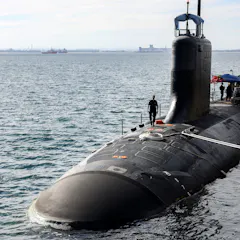
Following news of Australia acquiring used Virginia-class submarines from the US, AUKUS has been in the headlines again, but how much of what you’ve heard is true?

Defence Minister Chris Penk has inadvertently highlighted a major tension between increased defence spending and New Zealand’s nuclear-free policy.
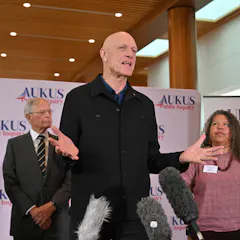
The controversial AUKUS pact continues to cause headaches for the government - even within its own ranks.

In an increasingly unstable world, building the defence relationship with Australia makes sense. But New Zealand has to safeguard its military sovereignty, too.

The pledge is likely to please the Trump Administration, which has lobbied Australia to spend more.

Total national defence seeks to force an adversary to weigh the long-term costs of invasion and occupation.

Preferential treatment for the self-employed is a luxury the country can no longer afford.

Could arms manufacturers soon become an everyday investment in ESG funds?
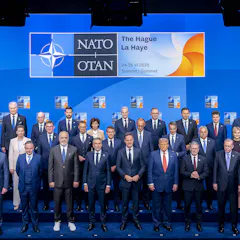
Spain risked Trump’s tariff wrath by rejecting the 5% spending requirement, but it isn’t NATO’s only sceptic.

Security comes at a price – but the government knows it can’t make ordinary households pay it.
Higher taxes, more debt, GDP growth or cuts in other areas? A bigger defence budget will mean shifts in economic activity and tradeoffs in spending priorities.

In the event of a major crisis or conflict in the region, Australia would not presently be able to defend itself for a prolonged period.

The UK is betting big on AI in defence to become “ten times more lethal”.

Trump may push Albanese on defence spending, but America needs its allies and partners in the Indo-Pacific perhaps more than anywhere else in the world.

In addition to practical measures of investment and expansion, the review lays out the more difficult changes that are needed to respond to security challenges.

The Coalition’s long-awaited defence plan is a ‘steady-as-she-goes’ approach in a world of increasing volatility.
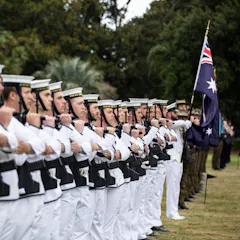
The major parties have made defence a central part of their election campaigns. A new survey suggests, however, this is not cutting through with the public.

While politicians would rather talk about the cost of living, global events are forcing them to discuss an issue that rarely wins them votes.

Australia is spending more on defence – but without money going to AI, cybersecurity and space technology our military risks being stuck in the past.
Top contributors
-

Professorial Fellow, University of Canberra
-
Director, Foreign Policy and Defence, United States Studies Centre, University of Sydney
-
Professor of Defence Studies, Canadian Forces College
-
Adjunct Professor, Defence and Security Institute, The University of Western Australia; UNSW
-
Professor of Law, University of Waikato
-
Visiting Fellow, Strategic Studies, Griffith University
-
Teaching Fellow in Strategic and Air Power Studies, University of Portsmouth
-
Assistant Professor, Public Administration, Queen's University, Ontario
-
Researcher at SCRAP Weapons, SOAS, University of London
-
Senior Research Economist, Institute for Fiscal Studies
-
Tony Walker AM is a Friend of The Conversation.
Director, La Trobe University
-
Professor in International Political Economy, University of Glasgow
-
PhD Candidate, SOAS, University of London
-
Postdoctoral Fellow, Political Science and International Relations, University of Canterbury
-
Founding Director, Centre for Britain and Europe, Department of Politics and International Relations, University of Surrey