

AI-powered cyber-security: the rise of new frontier platforms like Mythos highlights nuclear arsenals’ potential weak spots, and complicates the gambles inherent in nuclear deterrence.
Articles on Nuclear bomb
Displaying 1 - 20 of 26 articles

Bunkers, bomb shelters, mines and mountains all play critical roles protecting against our latest existential threat: the terrifying prospect of data loss.
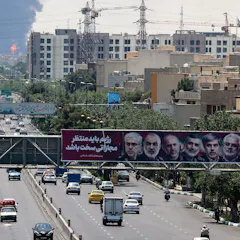
Close to 100 scientists have been killed or abducted to stymie foreign nations’ nuclear programs since World War II. But the tactic has serious drawbacks as a means of countering proliferation.

In the 1970s, a huge concrete dome was built on Runit Island to cover some 85,000 cubic metres of radioactive waste dumped by the US. It still leaks radiation today.

Nuclear experts from the US and Iran are due to meet in Oman. The turn to diplomacy indicates Trump is erring against reviving a maximum pressure strategy with Tehran.
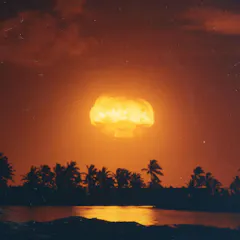
Manchester mayor Andy Burnham suggests the treatment of nuclear test veterans will be the next major UK public scandal to emerge. But how do the local people of Kiritimati recall these tests?

The prospect of a nuclear holocaust has receded since the end of the cold war. But maybe the world should take it more seriously.
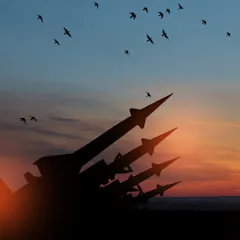
Climate modelling in the 1980s offered the first glimpses of what might lie beyond a nuclear war.

The United States and Russia, the two biggest nuclear powers, have no imminent plans for talks on a nuclear deal. That should change, writes a former US diplomat.
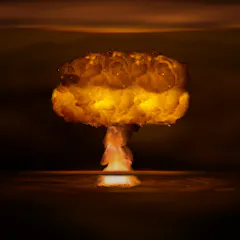
A nuclear bomb is a bomb that makes explosions by changing the nucleus of an atom in a way that releases a lot of energy.

The subject of the new Christoper Nolan film, Robert Oppenheimer, is often placed next to Albert Einstein as the 20th century’s most famous physicist.
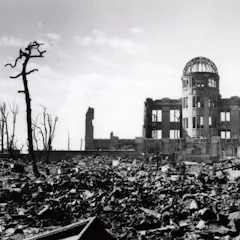
The heads of the some of the most powerful countries in the world would be wise to listen to the devastating testimony of Hiroshima survivors.
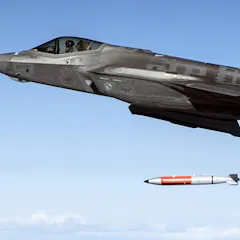
Both the Russian and US arsenals boast thousands of nuclear weapons, located in various places around their own countries and, for the US, in Europe as well.

The end is often envisioned the same way: abruptly, hopelessly and completely. How does this constrain the range of possible solutions?
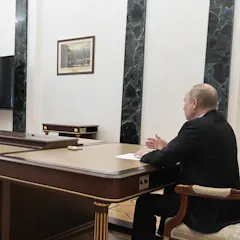
Experts around the world have been warning nuclear weapons are increasingly being seen as ‘usable’ by the political and military leaders who wield them.

A phenomenon first theorized over 200 years ago is also a telltale sign of nuclear tests.
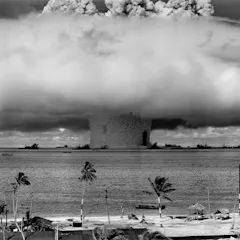
The cinematic legacies of Operation Crossroads, the first peacetime nuclear tests, fundamentally shaped how we view the mushroom cloud.
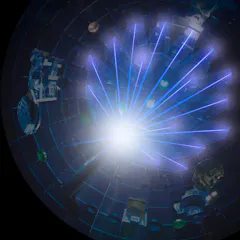
Scientists are working on ways to make lots of energy by converting matter into energy. The trick is keeping the process under control. One possibility is nuclear fusion – the Sun’s power source.

The element was discovered in the fallout of a thermonuclear blast.
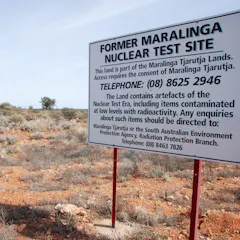
These caused untold health problems for Aboriginal people and Pacific Islanders who were at the highest risk of radiation
Top contributors
-

Affiliated Researcher, The Open University
-
Senior Fellow, James Martin Center for Nonproliferation Studies, Middlebury College
-
PhD Candidate, Swinburne University of Technology
-
Emeritus Professor of Atmospheric Sciences, University of Hawaii
-
Assistant Professor of Physics, Rutgers University - Newark
-
Edward R. Murrow Professor of Practice in Public Diplomacy, Tufts University
-
Professor of Literature, American University
-
Professor of History, Australian Catholic University
-
Senior Research Scientist, Boston College
-
Honorary Principal Fellow, School of Population and Global Health, The University of Melbourne
-
Professor of Earth System Science, UCL
-
Senior Fellow at the Coral Bell School of Asia Pacific Affairs, Australian National University
-
Associate Professor, RMIT University
-
Reader, School of Chemical and Physical Sciences, Keele University
-
Lecturer in History, University of Glasgow