
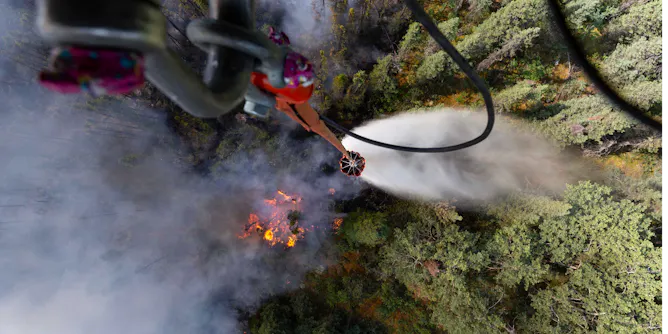
A new study finds more deciduous trees like aspen are growing in after severe fires in the region, and that has some unexpected impacts.
Articles on Nitrogen
Displaying 21 - 40 of 58 articles

Harmful algae blooms are an increasing problem in Florida. Once nutrients are in the water to fuel them, little can be done to stop the growth, and the results can be devastating for marine life.
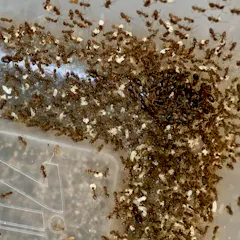
The spread of tawny crazy ants may be driven, in part, by their need for calcium. The calcium-rich limestone bedrock of the lower U.S. Midwest may provide ideal conditions for populations to explode.
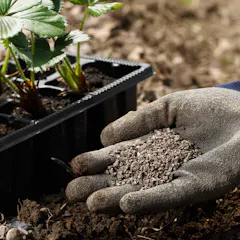
If rolled out worldwide, our method could replace a quarter of all the synthetic nitrogen fertiliser used in agriculture.

New research shows that one-third of yearly nitrogen runoff from Midwest farms to the Gulf of Mexico occurs during a few heavy rainstorms. New fertilizing schedules could reduce nitrogen pollution.
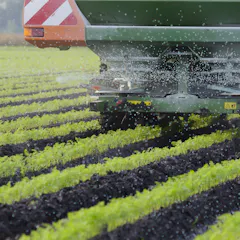
Agriculture is the dominant cause for the increasing N₂O concentrations. Emissions must be reduced if we hope to stabilise Earth’s climate.

You might think the more oxygen you breathe in the better. But too much oxygen can make you sick.
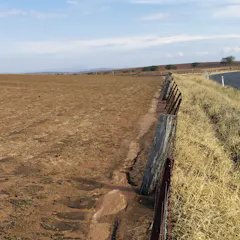
It’s painfully clear nature is buckling under the weight of farming’s demands. There’s another way – but it involves accepting nature’s limits.
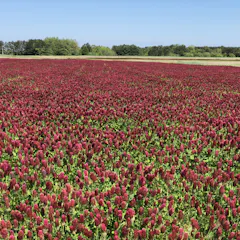
Storing more carbon in soil helps slow climate change and makes croplands more productive. But there are two kinds of soil carbon that are both important, but function very differently.

The elements that make up each column of the periodic table share a set of common traits. Here, a chemist describes group 15 and the crucial role phosphorus, in particular, plays in cancer.
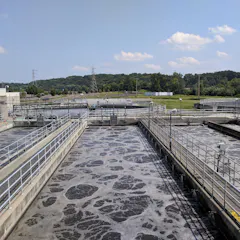
The ‘used water’ that flows from our showers, dishwashers and toilets isn’t a waste to engineers – it contains valuable materials. The challenge is recovering them and turning them into products.

Today’s production of more, better food from the same amount land means that tomorrow’s population may not go hungry.
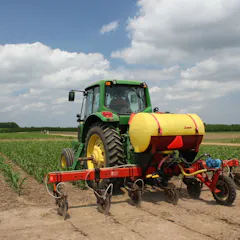
Fertilizer is a key source of nitrogen pollution which fouls air and water worldwide. Current regulations target farmers, but focusing on producers could spur them to develop greener products.
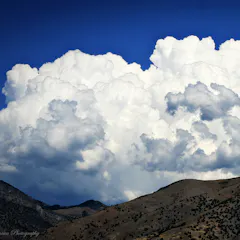
Even a small cloud can weigh as much as four tonnes – but gravity, chemistry and temperature keep them floating in the sky.
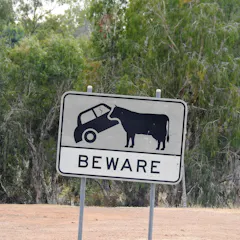
The University of Melbourne is the first institution in Australia to have its nitrogen footprint calculated – it’s 139 tonnes per year, mainly because of food production, energy use and transport.
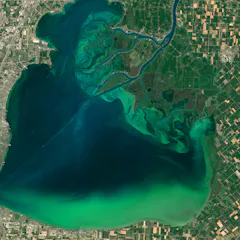
Scientists have mapped a huge dead zone in the Gulf of Oman, without enough oxygen in the water to support life. This Speed Read explains why dead zones form in waters around the world.

Scientists have long thought most nitrogen in Earth’s ecosystems comes from the air, but new research shows it also is released as rocks weather. This could boost plant growth and help sequester carbon – but not fast enough to avert climate change, as some pundits have claimed.
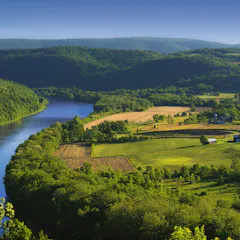
America’s drinking water infrastructure is aging and needs billions of dollars in upgrades. Two extension educators urge consumers to monitor their water and have it tested if they suspect problems.

Pollution has increased carbon in our soils - which is good for climate change. But this carbon may not stay there for long.
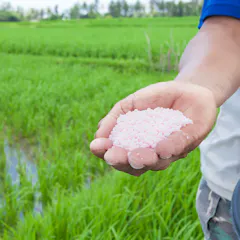
Somehow we need to grow more food to feed an expanding population while minimising the problems associated with nitrogen fertiliser use.
Top contributors
-

Chair Professor in Sustainability, Lancaster University
-
Professor, The University of Melbourne
-
Research fellow, The University of Melbourne
-
Postdoctoral Researcher, Agricultural Science, The University of Western Australia
-
PhD candidate, The University of Melbourne
-
Professor Emeritus of Environment and Sustainability, University of Michigan
-
Professor, University of Maryland Center for Environmental Science
-
Cheryl Palm is a Senior Research Scientist and Director of Research in the AgCenter, Columbia University
-
Research Fellow, School of Agriculture and Food Sciences, The University of Queensland
-
Research Associate in Microbiology, University of Guelph
-
Research Associate Professor, School of Earth and Environment, The University of Western Australia
-
Postdoctoral Associate in Physics, City College of New York
-
Extension Educator, Water Resources, Penn State
-
Researcher & Project Co-ordinator N2Africa, International Institute of Tropical Agriculture (IITA)
-
Principal research scientist, Australian Institute of Marine Science