
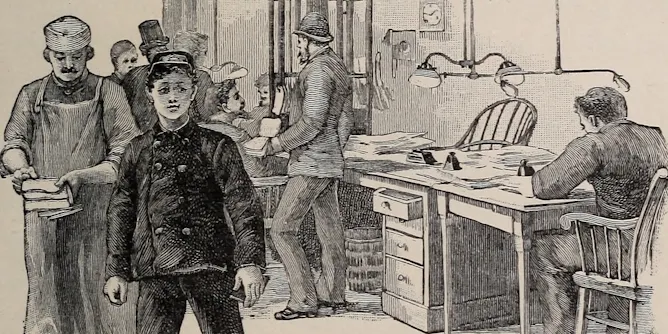
Solutions to fake news and financial support for media may come from newspapers of the early 1800s.
Articles on Newspapers
Displaying 101 - 120 of 216 articles

The love Canadians profess for their local newspapers isn’t quite what it seems. Few pay for a subscription, and many say they can get their news elsewhere if their local paper shuts down.
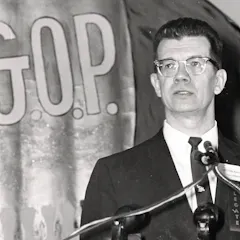
In the 1960s, white newspaper journalists exploited racial divisions to help build the GOP’s southern firewall.
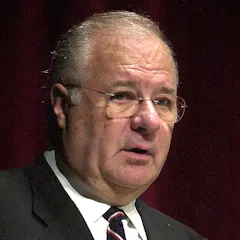
Joe Ricketts abruptly shut down DNAinfo and Gothamist after his employees voted to unionize. Is what he did legal? And how could similar events be prevented in the future?
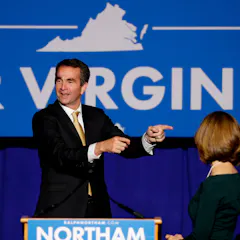
It’s time for newspapers to stop telling their dwindling number of subscribers how to vote.

A new study explores the state of an industry that’s tapping creative revenue streams and incorporating new tools to engage with readers.

Canadian newspapers are in trouble, and there are no philanthropic efforts afoot to rescue them. The National Student Investigative Reporting Network, or NSIRN, is aiming to make a difference.
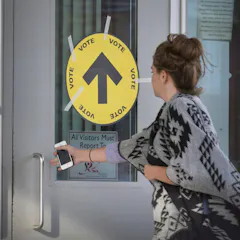
Local news is as important to communities as clean air, but the failing business model of traditional journalism has left the local news industry in rapid decline.

The traditional media industry comes with a large environmental cost, but emissions from digital productions are often ignored.

Giving labor unions a financial stake in a company such as a newspaper can offer unique advantages that could benefit employees, society and the bottom line.

There are some benefits to the uptick in billionaire newspaper and magazine owners, who can weather short-term losses for the sake of long-term gains. But whose interests are really being served?

One of the great satirical achievements of the mass media era, the editorial cartoon, is losing its centrality in the digital age. Yet the ‘visual terrorism’ of cartoons can cut through the verbiage of political commentary.

Thoreau spent his life pursuing the ‘hard bottom’ of truth. But he confronted a sensationalist newspaper industry that, in many ways, mimicked today’s media environment.
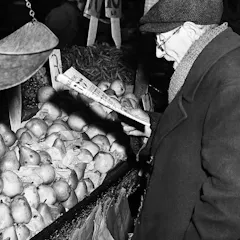
The newspaper’s new owners harken back to a tradition of labor-led media in the early part of the 20th century, which represented a bulwark against corporate power.
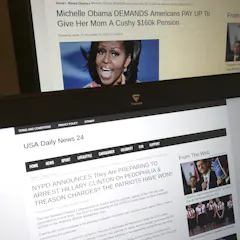
News consumers don’t often believe fake news. But it’s nonetheless critical that they learn to gauge the legitimacy of news sources and become aware of their own biases.
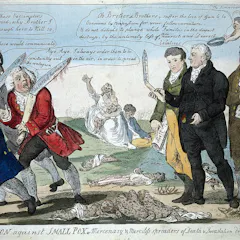
Some people have objected to childhood vaccination since it was introduced in the late 1700s. And their reasons sound remarkably familiar to those of anti-vaxxers today.

News Corp on the right, Fairfax on the left. This division has a long history in Australia, to the detriment of quality journalism and public debate.
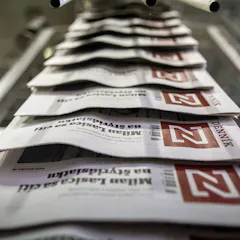
Comments sections may be scary places for reporters but, as the experience of one Slovak daily shows, when journalists engage with readers, it makes for better news.

While digital revenue streams may be delivering, there’s still a strong reliance on print for revenue and research shows readers engage more with print.
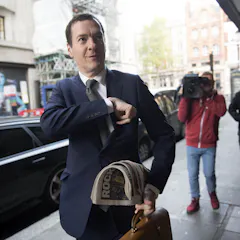
The former chancellor is walking a path between critic and conformist.
Top contributors
-

Senior Research Fellow, Centre for Advancing Journalism, The University of Melbourne
-
Director of Undergraduate Studies, School of Journalism, Media and Cultural Studies, Cardiff University
-
Professor of Political Communication; Director CAJ, The University of Melbourne
-
C. Edwin Baker Professor of Media Policy and Political Economy, University of Pennsylvania
-
Professor (Communication), Deakin University
-
Visiting Professor of Practice (Journalism), City St George's, University of London
-
Professor in Media and Communication, Goldsmiths, University of London
-
Associate Professor of Journalism, Concordia University
-
Associate Professor, Co-Director of the Research Centre for Journalism, Media and Democracy, Auckland University of Technology
-
Associate Professor of Interdisciplinary Studies, Royal Roads University
-
Professor of Journalism, Media and Communication, Queensland University of Technology
-
Professor of English, Flinders University
-
Professeure/Professor, Directrice/Director, Centre d'études sur les médias, Université Laval
-
Senior Lecturer in Media & Communication at UCFB, University Campus of Football Business
-
Assistant Professor of Political Communication, Louisiana State University