

The mystery of how the brain creates consciousness still puzzles scientists, but the mechanics of waking up are starting to be understood.
Articles on Neurons
Displaying 61 - 80 of 120 articles
Neurotrophic factors play an important role in protecting neurons – which is why researchers are investigating them as a treatment for Parkinson’s.
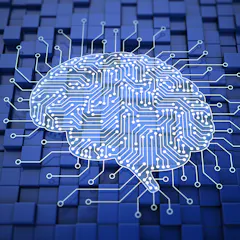
Artificial brains are far in the future, but computer chips that work like brains could keep computers advancing when today’s silicon transistor chips reach their limit.
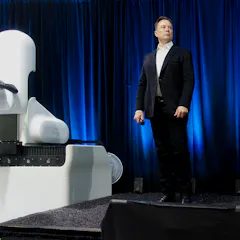
Decades of research have shown that the brain does not yield its secrets easily.
Medical treatments involving neurostimulation are resurfacing and appear to be more effective than drugs in treating depression.
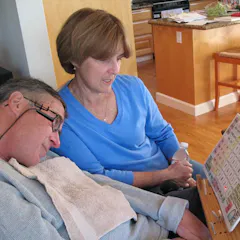
Amyotrophic lateral sclerosis, Lou Gehrig’s disease, is a crippling, progressive neurodegenerative disease for which there is no cure. Now it seems that a diabetes drug may help some cases.
A bioengineer explains how a clearer picture of brain structure and function may fine-tune the ways brain surgery attempts to correct structure and medication tries to correct function.
Air traffic controllers have to process and manage large amounts of information to get airplanes to their destinations. The brain manages the incessant traffic of neurons in a similar fashion.

Brains recognize a smell based on which cells fire, in what order – the same way you recognize a song based on its pattern of notes. How much can you change the ‘tune’ and still know the smell?

The video-sharing platform may connect to our innate mental systems for physically copying one another

The internet is awash with videos that claim to use ‘binaural beats’ to improve your focus or relieve stress. But while they can influence your brain, the touted mood-enhancing effects may not be.
The knowledge produced in designing and developing artificial neural networks may provide new insights into how our brains work.
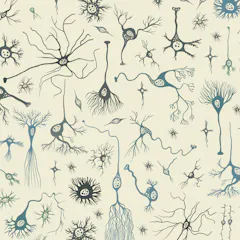
We have more neurons in our cortices than any other species, courtesy of an early technology – and along with them came our long, slow lives, with plenty of chances to gather around the dinner table.

About one in six people who take the most common medication for Parkinson’s disease will develop addictive behaviours. We found whether this happens depends on a person’s unique brain structure.

Like a cocktail partygoer able to focus on one discussion in a noisy room, brains are able to make reliable connections against a busy neural background. Here are two phenomena that help it happen.
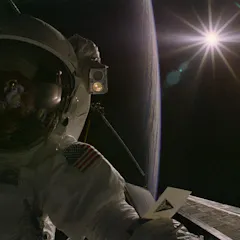
Space missions are dangerous. But when it comes to long missions, radiation may be the greatest threat to astronauts’ health.
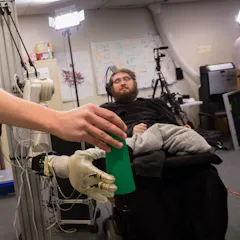
BMIs like the ones Neuralink is working on are already used in laboratories around the world as assistive technologies. But melding your mind with an AI is probably not happening anytime soon.
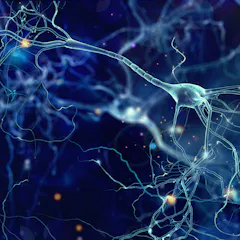
A new technology has enabled neuroscientists to examine the chemistry of individual brain cells. The finding reveal how genes are regulated differently in brain cells of people with autism compared to neurotypical people.

An adult brain weighs about 1.5kg. It’s mostly water with some fat, protein, sugar and a dash of salt. Sounds like pancakes, I know, but I once tried chicken brains and, well, pancakes are tastier.

Itch is usually caused by something harmful, or something our body assumes might be harmful when actually it’s not.
Top contributors
-

Professeur agrégé de neurosciences computationnelles et neurophysiologie, L’Université d’Ottawa/University of Ottawa
-
Associate Professor of Psychology, Vanderbilt University
-
Postdoctoral Researcher in Cognitive Neurosciences, The University of Queensland
-
Professor of Electrical Engineering and Bioengineering, Tau Beta Pi Eminent Engineer, University of South Florida
-
Assistant Professor of Mechanical Engineering, Binghamton University, State University of New York
-
Assistant Professor of Computer Science, Binghamton University, State University of New York
-
Research Fellow, Centre for Robotics, Queensland University of Technology
-
Chancellor's Professor of Medicine, Liberal Arts, and Philanthropy, Indiana University
-
Associate Professor of Neural and Behavioral Sciences, Penn State
-
Professor of Cognition, Lancaster University
-
University of Illinois Urbana-Champaign
-
Graduate Student in Biomedical Science, Harvard University
-
Sir Henry Dale Fellow in Cell & Developmental Biology, UCL
-
Ph.D. Student in Bioengineering, Researcher at the Center for Sensorimotor Neural Engineering, University of Washington
-
Professor in Neuroscience, The Open University