
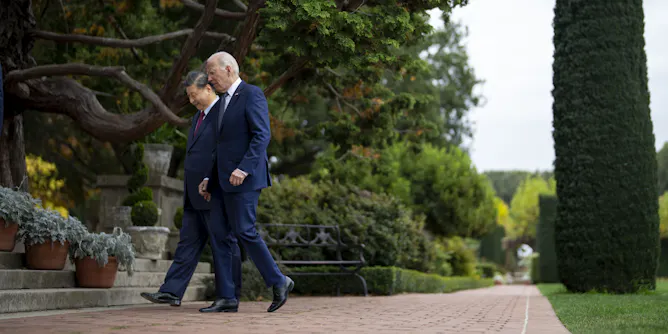
The Sunnylands Statement has set a powerful signal for COP28, however, it also highlights that more must be done in Dubai to define what it means to achieve ‘net zero.’
Articles on Net zero emissions
Displaying 121 - 140 of 288 articles
Record emissions are fast shrinking the remaining amount of carbon dioxide we can emit if we are to limit global warming. At current rates, we’ll use up the budget for a 1.5°C outcome in seven years.
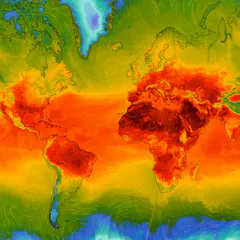
We can’t prevent continued global warming without reaching net zero carbon dioxide emissions. New climate simulations show what might happen when we get there.
Australia’s latest climate change statement shows we have little hope of reaching net zero emissions by 2050. There’s good news on the 2030 target, but then what?
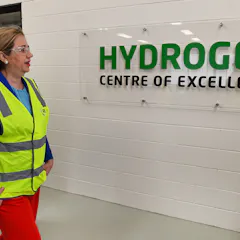
Australian governments have invested a lot of hope in hydrogen to help drive the net zero transition, but concrete policies are urgently needed or we will lose our hydrogen advantage to other nations.

Electric arc furnaces can use up to 100% scrap steel as its raw material, resulting in a significant reduction in emissions.

Industry is a leading climate polluter: Our road map shows what’s needed to cut industrial emissions in fast-growing countries.
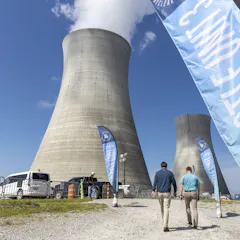
Small modular reactors may hold the key to Canada’s net-zero energy future.
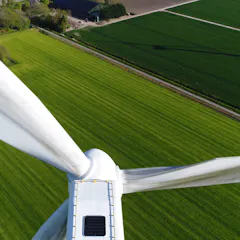
It’s still possible for Australia to cut emissions in line with holding climate change to 1.5°C. Here’s how.
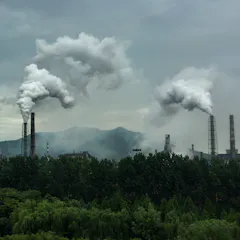
The idea that harm done today can be offset in the future is based on a basic misunderstanding of the carbon cycle. Planting more trees is important – but it’s no substitute for cutting emissions.

For Australia to shift to a net zero economy, its big polluters need to cut emissions. A get-out clause buried in the policy makes it unlikely that they will, and the result will be devastating.
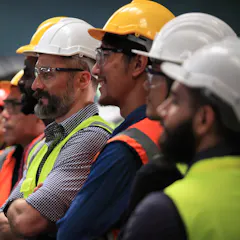
Our survey of UK workers reveals their deep concern about climate change – many want to see action being taken.

If big money is going to invest in clean energy and technology, the rules have to be clear. Australia’s launch of a green finance strategy last week was a good start but there is further to go.
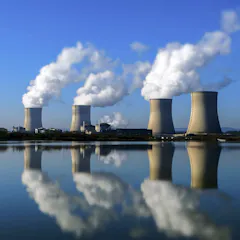
When Australia’s government and opposition argue over how to get to net zero emissions, nuclear power is the flashpoint. The argument against nuclear is stronger, but not for the obvious reason.

Australia has a massive opportunity to reduce global emissions by as much as 9%, all while renewing its heavy industries and economy. But to seize the opportunity, government needs to move fast.

30 of the 50 economists surveyed want a carbon price of the kind introduced by Julia Gillard in 2012 and abolished by Tony Abbott in 2014. Several say there’s little “time left to act seriously”.

Australia’s road to net zero must pass through Indigenous-held land, which is likely to host many clean energy projects. First Nations people want partnerships that help them protect their Country.
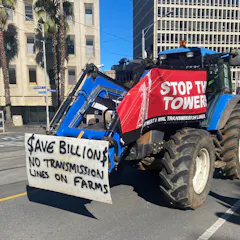
If Australia is to meet its net zero targets it must move fast and build massive industrial infrastructure. But those projects are provoking fierce hostility. Is there a way through the green dilemma?

Buying a new house can be overwhelming – here’s how to make sure you’re not left with one that guzzles energy.
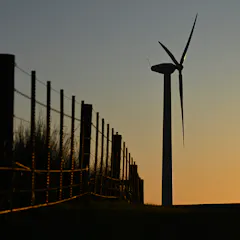
Of all Australia’s climate policies, the Renewable Energy Target has been the most effective. Why have Australian governments moved away from it, and how can they revive it?
Top contributors
-

Professorial Fellow, University of Canberra
-
Program Director, Energy and Climate Change, Grattan Institute
-
Assistant Director of the Global Systems Institute, University of Exeter
-
Professor of Climate Economics and Policy, Smith School of Enterprise and the Environment, University of Oxford
-
Climateworks Centre Country Lead, Australia, Monash University
-
Professor, Crawford School of Public Policy and Director, Centre for Climate and Energy Policy, Australian National University
-
Adjunct Professor of Transport, University of Technology Sydney
-
Chief Research Scientist, CSIRO Environment; Executive Director, Global Carbon Project, CSIRO
-
Professor of Law, Deakin University
-
Visiting Fellow, Crawford School of Public Policy, Australian National University
-
Professor of Physical Climate Change; Director of the Priestley Centre for Climate Futures, University of Leeds
-
Former Visiting Fellow, SPRU, University of Sussex Business School, University of Sussex
-
Head of Atmospheric, Oceanic and Planetary Physics, University of Oxford
-
Chair of Energy and Climate Governance, University of Manchester
-
Senior Research Scientist, Physical Geography and Ecosystem Science, Lund University