

Grid-like cities such as Buenos Aries can have a detrimental effect on navigation ability.
Articles on Navigation
Displaying 21 - 40 of 54 articles
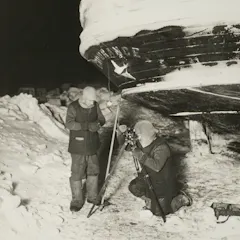
Accurately calculating a ship’s position by hand in 1915 was easy compared to what the New Zealand-born navigator Frank Worsley had to do next.

Migrating birds use both their view of the stars and their internal magnetic compasses to find their way over thousands of miles.

As you’re walking through city streets on your way to work, school or appointments, you probably feel like you’re taking the most efficient route. Thanks to evolution, you’re probably not.
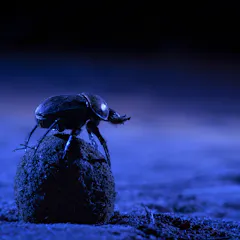
On starlit nights, the Milky Way acts as these beetles’ primary reference. But light pollution gets in the way.

Although some parents may be reluctant to let their children explore their surroundings alone, allowing kids to wander can help build their sense of direction.

The English astronomer and navigator Thomas Harriot died in 1621, leaving behind 8,000 pages of notes containing a trove of unpublished scientific discoveries.

We now have a glimpse into where early Indigenous Australians likely travelled all those tens of thousands of years ago.

Some birds may effectively possess an in-built, global GPS system.
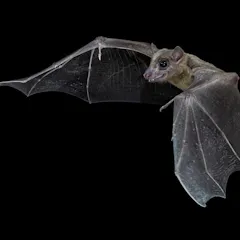
This important discovery demonstrates that cognitive maps are not the exclusive domain of humans and a few other species.
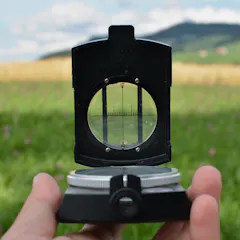
Recently, magnetic compasses at Greenwich pointed directly at true north for the first time in 360 years. This is currently happening in Western Australia too. But what does it mean?

Connected technology could help the visually impaired to recognise people, places or even bank notes.
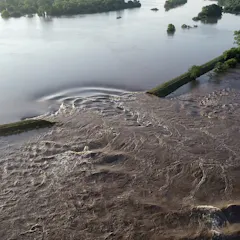
At a time when storms are becoming more frequent and severe, relying on levees for flood control can create as many problems as it solves.
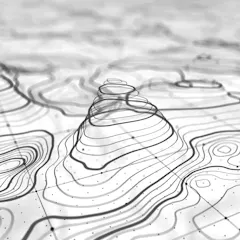
Red Dead Redemption 2 has been criticised for its portrayals of violence, but it could also be teaching players the lost art of reading a map.

Eight decades after missing aviator Amelia Earhart was declared dead, technologies still don’t quite track every airplane all over the globe.
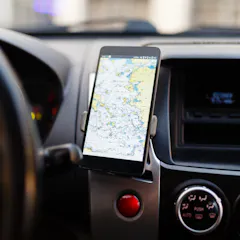
Without their devices, regular GPS users take longer to negotiate a route, travel more slowly and make larger navigational errors.
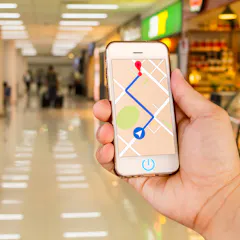
London’s Gatwick Airport has installed thousands of virtual beacons to help passengers navigate when GPS won’t work inside.
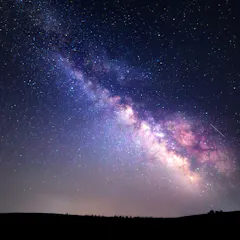
New research shows the insects use the brightness of different stars to work out which direction to go.

Disney’s Moana has a remarkably accurate depiction of how Polynesian peoples navigate by the stars, and draws attention to the richness of Indigenous astronomy.
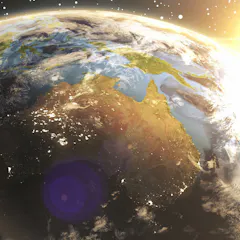
Australia is always on the move thanks to continental drift which means the mapped coordinates of any place can get out of line with any GPS locating system. So what’s the plan to fix it?
Top contributors
-

Associate Professor, RMIT University
-
Research Fellow, Julius Maximilian University of Würzburg
-
Professor of Animal Behaviour, Bangor University
-
Associate Professor in Geospatial Science, RMIT University
-
Professor of Historical Geography and Intellectual History, University of Bristol
-
Postdoctoral Research Associate, Florida International University
-
Honorary Senior Lecturer, University of Aberdeen
-
Training Course Materials Designer, Cardiff Metropolitan University
-
Professor of Electrical Engineering, Ohio University
-
Professor of Linguistics, Bangor University
-
Director of the University of California Center of Excellence on Unmanned Aircraft System Safety, University of California, Merced
-
NASA
-
Cultural Astronomy & Cultural Competence Researcher, UNSW
-
Professor, School of Civil & Environmental Engineering, UNSW
-
Professor of History and Philosophy of Science, University of Cambridge