
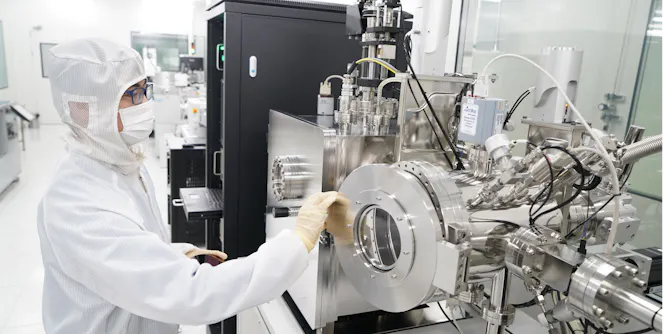
Two decades ago, the nanotechnology revolution avoided stumbling by bringing a wide range of people to the table to chart its development. The window is closing fast on AI following suit.
Articles on Nanotechnology
Displaying 21 - 40 of 151 articles
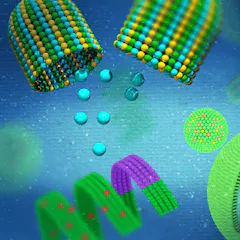
Nanoparticles have contributed to profound medical advances like the COVID-19 vaccine, but without oversight, they pose ethical and environmental issues.

Cardiovascular disease and cancer share many parallels in their origins and how they develop. Nanoparticles offer one potential way to effectively treat both with reduced side effects.

A new book argues our philosophical and intellectual responses to technology have not kept pace with events.

Technology will be a key part of solving the global water scarcity crisis.
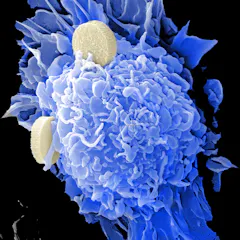
The proteins that cover nanoparticles are essential to understanding how they work in the body. Across 17 proteomics facilities in the US, less than 2% of the identified proteins were identical.

Our new approach lets us separate, store and transport tricky gases like hydrogen as a solid - and for a fraction of the energy.

Together with higher cotton production, nanotextile products can boost Nigeria’s textile industry and the economy.
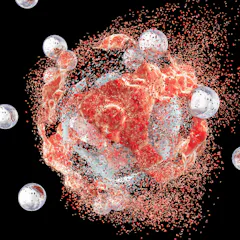
The COVID-19 mRNA vaccines put nanomedicine in the spotlight as a potential way to treat diseases like cancer and HIV. While the field isn’t there yet, better design could help fulfill its promise.

Moderna co-founder Robert Langer developed the process that made COVID-19 vaccines possible. He spoke about his journey helping develop the science for various lifesaving treatments.
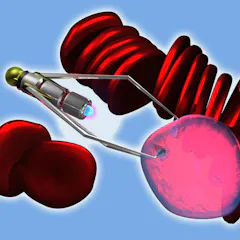
As a major contributor of knowledge, Nigeria could make giant strides in nanotechnology – which in turn could help various industries blossom.

Growing applications of nanotechnology include using nanorods for male birth control. The technique has had some success in animals, and offers the potential of human male contraception.
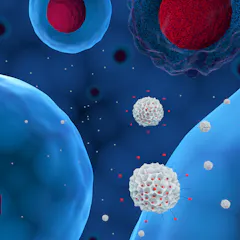
Some vaccine hesitancy is based on a fear of the nanoparticles used in mRNA vaccines. But humans have been interacting with nanoparticles for millennia, and we use nanotechnology-based devices every day.

Critics say investing in carbon capture and storage means betting on technology that’s not yet proven to work at scale. Using liquid marbles could make a huge difference.

Pollution from more frequent floods and wildfires – exacerbated by the warming climate – is threatening human health and poses particular risks to the brain.

The NanoMslide causes potentially cancerous cells to ‘light up’ with vivid colour contrast. It has already been successful in finding early-stage breast cancer cells in human tissue.
Nanotechnology, which approaches materials at the scale of atoms and molecules, has numerous applications for food production. Applying nanotech could revolutionize the agricultural sector.

Researchers are developing tattoo inks that do more than make pretty colors. Some can sense chemicals, temperature and UV radiation, setting the stage for tattoos that diagnose health problems.

Nanotechnology has an impressive record against viruses.

Bricks turn out to be useful for storing electricity thanks to their porousness and red pigment.
Top contributors
-

Professor of Advanced Technology Transitions, Arizona State University
-
Professor of Microbiology, Ladoke Akintola University of Technology, Ogbomoso
-
Associate Deputy Vice-Chancellor for Research Innovation and Entrepreneurship, RMIT University
-
Molecular Imaging Post-Doctoral Research Assistant, University of Hull
-
Director, ARC Research Hub for Safe and Reliable Energy, Deakin University
-
Postdoctoral Fellow, Nanotechnology, Carleton University
-
Reader in Polymers ad Nanomaterials, School of Pharmacy and Biomedical Sciences, University of Lancashire
-
Postdoctoral research associate, Cardiff University
-
Senior Professor, Australian Institute for Innovative Materials, University of Wollongong, University of Wollongong
-
Professor of Ecotoxicology, Leiden University
-
Project Manager, Swansea University
-
Faculty in Strategy and Innovation, University of Oxford
-
Senior Postdoctoral Research Fellow, Solid-state Physics, The University of Melbourne
-
Reader (Associate Professor), Queen Mary University of London
-
Assistant Professor of Chemical and Biological Engineering, University of Colorado Boulder