

Contamination tolerance shapes the economics of recycling.
Articles on Nanomaterials
Displaying 1 - 20 of 30 articles

In South Africa, discarded pineapple leaves can now be turned into a low-cost, eco-friendly solution for both cleaning polluted water and forensics.

Exciting new devices and materials powered by tiny nanomaterials are being developed to clean up South Africa’s polluted water sources.
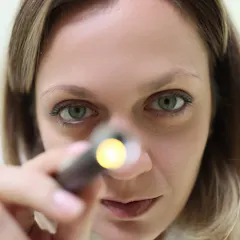
Your GP shines a light in your eyes, orders a blood test and requests some medical imaging. All rely on light to help diagnose disease.

Researchers are developing new ways to produce widely used silica nanomaterials so that these substances and any by-products won’t harm the environment.

Cloud seeding – spraying materials into clouds to increase precipitation – has been around for nearly 80 years. But only recently have scientists been able to measure how effective it really is.

Technology will be a key part of solving the global water scarcity crisis.
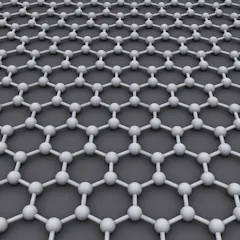
Graphene is superstrong and superconductive, and it has applications in everything from construction to electronics. But to date there have been almost no commercial uses of the material.

Together with higher cotton production, nanotextile products can boost Nigeria’s textile industry and the economy.
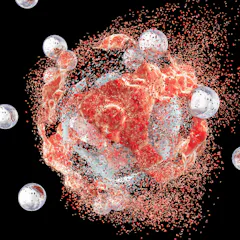
The COVID-19 mRNA vaccines put nanomedicine in the spotlight as a potential way to treat diseases like cancer and HIV. While the field isn’t there yet, better design could help fulfill its promise.
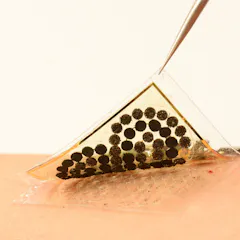
Lightweight, flexible materials can be used to make health-monitoring wearable devices, but powering the devices is a challenge. Using fuel cells instead of batteries could make the difference.
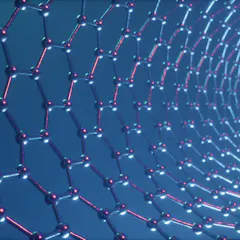
Since the 1960s, silicon ‘nanomaterials’ have driven the information revolution. But as their potential is exhausted, is it time for ‘atomaterials’ such as graphene to drive innovation still further?

Populations of freshwater species are in a state of deep decline. But we know why and we can reverse the trend.
Nanotechnology and materials are the source of countless innovations, but we don’t accurately know how they are affecting humans and the environment.
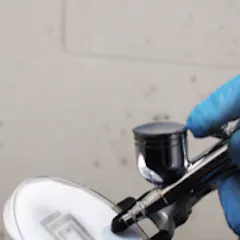
A new type of material can make it easy to put antennas almost anywhere – no matter how thin the space, or even on surfaces people need to be able to see through.

Using nanostructures on a flat piece of glass can make lenses smaller, lighter and much cheaper – while providing better image quality.

Less-toxic hair dye would be a great invention. But discounting the risks that come with nanoparticles could undermine other efforts to protect human health and environmental from their effects.

Advanced materials that seem like they come from Star Trek are becoming reality today.

New research shows bees see a blue halo around flowers thanks to nanostructures on its petals.
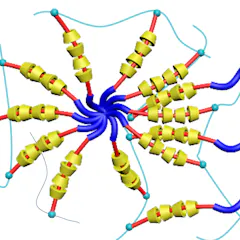
Research on molecular machines won last year’s Nobel Prize in chemistry. Now scientists have figured out a way to get these tiny molecules to join forces and collaborate on real work on a macro scale.
Top contributors
-

Professor of Advanced Technology Transitions, Arizona State University
-
Professor, Biomedical Sciences, Swansea University
-
Postdoctoral research associate, Cardiff University
-
Associate Professor of Physics, University of Cincinnati
-
Professor of Electrical and Computer Engineering, Tufts University
-
Professor of Ecotoxicology, Leiden University
-
Reader in Nanoelectronics, University of Southampton
-
Professor of Chemical Engineering and Chemistry, University of Sheffield
-
Research Fellow, University of Sydney
-
Australian Research Council Future Fellow and leader of the Integrated Nanoporous Materials team, CSIRO
-
Ph.D. Student in Materials Science and Engineering, Drexel University
-
Visiting assistant professor, James Madison University
-
Senior Communications Advisor, Faculty of Science, Monash University
-
Honorary Professorial Fellow, School of Chemistry, The University of Melbourne
-
PhD candidate in Atomic Imaging, University of British Columbia