
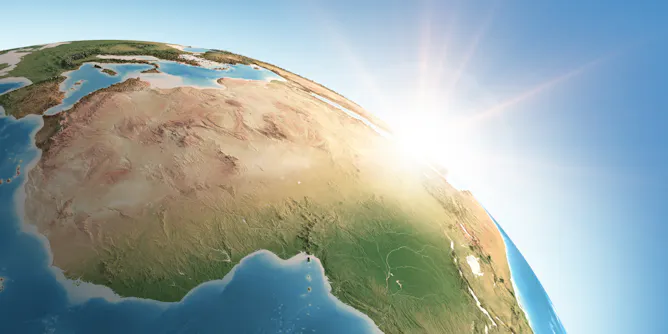
Côte d’Ivoire’s nanosatellite is the first step towards applications that monitor environmental harm and illegal activities and assist in planning for development.
Articles on Nanosatellite
Displaying all articles

In some African countries, astronomical research is quite developed.
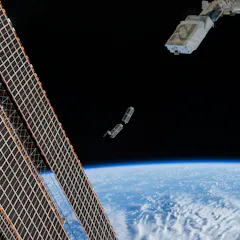
Shrinking satellites are making it cheaper and more accessible to do science in space.
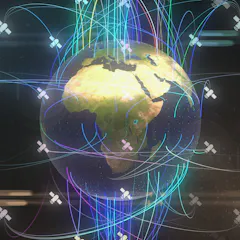
The nanosatellite constellation will detect, monitor and identify foreign vessels within the country’s maritime borders.
Free space optical communication will allow the same connectivity in space we already have on Earth. And this will provide benefits across a number of sectors.
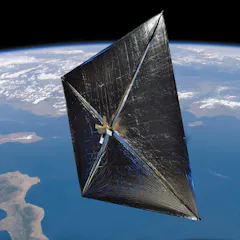
Scientists are hoping to turn tiny spacecraft into starships by coupling them with large solar sails.
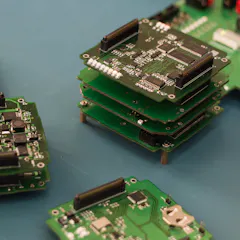
How do you train space engineers? You enable college students to build mini satellites, called CubeSats, launch them into space and help them collect the data.
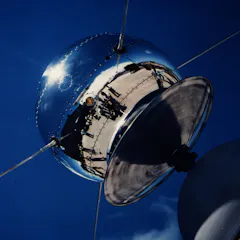
When Vanguard 1 – the “grapefruit satellite” – was launched in 1958, its only companions were Explorer 1 and Sputnik 2. Soon it may have thousands of descendants swarming around it.
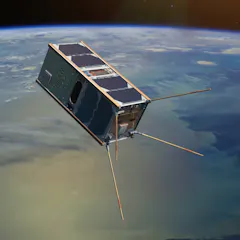
We don’t need another review of Australia’s space industry, we just need a space agency.
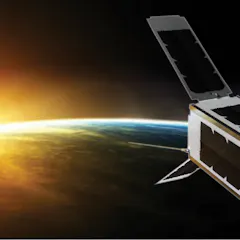
Australia’s hoping to take a share of the billion-dollar space industry with the launch of its first totally Australian-built satellites in 15 years.
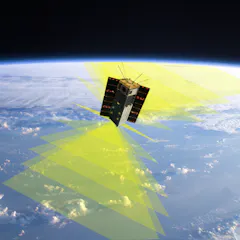
As technology advances, tiny satellites no bigger than a loaf of bread have advanced from just proving they work to being big contributors in answering science questions.
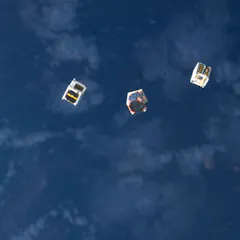
Just about anyone can get a tiny, cheap satellite into orbit these days. As we consider how to deploy them responsibly, inspiration comes from an amateur community of enthusiasts.
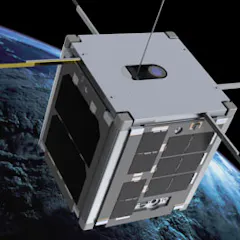
Nano-satellites are small and cool enough to inspire youth to consider careers in science, technology, engineering and mathematics.
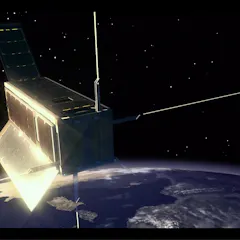
Earlier this year, the Russian Federal Space Agency received a hand-luggage-sized delivery from the UK. It came with a request to launch the contents aboard a rocket, along with the Russian three-tonne…
Top contributors
-

Acting Chief Engineer, MDASat constellation project, Cape Peninsula University of Technology
-
Geologist, Institut de recherche pour le développement (IRD)
-
Andrew Dempster is a Friend of The Conversation.
Director, Australian Centre for Space Engineering Research; Professor, School of Electrical Engineering and Telecommunications, UNSW
-
Associate Professor in Archaeology and Space Studies, Flinders University
-
Research Fellow, The Open University
-
Ph.D. Student in the Human and Social Dimensions of Science and Technology, Arizona State University
-
Associate Research Astronomer, South African Astronomical Observatory
-
Astrophysicist and Science Communicator, The University of Melbourne
-
Research Associate of Systems Power and Energy, University of Glasgow
-
Scientific Officer, Obafemi Awolowo University
-
Doctoral Candidate, Institute of Air & Space Law, McGill University
-
James Watt Chair, Professor of Engineering Science, University of Glasgow
-
Research Associate of Systems Power & Energy, University of Glasgow
-
Épistémologue, Historien des sciences et Logicien, Université Félix Houphouët-Boigny. Cocody, Côte-d'Ivoire
-
Enseignant-Chercheur en physique chimie, Université Joseph Ki-Zerbo