
Once the subject of fantastical stories, nanoscience is now changing the world as we know it.
Articles on Nanomaterials
Displaying 21 - 30 of 30 articles

Flexible, easy to make, inexpensive, stretchable and simple to coat with nanomaterials, threads are also very commonly used by doctors already.

Two new studies from Food Standards Australia and New Zealand show there’s no evidence that nanoparticles in food present a health risk, but there’s more research to be done.

Microscopic needle-like particles don’t seem like something you’d want to feed a baby. Whether safe or not, the way we deal with nanoscale food additives leaves plenty of other questions.

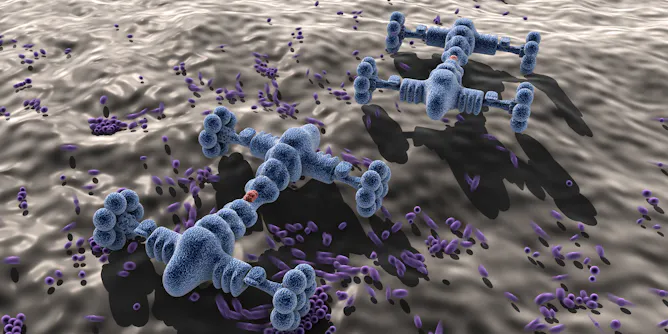
From tiny robotic doctors repairing your body to the latest climate change-tackling tools, nanotechnology is fighting an invisible battle on our behalf.
As the components in electronic devices are shrinking to the nanoscale, even a single atom out of place can disrupt their function. But this also presents an opportunity to make them even better.

A new method for creating a form of graphene with carbon dioxide sucked from the air has been announced with misleading claims.

The field of plasmonics has implications for integrated circuits, biosensors, other light-based technologies – even invisibility cloaks.
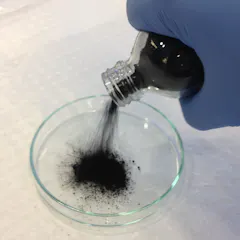
There is much excitement about graphene, a material only a single carbon-atom thick, but finding ways to do something with it that’s affordable have always been a challenge.
The Prime Minister’s Prizes for Science – awarded at Parliament House in Canberra tonight – recognise excellence in science and science teaching. This year, we asked four prizewinners to reflect on…
Top contributors
-

Professor of Advanced Technology Transitions, Arizona State University
-
Professor, Biomedical Sciences, Swansea University
-
Postdoctoral research associate, Cardiff University
-
Associate Professor of Physics, University of Cincinnati
-
Professor of Electrical and Computer Engineering, Tufts University
-
Professor of Ecotoxicology, Leiden University
-
Reader in Nanoelectronics, University of Southampton
-
Professor of Chemical Engineering and Chemistry, University of Sheffield
-
Research Fellow, University of Sydney
-
Australian Research Council Future Fellow and leader of the Integrated Nanoporous Materials team, CSIRO
-
Ph.D. Student in Materials Science and Engineering, Drexel University
-
Visiting assistant professor, James Madison University
-
Senior Communications Advisor, Faculty of Science, Monash University
-
Honorary Professorial Fellow, School of Chemistry, The University of Melbourne
-
PhD candidate in Atomic Imaging, University of British Columbia