
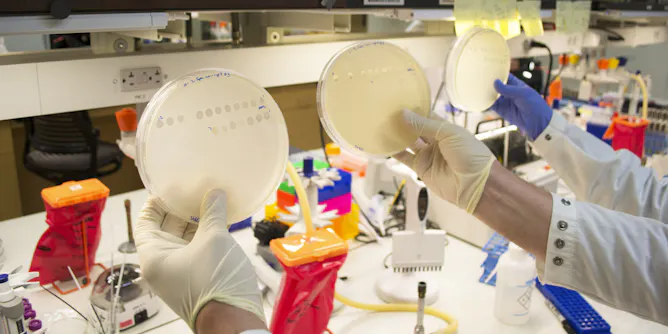
A core idea in molecular biology is that one gene codes for one protein. Now biologists have found an example of a gene that yields two forms of a protein – enabling it to evolve new functionality.
Articles on Mutations
Displaying 21 - 38 of 38 articles
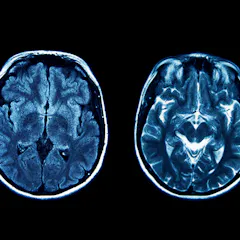
Antisense therapy showed promising results in a first-in-human trial for Huntington’s disease.
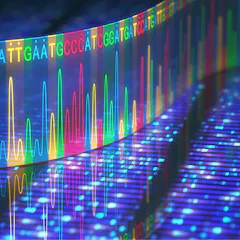
Comparing genomes of more than 200,000 people, researchers identified genetic variants that are less common in older people, suggesting natural selection continues to weed out disadvantageous traits.
Some animals seem to have missing genes – but the reality is a lot more intriguing.

Releasing just 100 mice carrying a faulty gene designed to stop them reproducing can remove an entire population of 50,000, a new study shows, paving the way for new eradication efforts.

Two US researchers have traced the majority of cancers to DNA replication errors during our natural cell replacement. Their finding asks for a renewed inquiry into the role of “chance” in cancer.
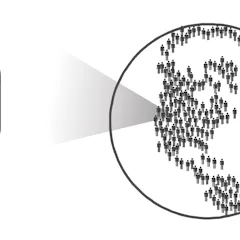
New genetic technologies are letting us look at flu evolution right where it starts: within individual people, while they’re sick.

Converting a DNA sequence into an audio could help us learn something useful about it, like where mutations occur.
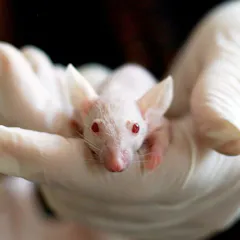
A new research paper reports dangerous side effects in CRISPR-edited mice. Some scientists are pushing back, placing blame for the unwanted mutations on the experiment, not the technique.

How do scientists figure out when evolutionary events – like species splitting away from a common ancestor – happened? It turns out our DNA is a kind of molecular clock, keeping time via genetic changes.
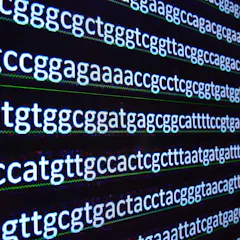
Not only are tumors are different from one another, but there can even be genetic differences within a single tumor.

A gene mutation that causes problems for neural stem cells – the building blocks of the brain – could be corrected by adding carnitine.

What produces the differences between men and women? Are they trivial or profound? Are they genetic or environmental, or both? And are men really closer genetically to chimpanzees than to women?
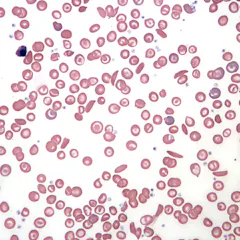
Gene therapy is allowing us to switch on natural beneficial mutations to counteract the effects of negative mutations in diseases such as sickle cell anaemia.
A mutated gene could be responsible for triggering prostate cancer, new research has found. The relevant gene, p53, encodes…
Mutations in the gene BTBD9 which is believed to be associated with restless legs syndrome (RLS) in humans has been found…
People with Lynch syndrome are at a greater risk of developing a wide variety of cancers than the general public, a new study…
Genetic changes, similar to those acquired in human cancers, have been observed occurring in the stem cells in the latest…
Top contributors
-

Lecturer, California State University, Long Beach
-
Senior Lecturer, School of Biological Sciences, Adelaide University
-
Adjunct Assistant Professor of Biological Sciences, Columbia University
-
Professor of Neuroscience, Royal Veterinary College
-
Ph.D. Student, Michigan State University
-
Senior Lecturer in Molecular Biology, Western Sydney University
-
Chair, The Conversation Media Group
-
Postdoctoral Research Fellow, University of Oxford
-
Assistant Research Scientist, Texas A&M Health Science Center, Texas A&M University
-
E.L. Wehner-Welch Foundation Chair in Chemistry, Texas A&M Health Science Center, Texas A&M University
-
Chargée de cours, docteure en psychologie, Université Paris Cité
-
Ph.D. Student in Biological Sciences, Columbia University
-
Doctoral Student in Genome Sciences, University of Washington
-
Ph.D. Student, Michigan State University
-
Doctoral Student in Biochemistry, University of Washington