
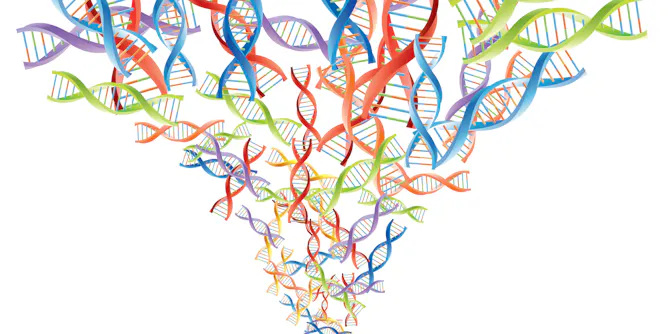
Your DNA contains millions of genetic variants that interact with each other in ways that affect whether diseases such as schizophrenia and heart disease develop, and with what severity.
Articles on Genetic mutation
Displaying 1 - 20 of 44 articles

The gene that codes for p53 is the most frequently mutated in cancer. Researchers are targeting different parts of its complex pathway to restore its ability to stop cancer.

Comprehensive genetic testing can provide a more timely and accurate diagnosis and personalised support for autistic individuals and their families.

No treatments are currently available to cure Parkinson’s disease. Better understanding the genetic foundation of this condition can help researchers find ways to slow or halt its progression.
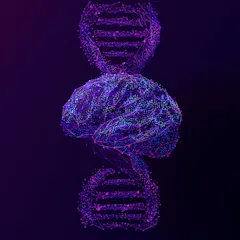
FTD leads to changes in personality and behavior. Understanding its genetic and molecular causes could lead to new ways to treat neurodegenerative diseases.

In Canada, 14.4 per cent of South Asians have Type 2 diabetes, the highest prevalence of any other ethnic group in the country. Why is this population so disproportionately affected by diabetes?

One enzyme plays a key role in how tumor cells replicate and divide indefinitely. Identifying the genes that give these cells their immortality could provide new drug targets to treat cancer.
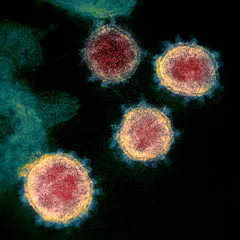
Neutralising antibodies aren’t the only game in town.
Changes in our environment can reveal previously hidden mutations in our DNA with potentially good and bad consequences.

Natural selection isn’t the only factor deciding human evolution.
Once genetic lesions for diseases such as cystic fibrosis and haemophilia were identified, the idea of replacing or correcting defective genes grew into what we now call “gene therapy”.

Why was one gene mutation that affects hair, teeth, sweat glands and breasts ubiquitous among ice age Arctic people? New research points to the advantage it provided for ancestors of Native Americans.

More and more evidence shows evolution isn’t as random as often thought.

In 2030, there is a boom in precision medicine, where diseases – from cancer to dementia – are defined and targeted more specifically with a focus on their molecular makeup.
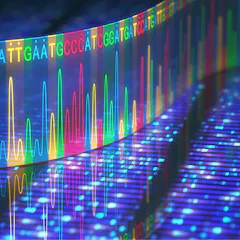
Comparing genomes of more than 200,000 people, researchers identified genetic variants that are less common in older people, suggesting natural selection continues to weed out disadvantageous traits.
Some animals seem to have missing genes – but the reality is a lot more intriguing.

Converting a DNA sequence into an audio could help us learn something useful about it, like where mutations occur.
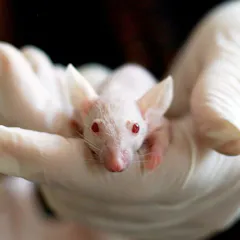
A new research paper reports dangerous side effects in CRISPR-edited mice. Some scientists are pushing back, placing blame for the unwanted mutations on the experiment, not the technique.

How do scientists figure out when evolutionary events – like species splitting away from a common ancestor – happened? It turns out our DNA is a kind of molecular clock, keeping time via genetic changes.
A cryptic part of DNA helps keep a species’ mutations in check until they become useful.
Top contributors
-

Chair, The Conversation Media Group
-
Medical Oncologist and Laboratory Head, WEHI (Walter and Eliza Hall Institute of Medical Research)
-
Chair in Translational Cancer Genomics, Queen's University Belfast
-
PhD Candidate & Research Fellow, University of Tasmania
-
Professor, Central Clinical School, Monash University
-
Professor of Human Genetics, Adelaide University
-
Professor of Biological Sciences, Columbia University
-
Associate professor, University of Sydney
-
Adjunct Professor, Australian Centre for Health Law Research, School of Law, Queensland University of Technology
-
Senior Lecturer in Molecular Biology, Western Sydney University
-
Deputy Director, The Kids Research Institute Australia, Professor of Autism Research, The University of Western Australia
-
Professor of Evolutionary Genetics at The Milner Centre for Evolution, University of Bath
-
Research Assistant Professor in Neuroscience, The University of Western Australia
-
Professor of Oncology, Head of the RMH Familial Cancer Centre and Joint Head, Breast Cancer Laboratory, WEHI (Walter and Eliza Hall Institute of Medical Research)
-
Institute Manager, Órama - Institute for Mental Health and Wellbeing, Flinders University