
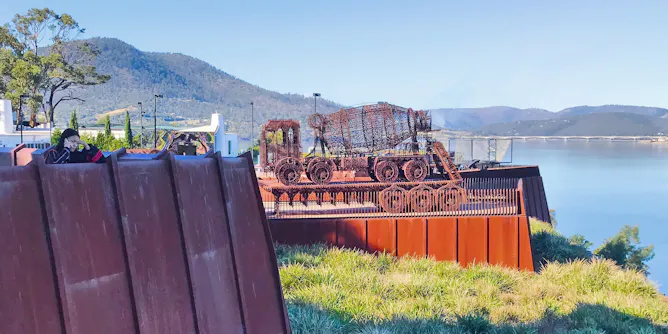
MONA could encourage more low-income visitors by making entry free for all concession card owners.
Articles on Museums
Displaying 201 - 220 of 308 articles
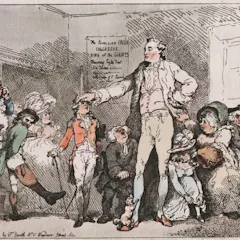
The remains of Irish giant Charles Byrne were stolen 250 years ago then displayed in a museum. Campaigners want them back for proper burial.

Like many Australian museums, collectors for the Queensland Museum played a role in the violent dispossession of First Nations people.
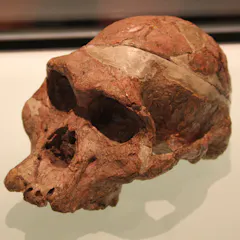
Museums might look dull and old from the outside, but they house a wealth of knowledge that we cannot afford to lose.
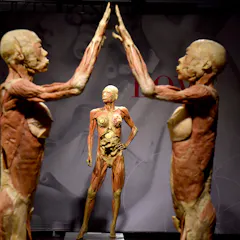
Protesters have urged a boycott of Sydney’s current Real Bodies exhibition, over claims that it could display remains of executed Chinese political prisoners.
Museums in 2018 explore where technology fits in our culture, and examine the relationship between audiences and objects.
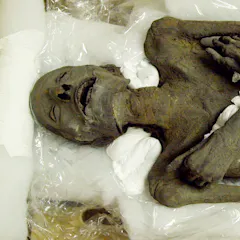
Are DNA samples today’s version of the human skeletons that hung in 20th-century natural history museums? They can provide genetic revelations about our species’ history – but at an ethical price.
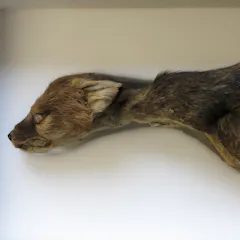
More than 160 thylacine specimens lie in museum collections in the UK. The sight of their bodies is a shocking reminder of loss.
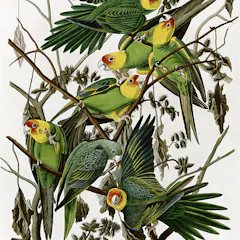
The last Carolina parakeet died in a zoo a century ago. A scientist tries to unravel some of this bird’s lasting mysteries.
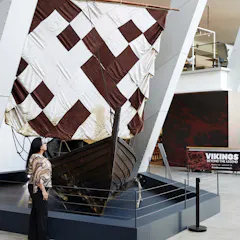
The Vikings have become synonymous with voyages and violence, but a new exhibition at the Melbourne Museum demonstrates their domestic and spiritual side.
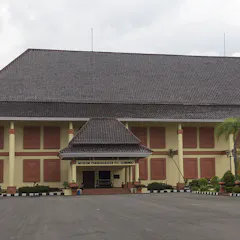
The Indonesian military recently announced that foreign researchers must request a permit to visit the museums it runs.
Museums can help teach immigrants new skills – if they engage them.
Australia’s plan to extend ISP ‘safe harbour’ copyright immunities to cultural institutions avoids more nuanced thinking about the nature and social value of culture, art and education.
Sometimes a work of art is characterized by a string of failures, but nonetheless ends up being a gorgeous freak accident of nature.
Museums are not apolitical, and they are not entirely scientific. As such, they don’t really represent reality.
Responses to the recent discovery of a Nazi swastika raise some awkward questions.
What does society want and need from the arts and humanities?
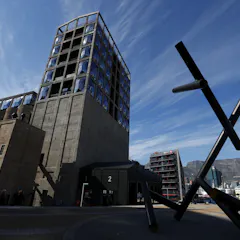
From a heritage perspective, the transformation of Cape Town’s grain elevator into an art museum delivers an innovative and creative solution to retaining and reusing industrial heritage sites.
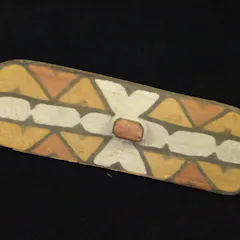
Ochre is more than just paint - it tells stories of culture and trade in Indigenous Australians. Using museum artefacts plus science can track ochre sources and untangle a lost history.
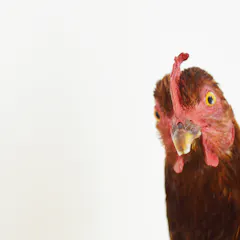
Dogs, rats, cats, cows, chickens and mice have also changed the world.
Top contributors
-

Professor of Public Humanities and Director of the ANU Humanities Research Centre, Australian National University
-
Assistant Director of the University Museum of Zoology, Cambridge, University of Cambridge
-
Ruth Coulter Heede Professor of Art History, Case Western Reserve University
-
Honorary Professor, Edith Cowan University
-
Professeur de Marketing, EDHEC Business School
-
Associate Research Professor of Anthropology, University of Colorado Denver
-
Lecturer, The University of Queensland
-
Associate Professor in Ancient History, Macquarie University
-
Eminent Scholar and Professor of Economics Emeritus, Auburn University
-
Postdoctoral research fellow, RMIT University
-
Director, Centre for Cultural Materials Conservation, The University of Melbourne
-
Lecturer, University of Glasgow; University of Nigeria
-
Lecturer in School of Art History and Art Education, UNSW
-
Senior Lecturer School of Art History and Art Education, UNSW
-
Senior Curator of Australian and First Nations Art, National Gallery of Victoria, The University of Melbourne