
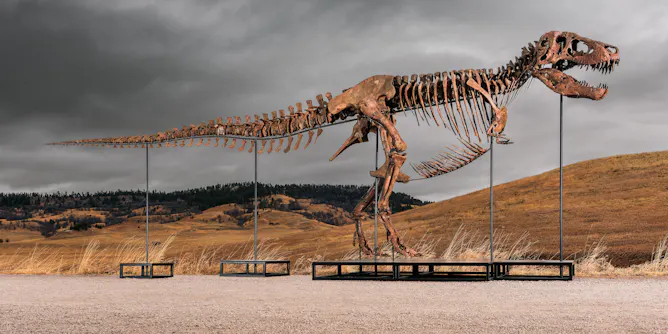
Sold for a record price of more than $50 million, ‘Gus’ was described by Sotheby’s as more than 60% complete.
Articles on Museum collections
Displaying all articles

Digital tools allow archaeologists to identify similarities between fragments and artifacts and potentially recover previously unknown parts of their stories.
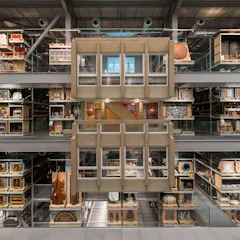
The Storehouse is an access-all-areas experience of the V&A collection, offering a visitors a more intimate experience of artefacts.
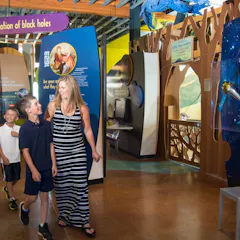
The consequences of shutting down the Institute of Museum and Library Services would be particularly dire for smaller museums and rural museums.

Every field has its own standard for what data gets recorded for specimens archived in a museum collection, which can make research difficult.
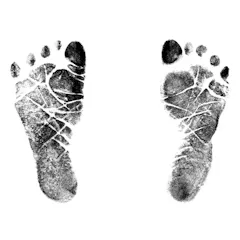
Our new analysis of the skeletal remains and records of babies in a NZ museum collection shows they were largely born to unmarried mothers or lower-class families.

What should our museums collect from the sea of information and imagery to represent how Australians feel about the referendum?
Closing racist exhibitions is a good step, but it doesn’t go far enough to decolonise our museums – an expert explains.

Only half of New Zealand’s roughly 4,000 mollusc species have been seen alive. Now geneticists can decode DNA from shells in museum collections to trace the life histories of extinct or rare species.
Proposed legislation would identify and protect African American cemeteries. But it wouldn’t cover the remains of thousands of Black people in museum collections.
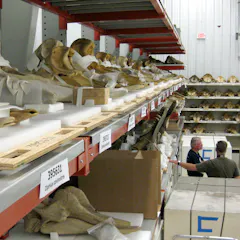
Specimen preservation means researchers don’t need to reinvent the wheel each time they ask a new question, making it critical for the advancement of science. But many specimens are discarded or lost.
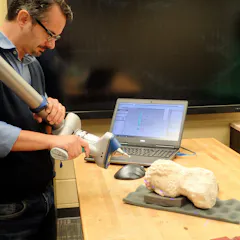
Davide Tanasi, a digital archaeologist, thinks it’s a pity when historical artifacts are locked away in storage. He’s working to fix this by sharing them as 3D models.

Museums’ collections are a priceless resource for scientists, but they’re not easy to access. Digitizing specimens – like the 700 bat skulls the author studied – is a way to let everyone in.
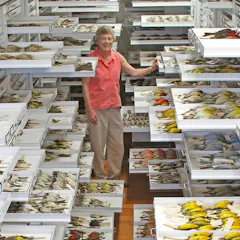
Taxonomists are becoming as rare as some of the species they work on, and this puts museum collections and conservation efforts under threat and increases the risk of biosecurity incursions.

A tiny percentage of museums’ natural history holdings are on display. Very little of these vast archives is digitized and available online. But museums are working to change that.
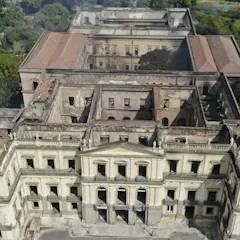
It’s a comforting falsehood that once an artifact joins a museum’s collection, it’s safe for eternity. Museums face many foes in the fight to preserve – a lack of funds might be the biggest.
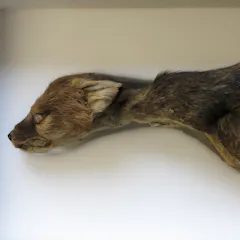
More than 160 thylacine specimens lie in museum collections in the UK. The sight of their bodies is a shocking reminder of loss.
A new website allows you to see what other people search for in the State Library of NSW’s vast collection of artefacts – and discover things you’d never think to look up in the first place.
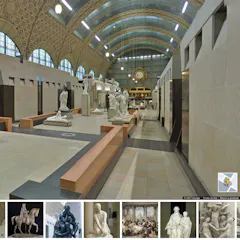
Do you fancy a virtual stroll through the Musee D'Orsay or printing your very own Vermeer? Technology is transforming museums in a myriad of ways.
Top contributors
-

Associate Research Professor of Anthropology, University of Colorado Denver
-
Associate Professor in Ancient DNA, University of Otago
-
Scientific Computing Consultant, University of Minnesota
-
Professor of Paleontology and Director of the University of California Museum of Paleontology, University of California, Berkeley
-
Associate Professor in English, University of Tasmania
-
Professor of Digital Humanities, Department of History, University of South Florida
-
PhD candidate, History, University of Warwick
-
Doctoral Student in Anthropology, American University
-
DeWitt Wallace Professor of Biology and Geology, Macalester College
-
Professor of Public Humanities and Director of the ANU Humanities Research Centre, Australian National University
-
Matthew Flinders Professor, Flinders University
-
Assistant Professor of Ecology & Evolutionary Biology and Assistant Curator of Mammals, University of Kansas
-
Assistant Professor of Biology, University of North Carolina – Greensboro
-
Curator Invertebrates, Museum of New Zealand Te Papa Tongarewa
-
Postdoctoral Fellow in Archaeology, University of California, Los Angeles