
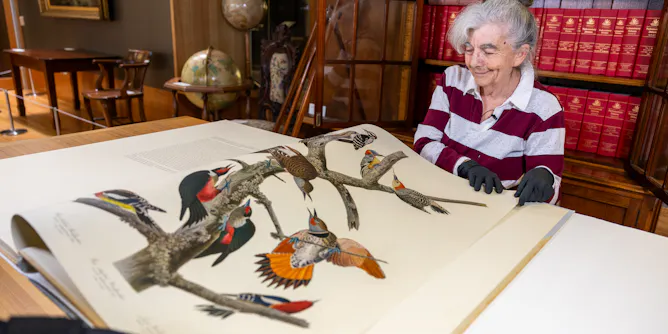
Libraries are turning to social media to connect with their communities – with brilliant, often hilarious results. On the way, they’ve launched some unlikely stars.
Articles on Libraries
Displaying 1 - 20 of 166 articles

The nation’s first successful circulating library was established almost 300 years ago by Benjamin Franklin in Philadelphia.

It’s a library’s duty to balance representing its community with providing a broad range of books – including those that may challenge or discomfort.

On extremely hot days and in the aftermath of storms, people tend to hole up inside. Losing festivals, traditions and gathering places can worsen that loneliness.

Despite dire warnings of a ‘postliterate’ generation, data suggests Gen Z is still reading – just in ways many traditional studies fail to capture.
A distinctly rational, masculine curiosity is at play in David Walsh’s new, private library. And ditching the Dewey system for the digital brings surprises.

If students choose to listen to music while studying, they should consider music that is less distracting – and save high-energy playlists for when they don’t need to focus.

A new database includes more than 850 dissertations and theses, spanning everything from baseball slang and cigarette smoking to postage stamps and ballpark organs.
During and after WWI, thousands of American women acted as mothers for displaced French children. A war studies research fellow weighs in with considerations for teaching this vital, often overlooked part of transatlantic wartime history.
Due to the vagaries of her music manuscripts and the historical neglect of women composers, Bembo and her opera were overlooked for centuries.
‘Diamond open access’ means research is free to read, free to publish. It’s a public good – but it relies on volunteer labour.
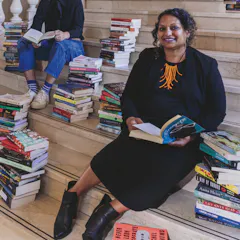
In an extract from The Library That Made Me, novelist Roanna Gonsalves reflects on the aspiration, pleasure and survival of shared knowledge.
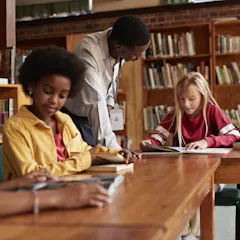
Well-designed school library policies make space for community feedback while preserving intellectual freedom.
‘Green open access’ has existed for decades – and it’s not hard to get academics to use it more.
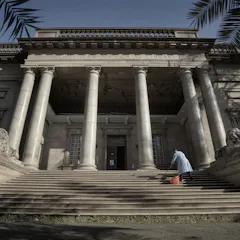
The film suggests that building a library is not merely about a building or books; it is about dialogue and citizenship.
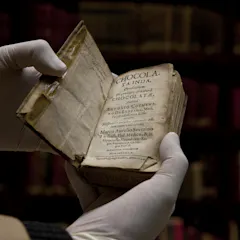
Print books embody culture. We see it in social media trends for annotating books, community publishing and wartime destruction of books spanning the Nazis to Gaza.
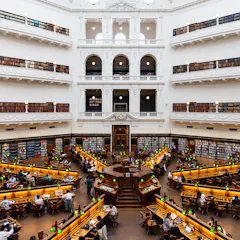
The State Library of Victoria’s ‘major’ proposed cuts include slashing the number of reference librarians and free computers for public access. Some staff are shocked.
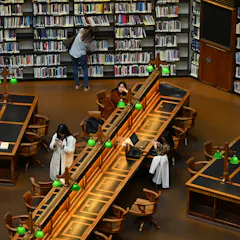
A new report shows that visits to Australian public libraries are up 10% – though funding is down. They provide everything from books and internet to help with CVs.

Maps have always both granted power and threatened it, depending on who controls the data, the scale and the narrative.

Libraries should be an inclusive resource for communities of children with diverse cultural and linguistic backgrounds and learning needs.
Top contributors
-

Deputy University Librarian, University of California, Merced
-
Professor of Information Sciences & Director, Social Change Enabling Impact Platform, RMIT University
-
Research Associate - Creative Industries, Flinders University
-
Adjunct Senior Industry Fellow, School of Global, Urban and Social Studies, RMIT University
-
Slavic Resources Coordinator, and Head, Petro Jacyk Resource Centre, University of Toronto Libraries, University of Toronto
-
Adjunct Professor, College of Arts, Social Sciences and Commerce, La Trobe University
-
Assistant Professor, Harvard University
-
Scholarly Communications Librarian, University of the Witwatersrand
-
Baker Endowed Chair and Professor of Library and Information Science, University of South Carolina
-
Canada 150 Research Chair in Gender and Cultural Informatics, University of Alberta
-
Professor of Print and Digital Cultures, Cardiff University
-
Director of the Centre for Organisational and Social Informatics, Monash University
-
Professor in Politics and Journalism, University of Notre Dame Australia
-
University Librarian and Vice Provost for Digital Scholarship, University of California, Davis
-
Postdoctoral Fellow—Indigenous and Colonial Histories, University of Tasmania