
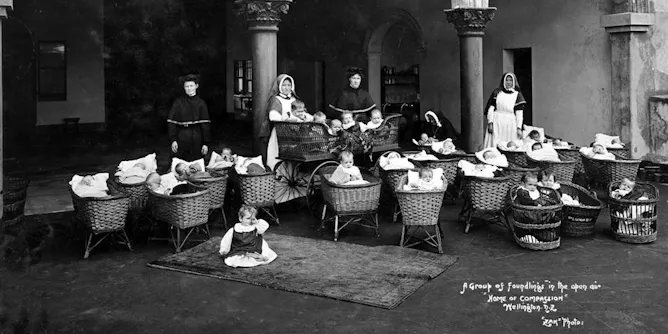
The inequality, stigma and eugenic thinking that led to their acquisition is often obscured or erased.
Articles on Collections
Displaying 1 - 20 of 49 articles

Advances in imaging, text recognition and machine learning are transforming what can be done with collections of plants and fungi in herbaria and museums globally.
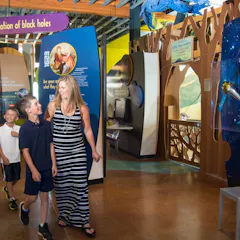
The consequences of shutting down the Institute of Museum and Library Services would be particularly dire for smaller museums and rural museums.
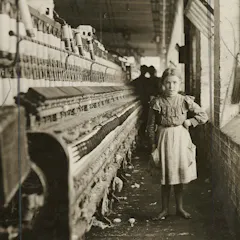
While Lewis Hine’s early-20th century photographs of working children compelled Congress to limit or ban child labor, the US Department of Labor is now under fire for failing to enforce these laws.
Closing racist exhibitions is a good step, but it doesn’t go far enough to decolonise our museums – an expert explains.

In an interview, scholar Alyssa Collins explains how her time spent plumbing the sci fi writer’s papers left her stunned by the breadth of her interests and the depth of her scientific knowledge.
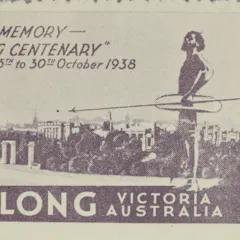
Gwoja Tjungurrayi features on our $2 coin and was the first living Australian to feature on a postage stamp. It turns out he made his stamp debut much earlier.
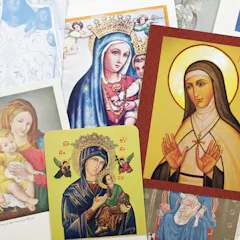
The mass production of religious items such as rosaries and holy cards poses a problem for the curators of religious artifacts at libraries and museums. How do you dispose of unwanted donations?

Cameras played a critical role in the quest for social equality for Black Americans in the post-slavery era.

From fungi and flies to spiders and fish, living collections need care and feeding even when their human keepers are dealing with a pandemic and its resultant social distancing.
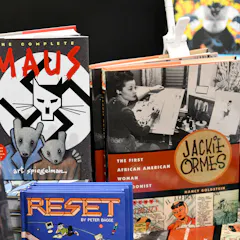
Some graphic novels can spur teens’ engagement with social justice issues.
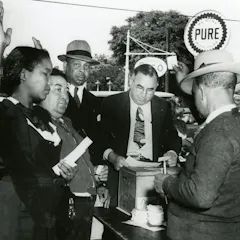
South Carolina’s black community has a long history of fighting for democratic rights.
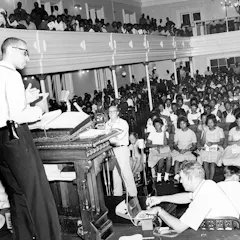
In a sermon two weeks after MLK’s funeral, civil rights leader, Wyatt Tee Walker, urged young seminarians to be hopeful and take action for making change happen. His sermon has valuable lessons today.
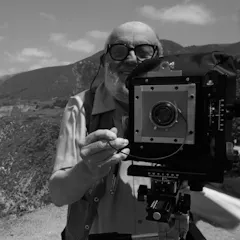
Largely self-taught, Adams learned to harness the communicative power of photography during his years as a marketing photographer.
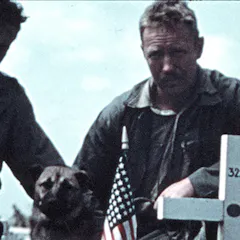
Films of the battle for Iwo Jima, being digitized 75 years after they were made, offer connections and lessons for Americans of today.
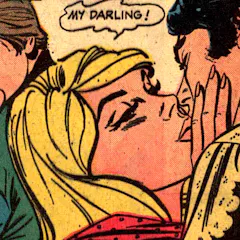
During the ‘love glut,’ roughly 1 in 5 of all comic books were romance comics, as publishers scrambled to appease readers’ appetites for scandalous storylines.

A new look at detailed data about Civil War skirmishes along the Mississippi River reveals another key to the Union’s victory.
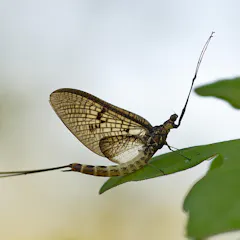
Mayflies and stone flies are extremely vulnerable to water pollution, which has implications for the larger food chain.

Centuries’ worth of important information is stored on paper – which can decay, burn or get eaten by pests. Peek inside the process of making all that data digital.
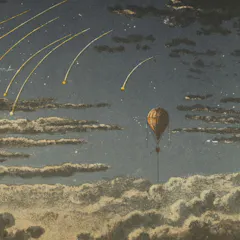
Not so long ago, people had no idea what would happen to them – and what they would see – once they ascended into the clouds.
Top contributors
-

Professor of History, Vanderbilt University
-
Scientific Computing Consultant, University of Minnesota
-
Professor of History, Rochester Institute of Technology
-
Associate Professor of Media and Communication, Temple University
-
Professor of History, Vanderbilt University
-
Associate Professor of American Studies, Dickinson College
-
PhD in Early Modern Literature, University of California, Davis
-
Postdoctoral Fellow in History, Vanderbilt University
-
William A. Kern Professor in Communications, Rochester Institute of Technology
-
Assistant Professor of Photojournalism and Visual Storytelling, Rochester Institute of Technology
-
Associate Professor of Interdisciplinary Studies, University of Nevada, Las Vegas
-
Professor of Paleontology and Director of the University of California Museum of Paleontology, University of California, Berkeley
-
Emerita Professor of Religious Studies, San Diego State University
-
Senior Wicklander Fellow at the Insitute for Business and Professional Ethics, DePaul University
-
Manager of Traveling Exhibitions at the Kinsey Institute, Indiana University