

Smallpox DNA from two people buried in Chile reveals the virus’s arrival through European colonisation – but recreating it would require deliberate laboratory work.
Articles on Mummies
Displaying all articles
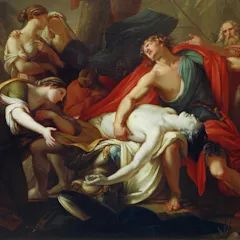
The fragment wasn’t placed besides the body, but stuffed inside it.
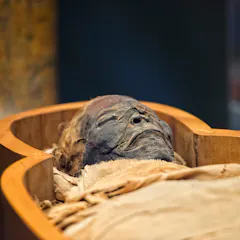
When medicine turned to the dead for cures.

Around the world, museums are grappling with the question of what to do with human remains. This includes lifelike copies of those who may have died traumatically.
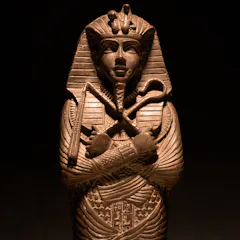
Welcome to ‘sensory heritage’, the study of how we engage with objects from the past besides what they look like.
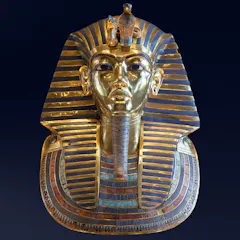
Tutankhamun’s resting place in the Valley of the Kings is relatively small. This has led to speculation that it was originally meant for a noble, queen or a princess.
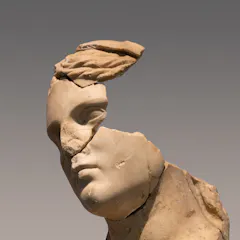
Was Aristotle bald, or did he have plenty of hair? Modern tech makes photo-realistic depictions of ancient figures a breeze, but they may not be exact.

Beyond the tombs and riches, life in ancient Egypt wasn’t so luxurious, after all.
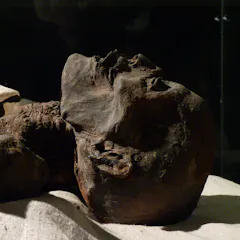
From unwrapping parties to grinding-up mummies to make medicine, Europe has a long and strange relationship with Ancient Egyptian remains.

The movies make it seem like someday we’ll be able to make people and objects grow really big or shrink really small. Whether this will be possible comes down to the smallest of things.
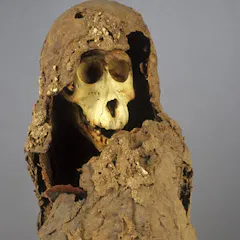
The DNA of microbes and food trapped in the teeth can reveal information about diet and health.
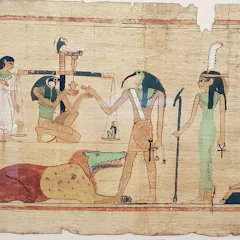
An estimated 1.75 million ibises were deposited at a single location in ancient Egypt. But the birds disappeared entirely from the region around 1850, and no one knows why.
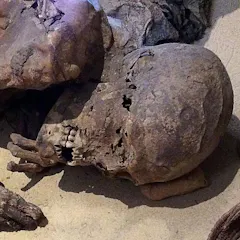
A body in an Italian museum reveals that Egyptians living 1,500 or more years before the Pharaohs already knew how to preserve bodies.
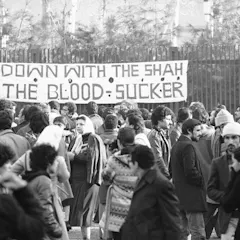
A mummy unearthed during construction in Iran may be the body of a former shah. For the Islamic regime, the discovery is an unwelcome reminder of Iran’s secular past. For protesters, it holds promise.
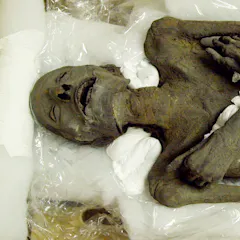
Are DNA samples today’s version of the human skeletons that hung in 20th-century natural history museums? They can provide genetic revelations about our species’ history – but at an ethical price.
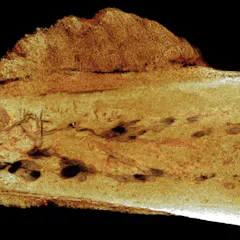
Cancer is not the modern disease many believe it to be. New fossil evidence from two South African caves suggests that its origins lie deep in prehistory.
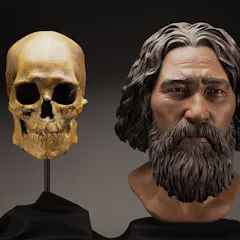
A 9,000-year-old skeleton became a high-profile and highly contested case for the Native American Graves Protection and Repatriation Act. How do we respectfully deal with ancient human remains?
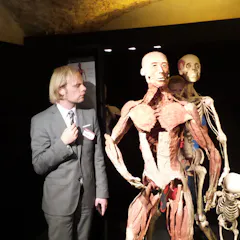
You don’t have to be a physician or anatomist to be curious about how bodies work. Exhibits of dead human specimens have been around for quite a while – capitalizing on our fascination with death.
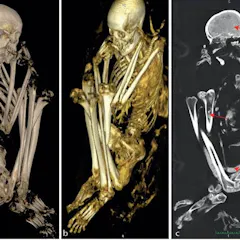
Modern techniques such as CT scanning and ancient DNA analysis have allowed scientists to discover a great deal about a mummy found in a shallow grave in Botswana.
Top contributors
-

Professor of History, UMass Amherst
-
PhD Candidate in Anatomical Sciences, University of the Witwatersrand
-
Professor; Head of the School of Anatomical Sciences, University of the Witwatersrand
-
Professor of History and Jewish Studies, Vanderbilt University
-
Research Fellow in Ancient History, Macquarie University
-
Associate Professor of Osteoarchaeology, Uppsala University
-
Senior research fellow, Queensland University of Technology
-
Senior Lecturer in Microbiology, Western Sydney University
-
Associate Research Professor of Anthropology, University of Colorado Denver
-
Professor of Evolutionary Biology, Griffith University
-
Associate Professor of Physics, University at Buffalo
-
Associate professor, University of Rome Tor Vergata
-
Professor in Pathways Education, University of Southern Queensland
-
Lecturer in Classics and Ancient History, The University of Western Australia
-
PhD Candidate, Anthropology and Archaeology, University of Bristol