

Many migrant parents are hesitant to pass their language accent onto their children. They fear this may lead them to experience discrimination. But speaking two languages has many advantages.
Articles on Multilingualism
Displaying 41 - 60 of 77 articles

Researchers have been calling for the extension of mother-tongue instruction beyond the current status quo in South African schools, but parents seem to prefer an even earlier transition to English.

Police officers are also not, and are not expected to be, sworn translators or interpreters. This has serious implications for justice.

Why the lives of bilingual dementia patients can be transformed by finding carers who speak their native language.

The South African Broadcasting Corporation, like South Africa itself, is a symbol of contradictions. While there are bad people who work for it, there are also many good ones.

Vocation specific language courses can encourage both linguistic and cultural awareness. They can equip students with the basics they need to communicate.
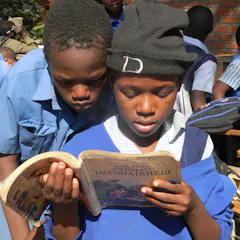
The International Year of Indigenous Languages serves as a good impetus to start implementing policies that prioritises Africa’s own languages.

Vulnerable groups are being excluded from society due to their lack of ability to speak national languages.
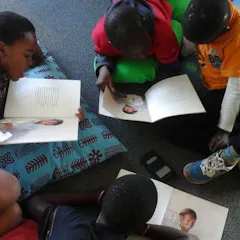
Reading involves more than decoding letter-sound relationships and making meaning from isolated texts.

Languages are said to be disappearing faster than endangered species with a different one dying every two weeks.

Why do some words sound pleasant to us, while others provoke disgust? Learning a new language can help us find out.

The international aid sector’s use of languages needs to change if it is serious about dealing with the issues raised by recent scandals.

Despite reports that multilingual students’ academic progress has ‘stalled,’ researchers find new reasons to be optimistic about how they are faring in US schools.

One of South Africa’s finest hip-hop crews message was that you couldn’t box identities forged through multilingual living in the ghettos.

It would diminsh the value of Britain’s multilingualism, promote a monolingual ideology and discriminate against speakers of other languages.

Africa’s current situation has a parallel in European history - the Reformation and the changes it wrought in terms of language exceptionalism.

South Africa must be seen as a country for speakers of all its official languages rather than an English-only elite.

Africa needs a new strategy for mother-tongue based bilingual education, from primary through to tertiary level.

The combination of knowledge and communication, along with a few other fundamental conditions such as liberty and respect , leads to social, cultural and technological development.

Raising the status of the African languages to that of official languages in South Africa post-1994 led to an explosion of translation and interpreting work in local and foreign languages.
Top contributors
-

Professor of African Language Studies, University of the Western Cape
-
Postdoctoral research fellow (Forensic Linguistics/ Language and Law), University of the Western Cape
-
Emeritus Professor of African Linguistics, University of Leipzig
-
Professor in Language Education, member bua-lit collective, University of Cape Town
-
PhD student, Developmental Psychology and Education, University of Toronto
-
Professor Emerita, Department of Teaching and Learning, Stockholm University
-
Professor of Linguistics, University of York
-
Lecturer, Department of African Languages, Makerere University
-
Lecturer in African Languages, Makerere University
-
Senior Lecturer in Linguistics, University of the Western Cape
-
Dean: Faculty of Arts and Humanities, University of the Western Cape
-
Associate Professor, Applied Psychology and Human Development, University of Toronto
-
Senior Lecturer, Applied Language and Literacy Studies, University of Cape Town
-
Senior Lecturer in the School of Languages and Applied Linguistics, The Open University
-
Postdoctoral Research Assistant in Modern Languages, University of Reading