
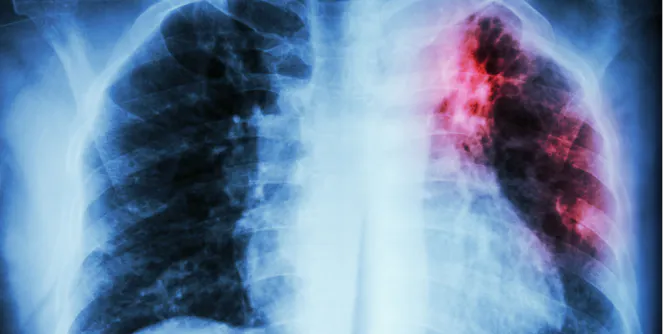
People have been battling tuberculosis for thousands of years, and drug-resistant strains are on the rise. Analyzing large datasets with AI can help humanity gain a crucial edge over the disease.
Articles on Multidrug-resistant tuberculosis
Displaying all articles

There are several reasons that TB patients don’t or can’t adhere to their treatment.

Washing hands and coughing into your elbow can help limit the spread of infectious diseases on planes and around the globe. So why don’t passengers read about this in their inflight magazines?
The push to end TB requires significant investment into the research and development of new diagnostics and treatments.

About three million people globally are ‘missed’ each year for Tuberculosis diagnosis. Many of them will die, some will get better, others will continue to infect others.

Advanced lab tests have entered the market to improve tuberculosis diagnosis. This will ensure prompt and correct treatment in managing the disease.

To tackle TB a dynamic change in discourse is needed. The focus must be on how to respond to emerging complexities the disease presents.

We used to think that antibiotic resistance came at a cost for bacteria, making them weaker. It turns out that for some bacteria, resistance can make them stronger and more virulent.

The federal government’s recent White Paper on developing northern Australia has disturbing echoes of the 1890s, a time when unbridled capitalism and indentured labour developed the North.
Tuberculosis, or consumption as it used to be known, sounds like a disease that we’ve managed to fight off for good. But a drug-resistant strain of the bacteria that causes it is making a comeback, and…
Top contributors
-

Assistant Professor of Medicine, Harvard University
-
Professor; Director Sydney ID, University of Sydney
-
Lecturer, Centre for Advancing Journalism, The University of Melbourne
-
Head of the Division of Pulmonology, University of Cape Town
-
Professor of Medicine (Microbiology and Immunobiology), Harvard University
-
Associate Professor and Chief Health Officer - COVID and Health Emergencies, Burnet Institute
-
Associate Professor, Melbourne Health
-
Senior lecturer, University of the Western Cape
-
Associate Professor of Biomedical Engineering, University of Michigan
-
Postdoctoral research fellow, University of Sydney
-
Associate Professor Department of Pathology, Aga Khan University
-
Clinical Chair and Professor of Infection Prevention and Disease Control at the University of Sydney, University of Sydney
-
Janet Dora Hine Professor, University of Sydney
-
Public Health Specialist, Senior Research Scientist, Kenya Medical Research Institute
-
Faculty Member, Africa Health Research Institute; Associate professor, UCL