
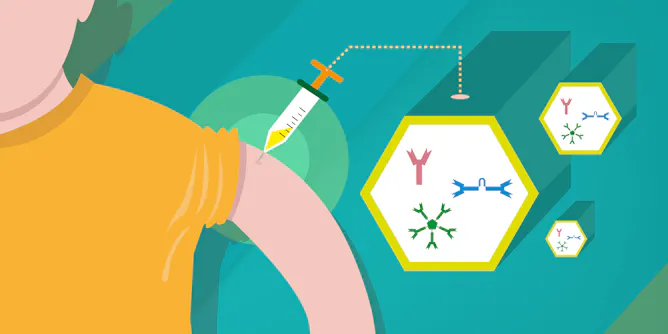
Our immune system protects us but when it comes to some mosquito-borne disease, it can work against us. What are the implications for the development of a Zika virus vaccine?
Articles on Mosquito-borne diseases
Displaying 41 - 60 of 80 articles

It’s hard to contain a mosquito-borne infection like Zika when the conditions are ideal for it to spread.
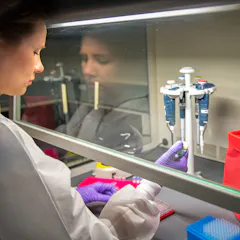
A computer model suggests that while more cases of Zika can be expected in the continental U.S. outbreaks will probably be small and are not projected to spread.
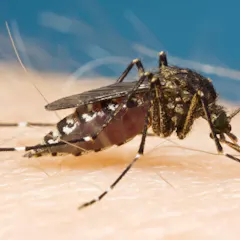
A rise in cases of the mysterious “Bairnsdale ulcer” in coastal Victoria has health authorities on alert and scientists investigating the role of mosquitoes in the spread.
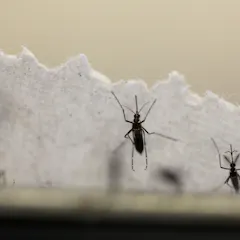
While no one likes getting bitten by mosquitoes, you might be surprised (and even a little fascinated) at the complex adaptions mosquitoes have developed to locate their favorite food sources.

How do we convince people that spreading Wolbachia-infected mosquitoes can eliminate dengue when they have long came to understand that mosquitoes transmit dengue?
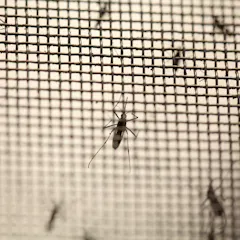
Innovations targeted at mosquito control are good but should not draw focus away from the tried and tested public health measures to control mosquito-borne diseases.
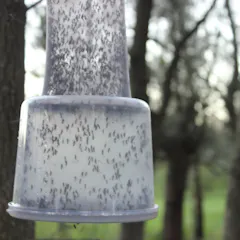
A war is raging in your backyard between the “good” and “bad” mosquitoes.
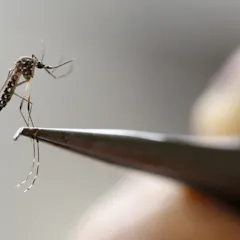
Look beyond transgenic techniques that add new genes to a species. People have used selective breeding techniques to change plants and animals for millennia – why not try them on mosquitoes?
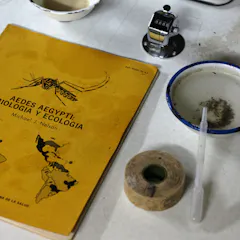
Aedes aegypti is adapted to live in close proximity with humans, and this close association likely contributes to the severity of the Zika outbreak.
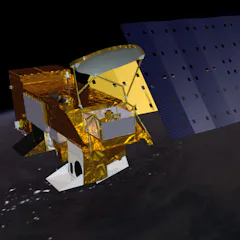
Satellite imaging can locate mosquito-friendly environments, allowing us to predict the advance of diseases they carry.
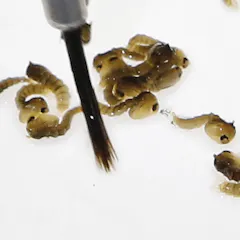
Insecticides and mosquito nets only get you so far. Synthetic biologists are ready to take the battle against mosquito-borne disease to the level of DNA – which might spell the insects’ ultimate doom.

Models based on where the mosquitoes that transmit Zika are found and human travel patterns to and from infected areas are key to predicting where the virus will spread.
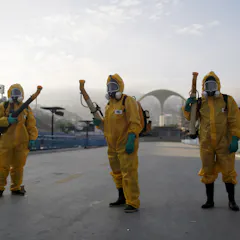
Zika was discovered almost 70 years ago, but wasn’t associated with outbreaks until 2007. So how did this formerly obscure virus wind up causing so much trouble in Brazil?
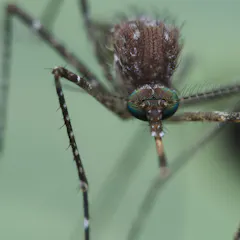
There’s something about mosquitoes that means they don’t get sick from the infections they carry. So can we turn that function off, genetically?

New genetic technology could change the DNA of entire species to prevent them from spreading diseases.
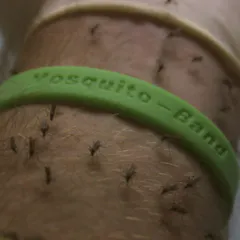
While slipping on a wrist band or sticking on a patch may be an attractive alternative, they’re unlikely to provide any substantial protection from biting mosquitoes.
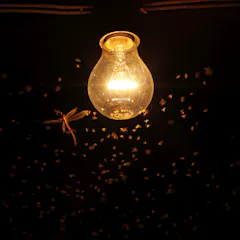
Solar is a vital piece of the energy puzzle for Africa, but there is an insect problem that comes with the light from solar.
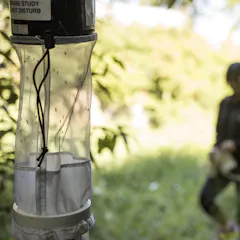
We monitor mosquitoes to help predict and control virus outbreaks. And a new technique for collecting mosquito saliva from the field has made the process both more sensitive and inexpensive.
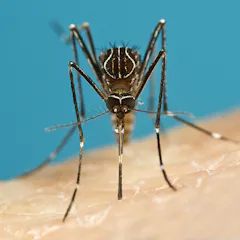
Could climate change cause mosquito-borne diseases to spread? While this an extremely important health question, the answer is far from simple.
Top contributors
-

Clinical Associate Professor, School of Medical Science & Sydney Infectious Diseases Institute; Principal Hospital Scientist, University of Sydney
-
Medical Entomologist at the School of Biological Sciences, University of Nairobi
-
Medical Entomologist, The University of Queensland
-
Professorial Research Fellow, James Cook University
-
Senior Lecturer in Parasite Epidemiology, School of Natural and Environmental Sciences, Newcastle University
-
Lecturer (University of Tasmania), University of Tasmania
-
Clinical Research Fellow, Liverpool School of Tropical Medicine
-
Professor of Advanced Technology Transitions, Arizona State University
-
Research Associate, focus on health rights, laws and policies, Simon Fraser University
-
Professor of Medicinal Chemistry, University of Dundee
-
Director Biosecurity Flagship, CSIRO
-
Sternberg Family Distinguished University Professor, Northeastern University
-
Associate Professor of Human Rights, University of Winnipeg
-
Associate Professor, Ecology, Northumbria University, Newcastle
-
Professor of Philosophy and Integrative Biology, The University of Texas at Austin