
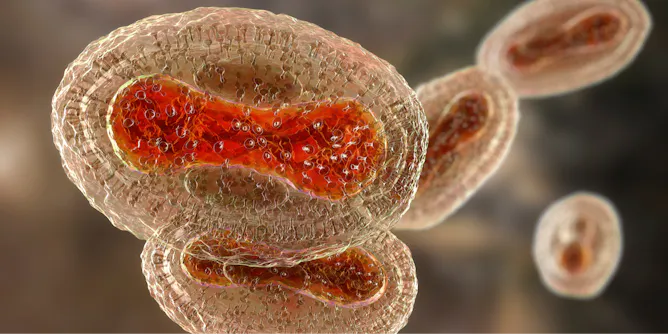
For the majority of the population, the risk appears to be very low. And for the higher-risk groups, we should be able to manage any outbreaks.
Articles on Monkeypox vaccine
Displaying all articles
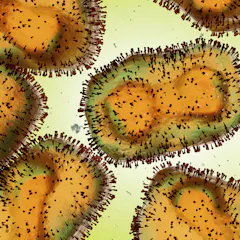
The last significant outbreak happened in 2022.
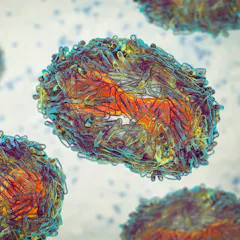
Sexual transmission was suspected in around 90% of transgender women patients but only in 61% of cisgender women and non-binary patients.
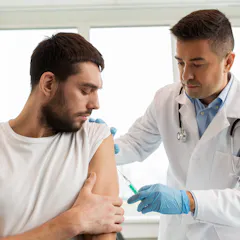
Public health measures have played a big role in curbing the current outbreak.
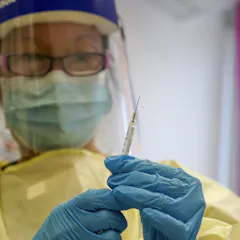
The hoarding of the COVID-19 vaccine by wealthy nations led to global calls for vaccine equity. Unless wealthy nations commit to change, the monkeypox vaccine rollout could meet a similar fate.

Engaging in open and honest dialogue with the public to increase understanding of health inequities has never been more important.
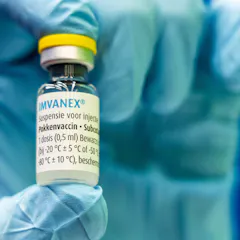
Countries have to weigh up the cost of vaccinating everybody versus the cost of treating the disease.
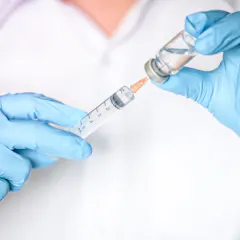
Chronic weaknesses in our global vaccine manufacturing and distribution systems may broadly be to blame.
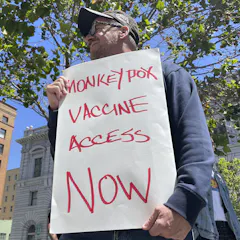
Some of the sexual moralising we saw with HIV is still with us. That makes it harder for men who have sex with men to come forward for vaccines and testing.

The right public health measures can be very effective at curbing the virus’s spread – if executed properly.
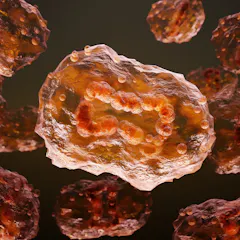
Declaring monkeypox a national health emergency will allow the U.S. government to direct resources and funds where needed to help slow the spread of the virus.
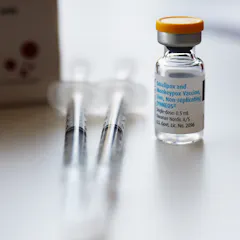
There are two approved monkeypox vaccines in the US. Both use a related poxvirus called vaccinia to produce an immune response that protects against smallpox and monkeypox.
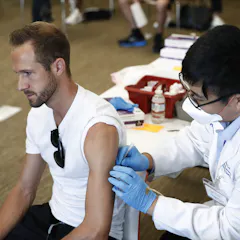
The third-generation vaccine has fewer potential side effects than second-generation vaccines and can be safely given to people with weakened immune systems.
Top contributors
-

Professor of Global Biosecurity, NHMRC L3 Research Fellow, Head, Biosecurity Program, Kirby Institute, UNSW
-
Professor of Public Health, University of Sheffield
-
Associate Professor of Biology, Rochester Institute of Technology
-
Professor of Infection and Inequities, Centre for Immunobiology, Blizard Institute, Faculty of Medicine and Dentistry, Queen Mary University of London
-
Professor of Health Studies, University of Richmond
-
Professor of Public Health, La Trobe University
-
Principal Research Fellow, Australian Research Centre in Sex, Health and Society, La Trobe University
-
Director, Biopharming Research Unit; and Member, Institute of infectious Disease and Molecular Medicine, University of Cape Town
-
Professor in Vaccinology, Institute of Infectious Disease and Molecular Medicine, University of Cape Town
-
Research Group Lead, LGBTQ+ Population Health Research Group, and Senior Research Fellow, HIV Epidemiology and Prevention Program, Kirby Institute, Faculty of Medicine and Health, UNSW
-
Nipah virus programme manager, Birmingham City University
-
Associate Professor in Biomedical Technology, University of Southampton
-
Professor and Program Head, HIV Epidemiology and Prevention Program, Kirby Institute, UNSW
-
Assistant Professor in Health Sciences, Simon Fraser University
-
Professor of Biostatistics and Epidemiology, Adelaide University