

Neuroscientist Karl Friston claims generative modelling techniques produce more valid predictions than conventional models, but the evidence so far is limited.
Articles on Modelling
Displaying 41 - 60 of 76 articles

An easy question, but a difficult answer.
National models on the spread of COVID-19 have helped us through this crisis. But we’ll need local models to get us through the next stage.

The science to policy process that was developed to guide climate mitigation decisions can be applied to the response to the COVID-19 pandemic, without having to be reinvented.

One practical exit strategy from lockdown would be identifying green zones, and progressively joining them together once it is safe to do so.

Policy-makers at various levels of government rely on models and simulations to make predictions about controlling the spread of COVID-19.
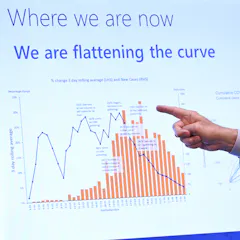
Scientific models can help us understand the important features of complex systems, but they need good data.
Study raises hopes that we may be closer to herd immunity than previously thought.

Models can predict the risk and spread of diseases and establish the time and place to implement optimal prevention and control mechanisms.

Predicting how a virus will spread — and its effects — relies on mathematically sound and accurate models that account for factors like weather patterns and human behaviour.
Strict quarantine measures have been shown to be more effective in reducing the spread of COVID-19 than closing schools.
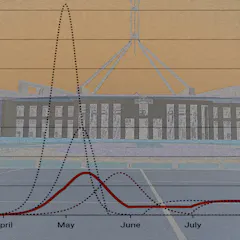
Should we close schools and workplaces now, or steadily introduce stricter social distancing measures over time? These mathematical models evaluate different approaches of flattening the curve.
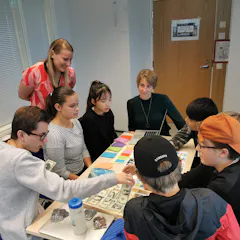
My year of buying almost nothing saved me thousands of dollars – but also taught me valuable lessons as a teacher, including about the benefits of failure.
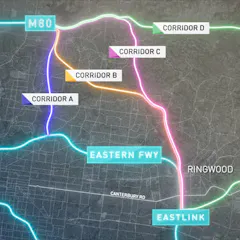
Transport modelling has been tarnished by its use to justify the predetermined projects politicians favour. But, if used more transparently, it’s a valuable tool for planning our future cities.

We used game theory to show you only need a small amount of fake news to disrupt any group discussion. But we also found a way you can fight back.
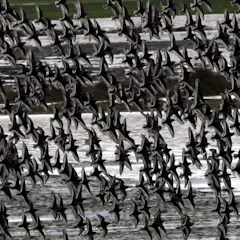
By identifying and applying the key rules governing the behaviour of each individual, agent-based modelling offers insights into complex phenomena like traffic jams and flocking.

From predicting suicide risk to chatbot therapy, artificial intelligence is all the rage in suicide prevention. The question is, can it really work?
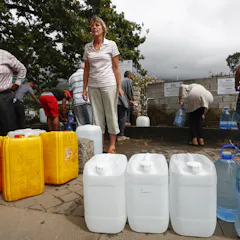
There are measures in place to manage Day Zero and beyond. Models show that these will not work.

All earthly and celestial things emit signals. The science of signal processing, born in the 19th Century and now greatly advanced thanks to computers, allows us to better understand them.
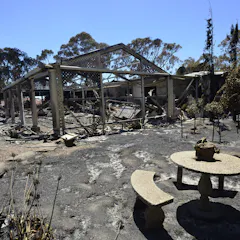
What decisions can we make today to reduce the future risk of hazards like floods and fire? Particularly in a time of climate change, modelling various plausible futures helps us plan for uncertainty.
Top contributors
-

Lecturer in Probability and Statistics and Senior Research Fellow in Infectious Disease Modelling, University of Oxford
-
Professor, Systems and Computer Engineering, Carleton University
-
Deputy Director (Programs), Burnet Institute
-
Head of School of Population Health and Professor, Infectious Diseases Dynamics and Interventions, UNSW
-
Honorary Enterprise Professor, School of Population and Global Health, and Department of General Practice and Primary Care, The University of Melbourne
-
Professor of Infectious Disease and Epidemiology, James Cook University
-
Professor of Biostatistics and Epidemiology, Adelaide University
-
Head of Modelling and Biostatistics, Burnet Institute
-
Professor of Civil and Environmental Engineering, Adelaide University
-
Associate Professor of Human Dimensions of Natural Resources, Colorado State University
-
Research Fellow, School of Civil, Environmental and Mining Engineering, Adelaide University
-
Chief Executive Officer, Monash University
-
Senior Lecturer in Applied Mathematics, Queensland University of Technology
-
Professor of Mathematics, Heriot-Watt University
-
Adjunct professor, UNSW