
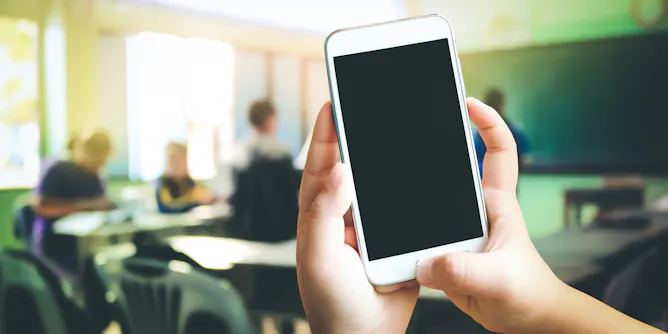
The Education Minister Dan Tehan has said research shows mobile phone bans have a positive effect on academic performance. But this is not necessarily true.
Articles on Mobile phones
Displaying 61 - 80 of 260 articles

Companies can’t verify that their source didn’t involve artisanal mining. A discussion over responsible sourcing strategies and practices is needed.
A professor of wireless communications explains the origins of cellular networks and how they evolved into today’s 5G networks.

COVID has shown us how powerful educational uses of digital technology can be informal, impromptu and conducted on the fly.

Auctions theory first revolutionised the sale of the mobile phone spectrum; now it is doing the same for the carbon market.

The upcoming Galaxy Z Fold 2 is almost three-quarters screen. And while that’s convenient, it’s important to actually be able to hold the phone. As design evolves, how do manufacturers adapt?
Sanctions against Huawei by the US Commerce department have been followed by other countries. How can the company’s business thrive with so few avenues left?

The government claims the bill is needed to make detention centres safer. But it would strip away a vital lifeline for people already 200 times more likely to self-harm than the Australian community.
Mobile devices can be turned into tools to rapidly identify a variety of disease-causing agents, including bacteria, toxins and viruses.

Nigeria must give more attention to teaching of digital skills and issues surrounding digital life as digital technologies have come to stay.
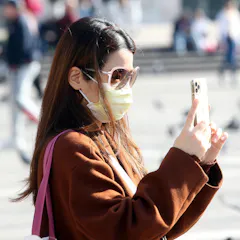
By tracing the location of millions of devices, Google has mapped the pandemic response at a scale never seen before.
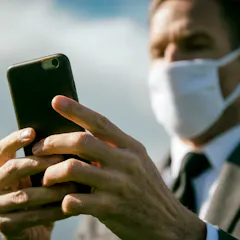
At least two thirds of mobile phones are contaminated with bacteria or viruses, but most people never clean them.
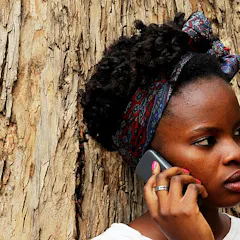
Phones sometimes serve as a ‘digital leash’ to check women’s whereabouts - a growing feature of many relationships and conflicts.
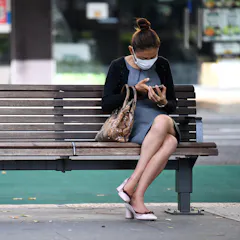
Our mobile phone’s location data could be a valuable tool to help track and trace the spread of the coronavirus outbreak. The government has the legal power to do it, given what’s at stake.

Parents shouldn’t fear putting tech under the tree. In fact, it could bring families closer together.
Data protection policies focus on human rights. But the exercise of our free will is increasingly being hindered.

Trials of the program found about 5% of offending drivers used their mobile phone with both hands, while the vehicle was moving.
But out-of-date kit, lack of access to digital technologies and expensive mobile broadband packages can all act as barriers to being able to operate successfully in the digital world.
Should we be concerned about the health effects of 5G? The short answer is no – there’s no substantiated evidence that the electromagnetic energy used by mobile telecommunications causes harm.
Banning mobile phones in school may seem sensible, but research and similar moves elsewhere suggest a blanket ban may introduce some problems.
Top contributors
-

Associate Professor, School of Engineering, RMIT University
-
Professor of Strategy, Frankfurt School of Finance and Management
-
Professor, Computer Networking and Telecommunications, University of Salford
-
Senior Lecturer in Networking, The Open University
-
Professor of Health Psychology, University of Wollongong
-
Associate Professor in Telecommunications Engineering, Swinburne University of Technology
-
Emeritus Professor in Public Health, University of Sydney
-
Associate Professor, Informatics and Operations, Kingston University
-
Director of UWA Centre for Software Practice, The University of Western Australia
-
Researcher, Digital Wellbeing, Western Sydney University
-
Director Radiation Research and Advice, Australian Radiation Protection and Nuclear Safety Agency (ARPANSA), and Adjunct Associate Professor, University of Wollongong
-
Senior Research Fellow, Department of Anthropology, Durham University
-
Professor of Applied Cognitive Psychology, The Open University
-
Professor of Organisational Behaviour, Bayes Business School, City St George's, University of London
-
Assistant Professor of Psychology, Georgetown University