

Backpacking is growing and West African countries such as Ghana need to actively attract them.
Articles on Mobile phones
Displaying 81 - 100 of 260 articles

In sub-Saharan Africa there are more people with mobile phones than access to electricity, and their data could be useful.

Pagers may be old school, but they have many advantages over mobile phones.

Every device that you use, every company you do business with, every online account you create – they all collect data about you and analyze it to figure out minute details of your life.

Philip Pullman can help us understand what smartphones are doing to people – here’s how.

Phones’ functions go far beyond making calls these days. Here’s the basics on why you can use some features and not others – and why planes may someday soon be filled with passengers yakking on phones.
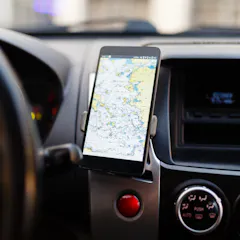
Without their devices, regular GPS users take longer to negotiate a route, travel more slowly and make larger navigational errors.
5G is similar to existing mobile networks, but with key differences in hardware and software. And we still need to work out who will build this infrastructure in Australia.

SIM cards link accounts to handsets. They keep communications private. They store messages. Although small and simple, they are a big part of modern mobile phone systems.

New tools to help people use their smartphones in less detrimental ways are a good start, but could be even better at protecting users’ well-being.
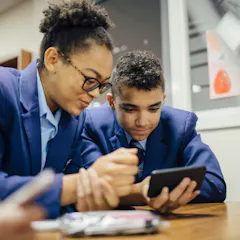
Four out of five experts say we shouldn’t ban mobile phones in classrooms.

People’s most private information isn’t on paper locked in desks anymore – it’s online, stored on corporate servers. The Supreme Court now says some privacy protections cover that data.

Smart phones are educational – and a big part of students’ futures.

E-commerce companies should deliberately build systems that are structured to provide supportive business environments for small and medium enterprises.

Paradoxically, people who know the real causes of cancer are also the most likely to believe in mythical causes of it.
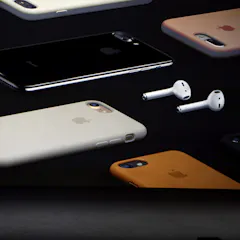
New research shows the impact of technology, especially smartphones, on carbon emissions. Encouraging consumers to get new phones every couple of years leads to extraordinary and unnecessary waste.

The most sustainable phone is the one you already own. But if you’re in the market for a new handset, consider choosing one with replaceable parts to avoid having to replace the whole thing again.

Rather than telling young people not to sext, we should encourage them to think about sexting as part of a broader negotiation of intimate relationships.

It’s a big issue for users and the industry.

The extent to which mobile phones can support and sustain real improvement in young lives is depressingly finite unless significant interventions occur.
Top contributors
-

Associate Professor, School of Engineering, RMIT University
-
Professor of Strategy, Frankfurt School of Finance and Management
-
Professor, Computer Networking and Telecommunications, University of Salford
-
Senior Lecturer in Networking, The Open University
-
Professor of Health Psychology, University of Wollongong
-
Associate Professor in Telecommunications Engineering, Swinburne University of Technology
-
Emeritus Professor in Public Health, University of Sydney
-
Associate Professor, Informatics and Operations, Kingston University
-
Director of UWA Centre for Software Practice, The University of Western Australia
-
Researcher, Digital Wellbeing, Western Sydney University
-
Director Radiation Research and Advice, Australian Radiation Protection and Nuclear Safety Agency (ARPANSA), and Adjunct Associate Professor, University of Wollongong
-
Senior Research Fellow, Department of Anthropology, Durham University
-
Professor of Applied Cognitive Psychology, The Open University
-
Professor of Organisational Behaviour, Bayes Business School, City St George's, University of London
-
Assistant Professor of Psychology, Georgetown University