
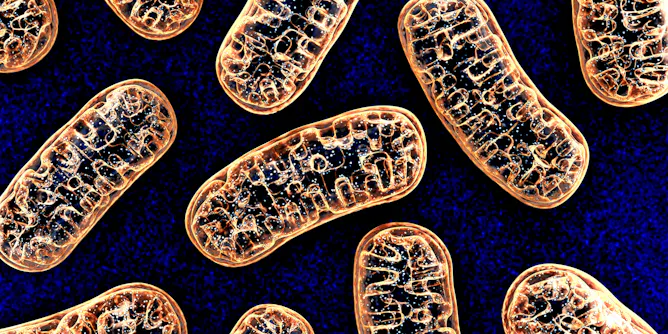
We previously thought mitochondrial DNA could only be passed on by mothers.
Articles on Mitochondria
Displaying 21 - 34 of 34 articles
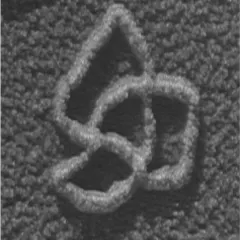
Mathematical models can describe the many shapes of DNA, as well as cellular processes like DNA replication.
The concept of three-parent babies defies what we learned in health class. But how and when is the third parent involved? At what stage? Jennifer Barfield gives us an update on the birds and the bees.

The genes in our cells’ mitochondria are passed on in a different way than the vast majority of our DNA. New studies shed light on how the unique process isn’t derailed by mutations.

Star Wars: The Last Jedi leaves many questions about the saga in a galaxy far, far away unanswered. Fortunately, biology may offer a insights on the Force, midi-chlorians, clones, and Rey’s lineage.

An ancient sexual conflict over mitochondrial inheritance may be responsible for the evolution of the two sexes as we know them.
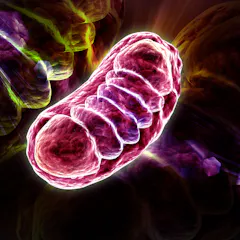
To explain why we have a mitochondria, we have to go back about two billion years to a time when none of the complexity of life as we see it today existed.
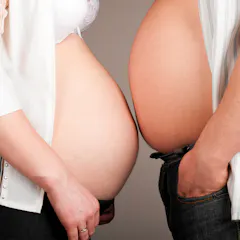
If you’re planning to become a parent, better lifestyle habits can reduce the risk of obesity in your children.

It’s a landmark case but there are many unknowns.

Scientists thought they were closing in on one great new treatment but may have found another instead.

Human population groups worldwide are highly homogeneous genetically. They are in fact 99.5% similar and their anatomical features vary in an uncorrelated fashion over the landscape.

There are solar-power sea slugs, so why haven’t humans mastered the art of photosynthesis?

How many times do people make the comment about which parent a child takes after. So what does genetics say?
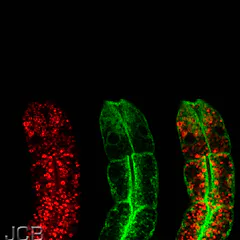
The complexity in biology is astounding. That is why biologists are thankful that model organisms, like the roundworm Caenorhabditis elegans, can be used to breakdown biological processes into simpler…
Top contributors
-

Associate Professor of Gastroenterology, School of Medicine, University of Washington
-
Postdoctoral Researcher of Evolutionary Biology, University of Pennsylvania
-
Professor, University of Oxford
-
Professor of Biology, Wilfrid Laurier University
-
Director of Translational Institute of Medicine (TIME), Queen's University, Ontario
-
Professor of Mathematics, University of California, Davis
-
Senior Research Fellow , Adelaide University
-
MB BS Phase 1 Lead & Senior Lecturer in Medicine and Molecular Genetics, University of York
-
Associate Professor , Adelaide University
-
Emeritus Professor, University of Cape Town
-
The University of Adelaide Research Fellow, Adelaide University
-
Assistant Professor, Assisted Reproductive Technologies, Colorado State University
-
Reader in Diabetes and Mitochondrial Research, King's College London
-
Research scientist, La Trobe University
-
Group Leader, The University of Queensland