

The increasing misogyny and oppression against women is reflected in this new horror, elevating it to something more than a mere nunsploitation movie.
Articles on Misogyny
Displaying 101 - 120 of 282 articles
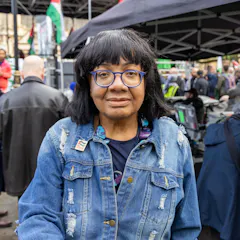
Frank Hester’s words are only the latest extreme example of the constant discrimination black and ethnic minority women face when they enter public life.
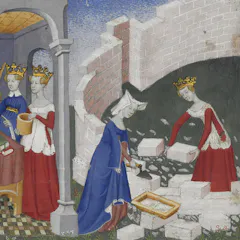
By compiling stories about the accomplishments of women, Christine set out to build an allegorical city where women and their achievements would be safe from sexist insults and slander.
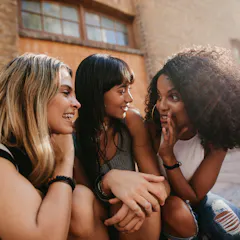
These private online communities represent a long-held feminist maxim: to solve sexism requires women to solve it themselves.

Data show young Australian women are less politically engaged than men. Given the negative experiences of female politicians, that’s hardly surprising. But there’s a glimmer of hope.
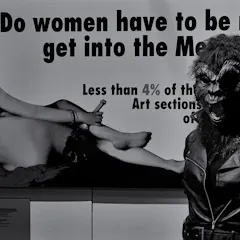
Notwithstanding the proliferation of exhibitions devoted to women, the question that feminists asked in the 1980s is more relevant than ever.

Women are disproportionately affected by pain in terms of how common it is and sensitivity, but also in how their pain is viewed, treated, and even researched.

From ‘starvemaxxing’ and ‘edgemaxxing’ to ‘whitemaxxing’ – young men and boys are being bombarded with a plethora of problematic content online.

Host Vinita Srivastava explores why racist, homophobic and sexist attitudes are increasingly showing up in school-age boys – and what we can do about it.

Understanding how deepfakes can be used as a tool for misogyny is an important first step in considering the harms they will likely cause, including through school cyberbullying.

As Hollywood continues to reckon with its past, Vivien Leigh’s story is a reminder of the challenges faced by women, even the most successful ones.

While blatant discrimination is easy to condemn because of how obvious it is, there are subtler, more insidious forms that also need to be rooted out.
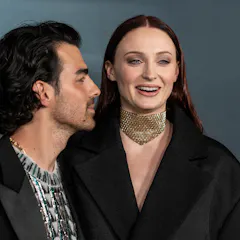
Young parents and others who don’t fit the ‘ideal’ of parenthood are especially vulnerable.
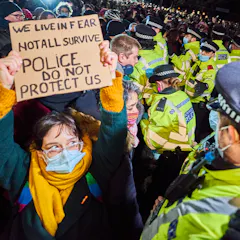
Institutional misogyny affects women and girls every day, not just in cases of horrific violence.
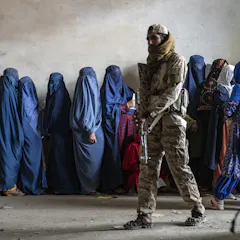
The Taliban’s two years ruling Afghanistan have taught us ordinary human rights initiatives are insufficient to address gender apartheid. We need resolute collective international action.

Examining the understandings of what ‘toxic femininity’ means to people can reveal insights about gender, power and the impact of language on health.

Foot stomping songs and charismatic performances make the stage adaptation of the 1970s TV series a hit.

Do your best to keep blame out of the conversation.

We need to care for those most affected, and consider both how we create safe work and learning environments, and how we de-escalate movements of misogyny, homophobia and transphobia.
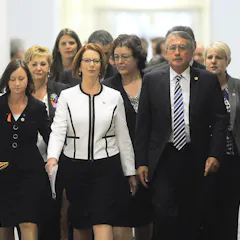
Gillard’s legacy - a mixed one on policy - was more than just the misogyny speech.
Top contributors
-

Lecturer, Monash University
-
Lecturer in Australian Politics, UNSW
-
Professor of Sociology, School of Social Sciences, Monash University
-
Associate Professor at the Health Services Management Centre, University of Birmingham
-
Professor of Cybercrime and Gender, University of Portsmouth
-
Professor in the Department of Sport and Exercise Sciences, Durham University
-
Senior lecturer, College of Business Law and Social Sciences, Nottingham Law School, Nottingham Trent University
-
Professor in Sociolinguistics, University of Nottingham
-
Professor, Department of Sociology & Anthropology, University of Guelph
-
Associate Professor, School of Education, Adelaide University
-
Associate Professor, Faculty of Law, Centre for Human Rights and Legal Pluralism, McGill University
-
Senior lecturer, University of Technology Sydney
-
Lecturer in Criminal Justice and Social Policy, School for Business and Society, University of York
-
Program Director | Instructor | Internship Coordinator, School of Health and Human Performance, Dalhousie University, Dalhousie University
-
Director of the Information Integrity Initiative, a project of TheNerve/Professor of Journalism, Chair of the Centre for Journalism and Democracy, City St George's, University of London