
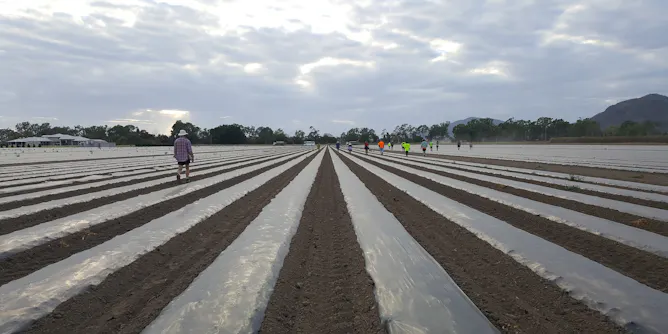
Tying migrant workers to one employer as a visa condition stymies their capacity to act in the face of poor conditions.
Articles on Migrant workers
Displaying 61 - 80 of 121 articles
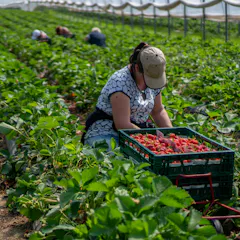
Australia’s Fair Work Commission has struck out a legal loophole allowing employers to pay farm workers exploitative piecemeal rates.
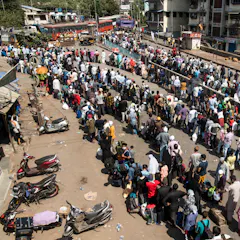
India had the legal ability to classify migrant workers as internally displaced and offer them protection, but instead they were marooned and left to the mercy of fate.
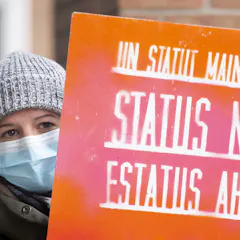
The system turns employers into immigration enforcement officers and generates a population of people without status who live and work in Canada without a clear path to security of presence or livelihood.

A transcript of episode 7 of The Conversation Weekly pocast, including an extra from Don’t Call Me Resilient on the treatment of migrant workers in Canada.
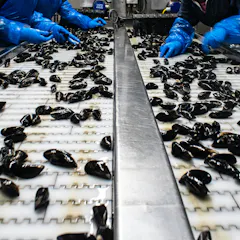
Debates about public safety and temporary foreign workers continue without input from those whose health is most affected. Migrant workers themselves are largely invisible amid discussions about risk.
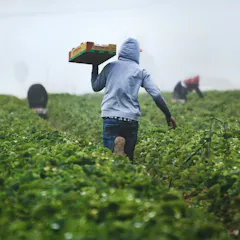
For much of its history Canada has encouraged people to come and work in this country. However, racialized migrant workers often face an immigration system designed to leave them powerless.

The COVID-19 pandemic has brought further suffering to migrant workers in Canada already experiencing the abuses of discriminatory immigration policies and poor working conditions.
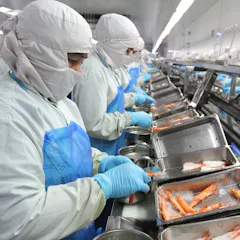
Many have looked to Asia for lessons on successful pandemic management. However, recent COVID-19 outbreaks in Thailand and nearby countries also offer warnings about what not to do.
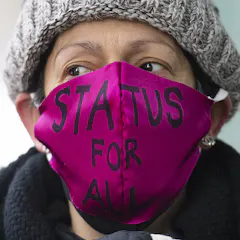
How we treat migrant workers who put food on our tables: Don’t Call Me Resilient EP 4 transcript
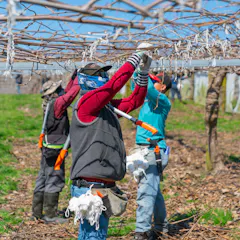
Pandemic border restrictions are keeping seasonal crop pickers from the Pacific out of New Zealand. Would adapting the quarantine system help?
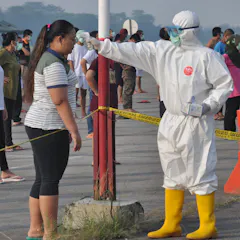
Migrant workers’ families suffer from limited access to pandemic-related health care and loss of income.

The federal government must make good on its throne speech language about making it easier for migrant workers to formally become Canadian by instituting a comprehensive regularization plan.
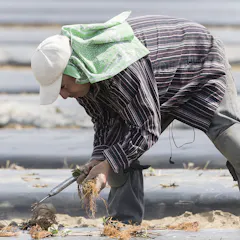
COVID-19 has proven that prioritizing the economy over the lives of the poorest and most vulnerable should never be an acceptable fix to economic woes.
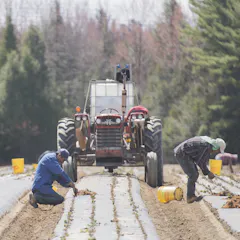
Access to culturally appropriate food may be key for newcomers to build connections with their communities.
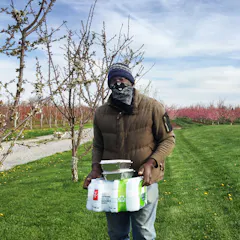
Migrant workers are not inherently more vulnerable to COVID-19, nor more likely to be carrying it than Canadians. Yet our treatment of them this year stigmatizes them and puts them at risk.
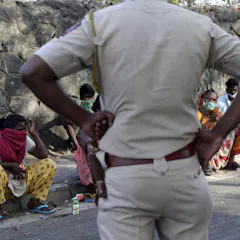
During the COVID-19 pandemic, India’s Narendra Modi government has been successful in scapegoating, discriminating against and marginalizing minorities, putting lives at greater risk.
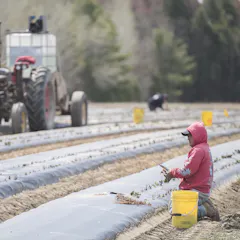
Now that the pandemic has made migrant workers visible in Canada, as well as the true value of the work they do, it’s time to dramatically improve their working conditions.
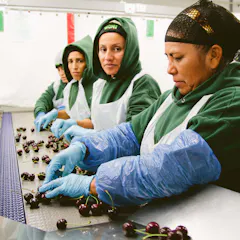
COVID-19 may not discriminate, but Canadian policy does. Income support during the pandemic must be extended to everyone, including migrant and undocumented workers.

Singapore, once a success in containing coronavirus, now has the most cases in Southeast Asia. One of the main reasons: the government’s neglect of its 300,000 foreign migrant workers.
Top contributors
-

Associate Professor of Health Studies, Research Associate, International Migration Research Centre, Wilfrid Laurier University
-
Associate Professor, UNSW
-
Doctoral Candidate, Medical Anthropology, University of Toronto
-
Research Fellow, Centre for Rural Policy Research, University of Exeter
-
Associate Professor of Law, University of Technology Sydney
-
ARC Future Fellow and Professor of Criminology, The University of Melbourne
-
Professor, International Migration Research Centre, Wilfrid Laurier University
-
Senior Lecturer, Griffith University
-
Professor, Melbourne Law School, The University of Melbourne
-
Associate Professor in Law, Adelaide University
-
Honorary Research Associate, Te Kunenga ki Pūrehuroa – Massey University
-
Professor of Sociology, York University, Canada
-
Professor of Development Studies, Te Kunenga ki Pūrehuroa – Massey University
-
Assistant Professor, Documentary Film, OCAD University
-
Professor of Social Economics, UTS Business School, University of Technology Sydney