
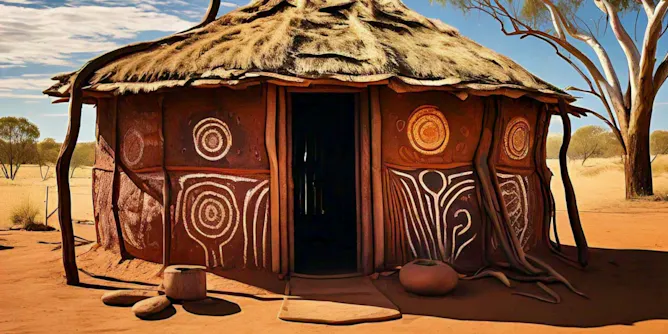
What do Australians and Australia look like according to generative AI? The results are alarming.
Articles on MidJourney
Displaying all articles

In a world where algorithms increasingly shape everyday life, many works of art are beginning to reflect how intertwined we’ve become with computational systems.
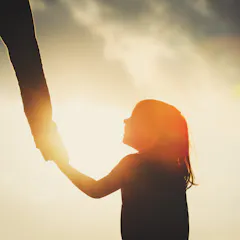
Human Rights Watch has sounded the alarm over Australian children’s images found in a huge data set used to train AI models. It could be a breach of our privacy law.
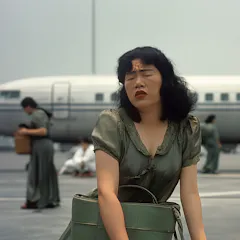
Since last year, I have been working on a project with my Thai mother who migrated to Australia in 1974 while pregnant with me. To fill in the archive, we’ve been looking towards AI.
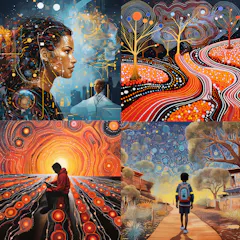
Tools such as ChatGPT dominate the conversation around AI in schools. But with teachers looking to meet Indigenous content requirements, using generative AI could do more harm than good.
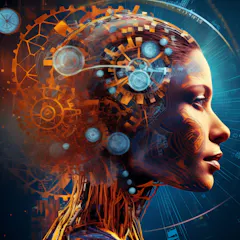
Generative AI has changed the ways we work, study and even pray. Here are some highlights of an astonishing year of change – and what we can expect next.

As AI developers indiscriminately suck up online content to train their models, artists are seeking ways to fight back.
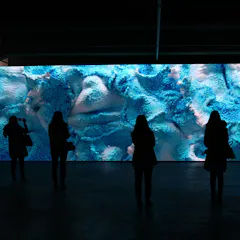
Artists have embraced AI despite the risks to them, educators could learn from their example.
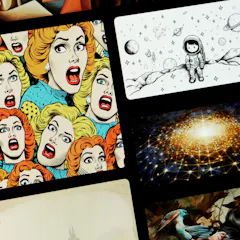
Regardless of the input, AI image generators will have a tendency to return certain kinds of results. This is where the potential for bias arises.
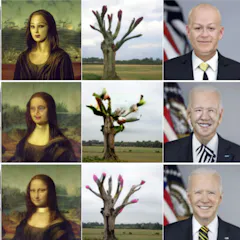
Visual artists draw from visual references, not words, as they imagine their work. So when language is in the driver’s seat of making art, it erects a barrier between the artist and the canvas.
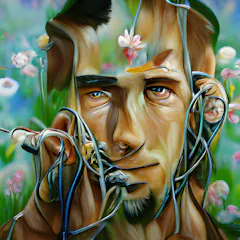
Intellectual property law wasn’t written with AI in mind, so it isn’t clear who owns the images that emerge from prompts – or if the artists whose work was scraped to train AI models should be paid.
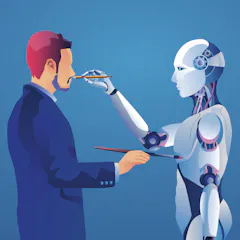
Generative AI can seem like magic, which makes it both enticing and frightening. Scholars are helping society come to grips with the potential benefits and harms.

Popes wear white to represent Christlike purity and red to symbolise compassion.
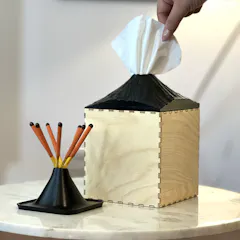
During the brainstorming stage of the design process, AI-powered image generation programs can open creative doors that may have otherwise never been accessed.

Artists and photographers have strongly opposed their distinct styles being replicated by AI image generators. And the law has yet to catch up with this issue.
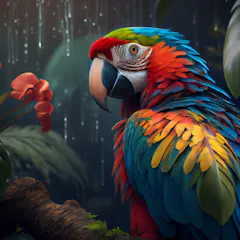
Users are having a blast getting creative with AI generators – but your output is only ever as good as your prompt.
My first image requests were whimsical queries, nocturnal flights of fancy, gentle tentative casts into the virtual spirit world.
Top contributors
-

Associate Professor of Visual Communication & Digital Media, RMIT University
-
Assistant Professor of Design, Rochester Institute of Technology
-
Professor of Digital Communication, Director of QUT Digital Media Research Centre, Queensland University of Technology
-
Faculty of Arts, The University of Melbourne
-
Professor of Early Modern Art History, History of Art, University of Edinburgh
-
Senior Lecturer in the Centre for Critical Indigenous Studies, Macquarie University
-
Postdoctoral Fellow in Philosophy, UMass Boston
-
Associate Professor, Washington State University
-
Senior Lecturer, Visual Communication, School of Design, University of Technology Sydney
-
Postdoctoral Associate in Social and Ethical Responsibilities of Computing, Massachusetts Institute of Technology (MIT)
-
Associate Professor, Faculty of Law & Justice; Lead, UNSW Public Interest Law & Tech Initiative, UNSW
-
Associate Dean (Education & Student Experience) Faculty of Business & Law, Royal Holloway, University of London
-
Associate Professor of Computer Science, Affiliate Professor of Information Science, University of Colorado Boulder
-
Professor of Computer Science, University of California, Berkeley
-
JD-PhD Student, Massachusetts Institute of Technology (MIT)