
The tech giant previously prohibited people from using its AI software for military purposes. The shift poses challenges not just for the public – but militaries as well.
Articles on DALL-E 2
Displaying 1 - 20 of 24 articles

As AI developers indiscriminately suck up online content to train their models, artists are seeking ways to fight back.
Artists have embraced AI despite the risks to them, educators could learn from their example.
The board is supposed to stop OpenAI from veering from its mission of building technology that benefits humanity.
The Federal Trade Commission’s investigation of ChatGPT maker OpenAI shows that the US government is beginning to get serious about regulating AI.
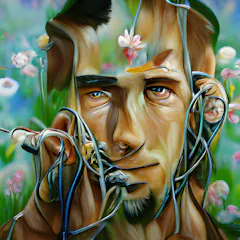
Visual artists draw from visual references, not words, as they imagine their work. So when language is in the driver’s seat of making art, it erects a barrier between the artist and the canvas.
Intellectual property law wasn’t written with AI in mind, so it isn’t clear who owns the images that emerge from prompts – or if the artists whose work was scraped to train AI models should be paid.
AI is starting to make us doubt whether humans have a monopoly on creativity. Two scholars argue AI’s use scenarios may be endless but that they require another form of creativity: curation.
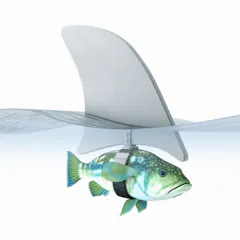
If it looks like a duck, walks like a duck and quacks like a duck, people now need to pause and wonder whether it actually hatched from an egg.
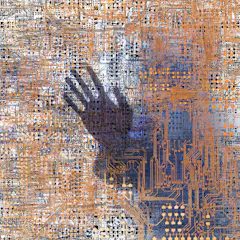
AI is poised to reshape parts of US culture and society. Have tech developments raced ahead of our ability to understand the consequences?
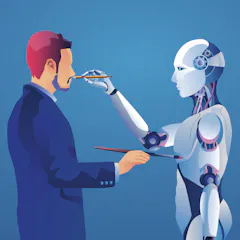
Generative AI can seem like magic, which makes it both enticing and frightening. Scholars are helping society come to grips with the potential benefits and harms.
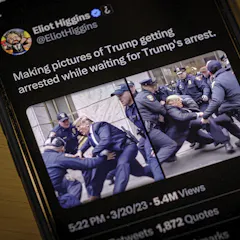
In a world of increasingly convincing AI-generated text, photos and videos, it’s more important than ever to be able to distinguish authentic media from fakes and imitations. The challenge is how.

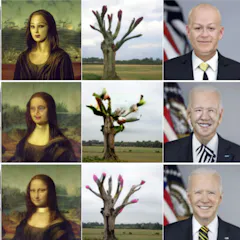
AI tools are now generating content that’s difficult to distinguish from reality.
Rather than seeing artificial intelligence as the cause of new problems, we might better understand AI ethics as bringing attention to old ones.

New technologies are often surrounded by hopeful messages that they will alleviate poverty and bring about positive social change. History shows these assumptions are often misplaced.

During the brainstorming stage of the design process, AI-powered image generation programs can open creative doors that may have otherwise never been accessed.
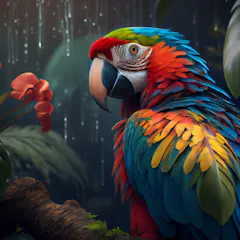
Users are having a blast getting creative with AI generators – but your output is only ever as good as your prompt.

Here are the trends on the cusp of transforming the online world.

The technology’s focus on the framing of the artistic task amounts to the fetishization of the creative moment – and devalues the journey that waters the seed of an idea to its fruition.
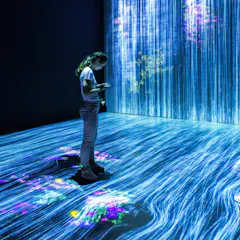
From ChatGPT to Lensa, it feels like AI is here to take over. But despite some impressive results, such systems still have plenty of limitations.
Top contributors
-

Professor of Computer Science, University of California, Berkeley
-
Professor of Philosophy and Director of Applied Ethics Center, UMass Boston
-
Postdoctoral Fellow in Philosophy, UMass Boston
-
Lecturer in Business Analytics, University of Sydney
-
Assistant Professor of Design, Rochester Institute of Technology
-
Associate Professor of Computer Science, Affiliate Professor of Information Science, University of Colorado Boulder
-
Professor of Community Information, University of Michigan
-
Senior Research Fellow in AI Accountability, Queensland University of Technology
-
Senior Lecturer in Digital Marketing, University of the West of Scotland
-
Associate Science Editor & Co-Host of The Conversation Weekly Podcast, The Conversation
-
Associate Professor of Computer Science, Florida International University
-
JD-PhD Student, Massachusetts Institute of Technology (MIT)
-
Professor Emerita of Linguistics, American University
-
Associate Dean (Education & Student Experience) Faculty of Business & Law, Royal Holloway, University of London
-
Associate Professor in Marketing, ESCP Business School