

Adults have blamed porn for many things recently, including harming teenagers. We asked teens what they thought and their opinions paint a complex picture.
Articles on Media literacy
Displaying 21 - 40 of 63 articles
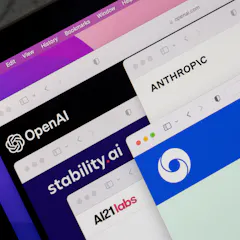
The media landscape is rapidly changing – and everyone needs to know how to participate in it.

Library scientists offer tips and tricks to figure out if a particular online news article is reliable or fake.

New Zealand is among many countries debating a ban on under-16s having social media accounts. But making digital media literacy education a priority would be a better first step.

Once huge ratings draws, reality TV shows are facing dwindling audiences in the UK and elsewhere. Is this the end of the genre, or can it adapt to survive?

If the US wants to protect young people from misinformation and foreign influence, focusing on TikTok is barking up the wrong tree.
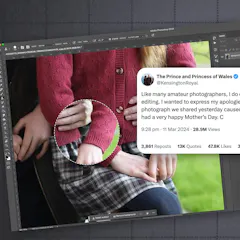
The Princess of Wales is caught in a social media storm after the release of a clearly edited photo. But image editing is increasingly common, and your phone can even do it without you knowing.

Tucker Carlson’s sycophantic interview with Russian dictator Vladimir Putin, and his subsequent praise for Russia’s subways, supermarkets and cheeseburgers, was not journalism. It was propaganda.
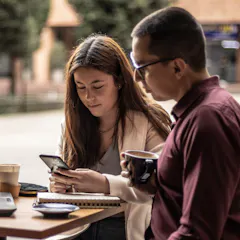
A new study unexpectedly found a way to help people assess social media posts with less bias and more care – pairing them up with partners who have a different perspective.

Family and friends were the top news sources for children and teens. But young people are also regularly getting news from social media.

Teaching students how to assess digital content can involve looking for clues about text origins, understanding the process of gathering and assessing evidence and grasping how content is generated.
What’s true and what’s not? An expert in media literacy explains how to evaluate information.
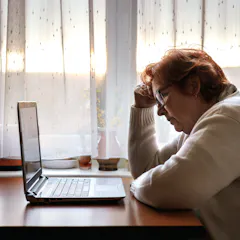
Researchers identified a connection between low levels of media literacy and COVID-19 vaccine hesitancy in people who consume their news via social media.

Bogus science articles are attempting to take advantage of our trust in experts.
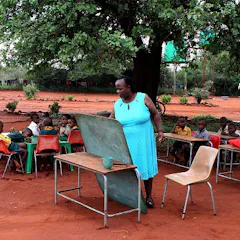
South Africa has no comprehensive national media literacy programme. Often it comes down to individual teachers and schools to make learners more media literate.

With COVID-19 shots finally available for infants and preschoolers, knowing how to combat misinformation on social media and elsewhere could be more important than ever.

Increased media literacy education and government regulations are necessary to combat fake information on social media platforms.
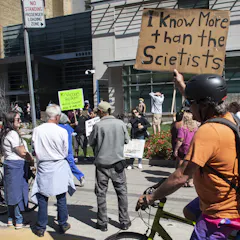
The failure to observe public health protocols during the pandemic requires attention and action. Revitalizing global citizenship education in schools should be part of addressing the problem.

Pediatricians and other health care providers can take some concrete steps toward building trust and counteracting anti-vaccination misinformation.
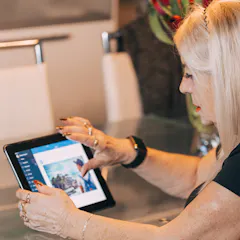
The first nationally representative survey to investigate the media literacy needs, attitudes and experiences of Australian adults shows they need more help with understanding media.
Top contributors
-

Professor in Digital Media, Western Sydney University
-
Director, News & Media Research Centre, University of Canberra
-
Professor, Digital Media Research Centre, Queensland University of Technology
-
Postdoctoral research fellow, Western Sydney University
-
Associate Professor of Visual Communication & Digital Media, RMIT University
-
Lecturer, News & Media Research Centre, University of Canberra
-
Postdoctoral Fellow, News & Media Research Centre, University of Canberra
-
Associate Professor of Communication, Colorado State University
-
Professor and Chair, Department of Journalism, Stellenbosch University
-
Associate Professor of Communication and Information, Nanyang Technological University
-
Lecturer in Journalism and Global Communication, University of Sheffield; Independent Social Research Foundation
-
Assistant Professor of Behavioral and Community Health Sciences, University of Pittsburgh
-
Assistant Professor of Public Health, University of Pittsburgh
-
Assistant Professor of Pediatrics, University of Pittsburgh
-
Professor of Journalism and Social Media, Griffith Centre for Social and Cultural Research, Griffith University, Griffith University