
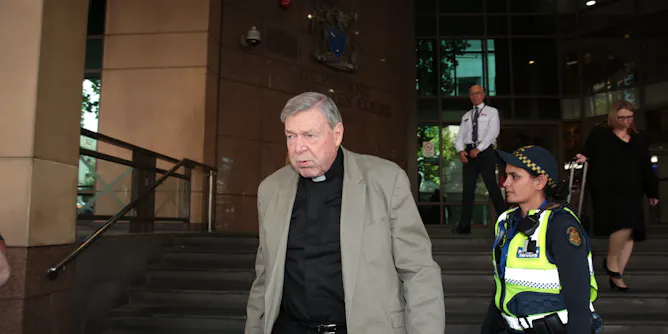
George Pell’s current committal hearing engages the principle of ‘open justice’ and some of its most important exceptions.
Articles on Media freedom
Displaying 61 - 80 of 105 articles
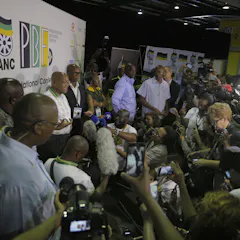
South African investigative journalists and civil society played a crucial role in bringing a country in the clutches of patronage networks back from the brink.
There are a lot of misconceptions regarding what a public broadcaster is. But one thing it is not is a government or state broadcaster.
It’s increasingly difficult for investigative journalists to hold governments to account – partly due to anti-terror and security laws making it harder for whistleblowers to act.
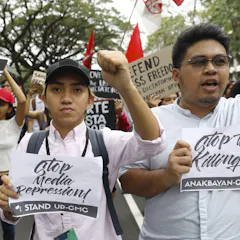
Rodrigo Duterte’s authoritarianism has progressed from death squads and martial law to cracking down on press freedom.
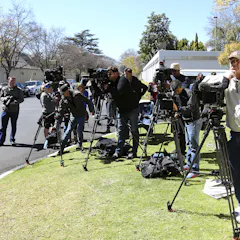
Forty years after the apartheid regime clamped down on the free press, South Africa’s media continues to face threats, albeit in more subtle forms than in the past.
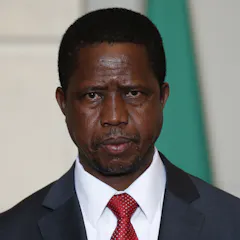
Zambia has gone from a country where people engaged freely in open political debate to one where most people now look over their shoulders to see who’s listening.
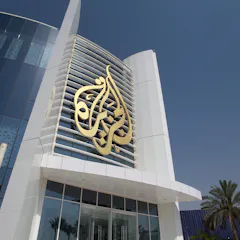
When the network launched in 1996, it radically changed the media landscape of the Arab world. Two decades later, some regimes are still seething.
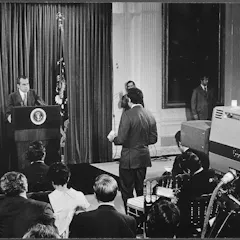
The beleaguered new president is driving a wedge between his citizens and the media. Nixon would have been proud.
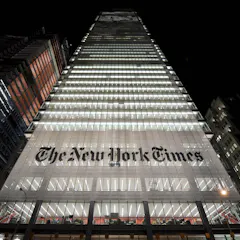
Although few pay for news in Australia, The New York Times’ is pushing into the country’s fracturing newspaper market.

There were high hopes that the SABC would become a true public broadcaster after the end of apartheid when it was used ruthlessly as a propaganda machine. But those hopes have since been dashed.
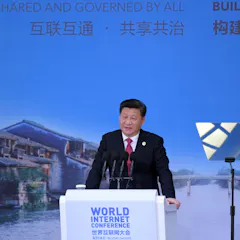
China is used to media being kept on a tight leash, but the party’s latest swoop has an ominous new zeal about it.
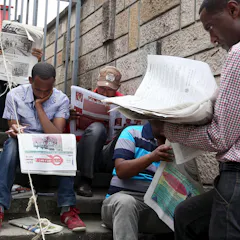
Press freedom has changed little in the past decade. If the African Union is to commit to the principles of democracy, it needs to do more to uphold freedom of expression and protects its journalists.
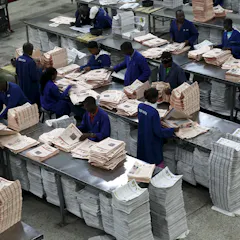
Namibia’s rise in the World Press Freedom rankings is stunning. The media environment in Africa, too, has improved. But media closures and the harassment of journalists are not yet things of the past.
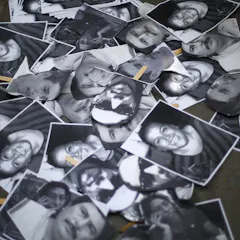
As recently as 10 years ago, Mexico had a press freedom index on par with the United States. How did everything fall apart so quickly?
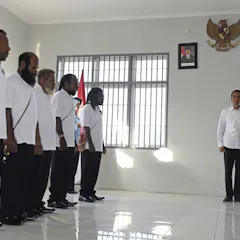
Although Indonesian President Joko Widodo declared Papua open for foreign media in May this year, government obstacles to access the restive region linger.
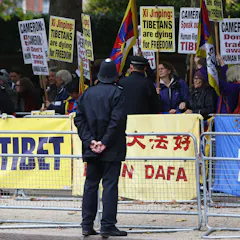
We are in danger of losing sight of what freedom is.
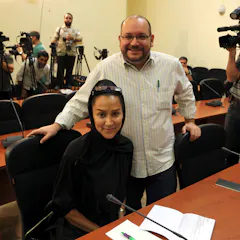
The trial of an American journalist in Iran was a craven farce – and a reminder of the brutality with which Tehran still treats journalists.

Almost eight months after the much-heralded election to usher Fiji back into democracy mode, the country will mark World Press Freedom Day facing serious questions about its claims to have a free and fair media.
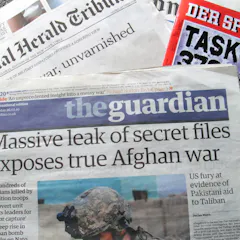
If confidential sources can still be exposed by the government’s new data retention legislation, why risk leaking anything to the media?
Top contributors
-

Associate Professor, School of Media, Film and Journalism, Monash University
-
Senior Research Fellow, Centre for Advancing Journalism, The University of Melbourne
-
Full Professor in Journalism, Dublin City University
-
Professor of Journalism and Communications, Macquarie University
-
Professor of Journalism and Social Media, Griffith Centre for Social and Cultural Research, Griffith University, Griffith University
-
Professor of Media Industries, University of Nottingham
-
Caxton Professor of Journalism, University of the Witwatersrand
-
Associate Professor in Media Studies, University of the Witwatersrand
-
Professorial Fellow, University of Canberra
-
Associate Professor, Griffith Criminology Institute, Griffith University
-
Professor and Chair, Department of Journalism, Stellenbosch University
-
Founding Editor, Pacific Journalism Review / Te Koakoa, Auckland University of Technology
-
Professor, Journalism, RMIT University
-
Assistant Professor, University of Manitoba
-
Associate Professor, School of Languages, Literatures, Cultures and Linguistics, Monash University