
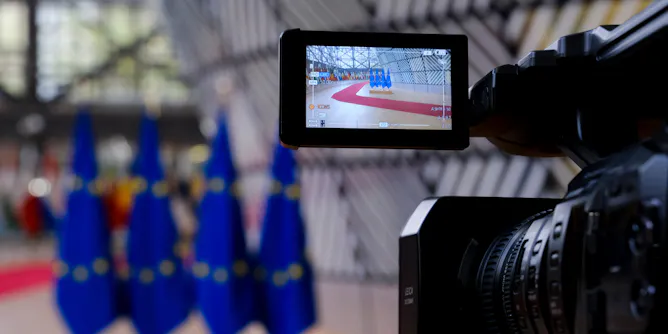
The EU’s Media Pluralism Monitor research project assesses the health of national media ecosystems but what about the bigger picture beyond compliance and the risks to Europe’s information space as a whole?
Articles on World Press Freedom Day
Displaying all articles

Political attacks are now supercharged by technology platforms retreating from accountability, and exploited by hostile foreign powers.
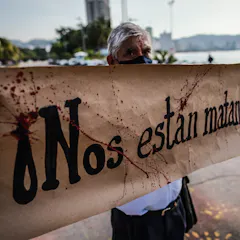
National and local governments are thought to be responsible for almost half of all attacks on journalists in both countries.

UK press freedom has come under threat.
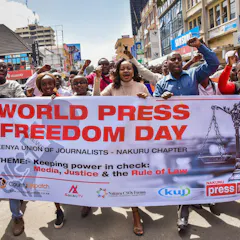
No matter what tactics are used to muzzle, restrict, limit, or censor information, trustworthy information that serves the public good can still find its way to those who matter most: the citizens.
Along with growing hostility towards journalists globally, the media climate in the Pacific has also been deteriorating.
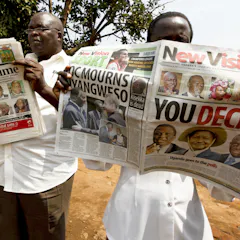
The biggest threats are the concentration of media ownership and attempts to legislate the online media environment.

For democracy to work, the press has to be free.
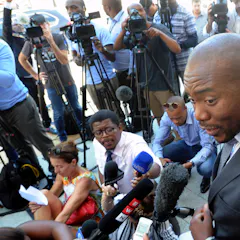
The sustainability of the news media is a precondition for good journalism in the public interest. Thus, economic questions should form part of discussions of press freedom.
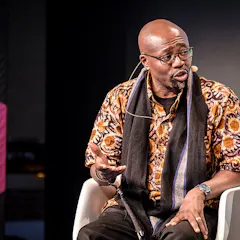
New forms of artistic expression are driving debates in East Africa that challenge sensitive subjects. But the backlash has been vicious.
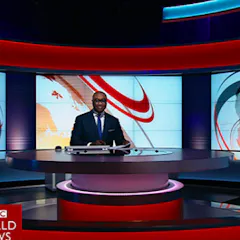
The problem is not the journalism itself, but the editorial processes that increasingly rely on non-journalistic procedures and practices.
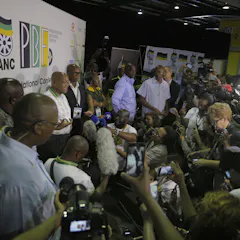
South African investigative journalists and civil society played a crucial role in bringing a country in the clutches of patronage networks back from the brink.
On World Press Freedom Day, we must deal with the threat data collection and surveillance poses to journalism.
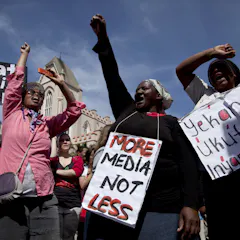
While some African countries have shown an improvement in press freedom and freedom of expression ratings, others, including South Africa, are seeing worrying trends and a drop in rankings.
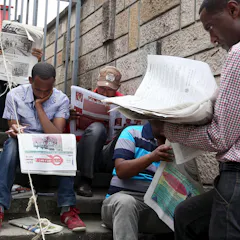
Press freedom has changed little in the past decade. If the African Union is to commit to the principles of democracy, it needs to do more to uphold freedom of expression and protects its journalists.
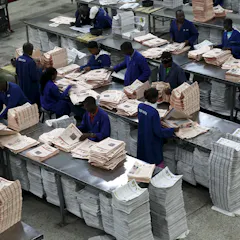
Namibia’s rise in the World Press Freedom rankings is stunning. The media environment in Africa, too, has improved. But media closures and the harassment of journalists are not yet things of the past.
Top contributors
-

Associate Professor in Media Studies, University of the Witwatersrand
-
Caxton Professor of Journalism, University of the Witwatersrand
-
Research Fellow, University of Antwerp (Belgium) and University of the Free State (South Africa), University of the Free State
-
Vice-Chancellor and Principal of the University, University of Pretoria
-
Programme Leader for MA International Journalism, University of Salford
-
Lecturer, School of Journalism, University of Nairobi
-
Professor and Chair, Department of Journalism, Stellenbosch University
-
Director of the Information Integrity Initiative, a project of TheNerve/Professor of Journalism, Chair of the Centre for Journalism and Democracy, City St George's, University of London
-
Senior Lecturer in Media Studies, Daystar University
-
International Director, Centre for Freedom of the Media (CFOM), University of Sheffield
-
Founding Editor, Pacific Journalism Review / Te Koakoa, Auckland University of Technology
-
Professor of Media Industries, University of Nottingham
-
Visiting Researcher, Centre for Freedom of the Media, University of Sheffield
-
Associate Professor of Journalism, University of Galway
-
Professor of Communications, Media and Economics at the Robert Schuman Centre for Advanced Studies & Director of the Centre for Media Pluralism and Media Freedom, European University Institute