

There is no understating the impact Williams has had on the game itself. But her role in helping sports journalists reimagine the scope of their work is a key part of her enduring legacy.
Articles on Media bias
Displaying 21 - 40 of 73 articles
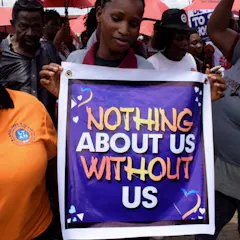
The study reveals a consistently biased and negative depiction of sex workers by news media in Nigeria.

A series of in-depth interviews with self-described conservatives found concerns that go beyond concerns about selective facts or obvious partisanship.
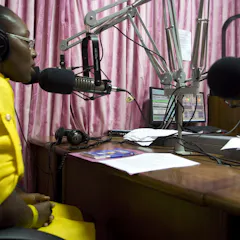
If women are to have a public voice in Ghana’s media ecology then a great deal more needs to happen.
The accusation of bias is like kryptonite for responsible news organizations: the stronger their piety to the ideal of objectivity, the more vulnerable they are to complaints made in bad faith.
A social psychologist explains how to avoid being misled, and how to prevent yourself – and others – from spreading inaccurate information.

Reasons why women’s voices are ignored in science reporting range from socio-cultural influences that inform gender norms, to perceptions of leadership and political power structures.
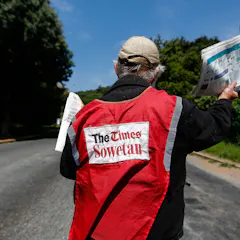
The media’s muting of women’s voices when reporting the COVID-19 crisis keeps women on the margins.
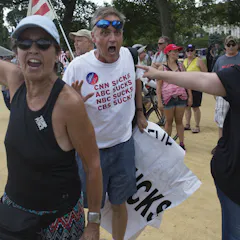
Charges of media bias are nothing new, though they’ve gotten louder since 2016, led by President Trump. But a press free to take a variety of viewpoints was the founders’ intention.
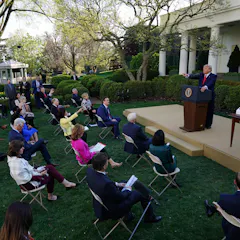
Though political elites complain about what the media covers, and how they cover it, research shows that ideological bias among media outlets is largely nonexistent.
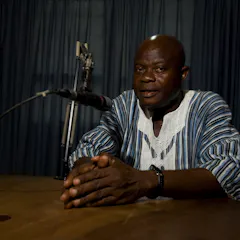
News-making practices in private radio broadcasting in Ghana need a re-think.
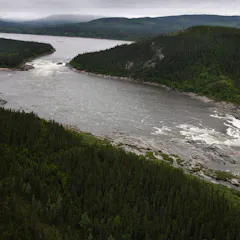
The mainstream news media has been biased in its reporting and portrayal of Indigenous Peoples on stories about renewable energy projects. What and how can they do better?

It wasn’t the ‘Sun wot won it’, but the partisanship of the UK press made the Conservatives’ task a great deal easier.
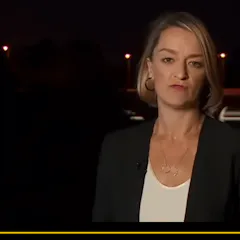
The BBC is looking exposed after a campaign in which it has taken fire from all sides.
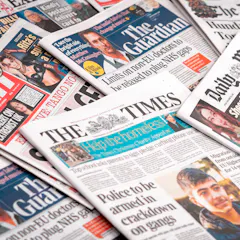
Analysis of the first week of the campaign shows that not all publicity is good publicity.
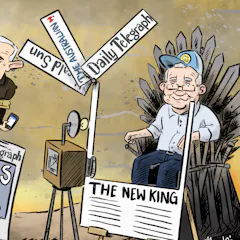
This election showed that Australia is stuck with an increasingly polarised media, a highly concentrated media ownership landscape and no apparent way to do anything about it.
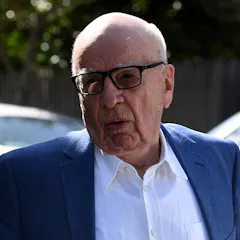
At some level, democratic societies have had enough of Murdoch and his propaganda operation masquerading as a news service.

Community radio stations have thrown themselves into the political discussion with gusto.
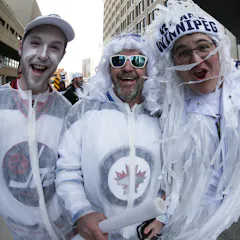
A celebration for the Winnipeg Jets turned controversial when an anti-racist group challenged a “make Winnipeg white again” headline about the city’s NHL playoff “whiteout” parties.
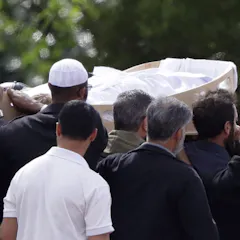
As the news of the shootings in New Zealand quickly unfolded, a researcher took note of the way the event was covered in news media and how the coverage was being discussed on social media.
Top contributors
-

Professor of Communication and Media Analysis, Loughborough University
-
Professor of Communication, Cardiff University
-
Professor, Cardiff School of Journalism, Media and Culture, Cardiff University
-
Professor of Political Communication, Loughborough University
-
Professor of Journalism in the Department of Journalism, Film and Television, University of Johannesburg
-
Senior Research Fellow, Centre for Advancing Journalism, The University of Melbourne
-
Professor Emeritus of Political Science, Indiana University
-
Lecturer in Sociology, Aston University
-
Lecturer in Media and Communication, University of Leicester
-
Professor of Journalism, University of Sussex
-
Professor of Communication and Media Analysis, Loughborough University
-
Director of Undergraduate Studies, School of Journalism, Media and Cultural Studies, Cardiff University
-
Senior Lecturer in Media & Communication at UCFB, University Campus of Football Business
-
Lecturer in Communication and Media Studies, Loughborough University
-
Lecturer in Media, Adelaide University