
A five-year study of Australian media found three quarters of science stories quoted men.
Articles on Media bias
Displaying 1 - 20 of 73 articles
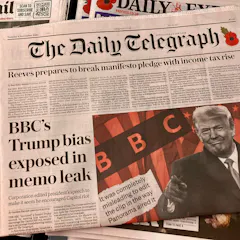
The Prescott memo contained no research questions or objectives, method, sample, time frame or, crucially, analytical framework for examining output.
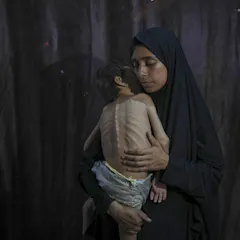
War photos can have several, sometimes conflicting roles, ranging from evidence and testimony, to ‘trophies’ for the oppressor.

The public can choose to forget, to preserve the comforting fiction their favourite heartthrob is a ‘good man’.

The media must do more to amplify women in climate and environmental reporting.

2024 was the deadliest year for journalists in modern history, with most killed in Palestine.
Liberal-leaning stories tend to stay longer on The New York Times’ homepage, even when controlling for popularity. We found the same thing of conservative stories in The Wall Street Journal.

The African story is not just about conflict, corruption, poverty, poor leadership, bad politics and disease. Its coverage should be more nuanced.
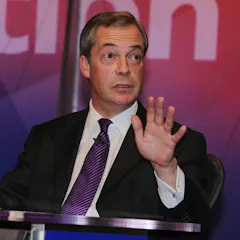
The top five most frequent non-politician panellists all write for The Spectator.
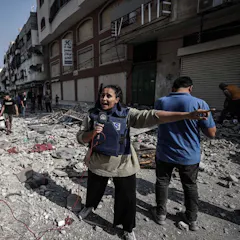
Experts say mainstream media coverage of the war in Gaza is severely skewed — with Palestinian voices getting stifled.

This bias in science journalism seems not to be due only to pragmatic concerns about time zones or the language spoken in the country where the scientist is based.

How the media talks about suffering on one side compared with the other can often reveal bias in the Israeli-Palestinian conflict coverage, writes a scholar of media bias and the Arab world.

Language has been dubbed “the covert operations of war”, such is the power it holds in shaping public opinion. Here’s what we found about the way Australian media has been framing the conflict.
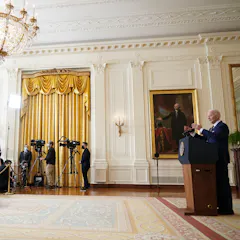
While President Joe Biden has low approval ratings, few other American presidents − with the exception of FDR and Warren Harding − have experienced such a run of good media luck.

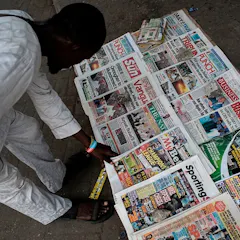
The South African print often uses language that portrays foreigners in a bad light, and dehumanises them.

Computer scientists are overwhelmingly present in AI news coverage in Canada, while critical voices who could speak to the current and potential adverse effects of AI are lacking.
The news media provide a very particular case study of gender discrimination.

Deficit discourse is created, in part, by a mainstream media and screen culture that is overwhelmingly white and doesn’t reflect the cultural diversity of its population.

Many people define ‘bias’ as ‘anything that doesn’t agree with me.’ But are the news media really biased?
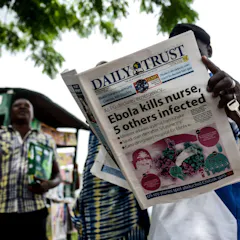
African media also emphasise the west as superior and Africa as inferior.
Top contributors
-

Professor of Communication and Media Analysis, Loughborough University
-
Professor of Communication, Cardiff University
-
Professor, Cardiff School of Journalism, Media and Culture, Cardiff University
-
Professor of Political Communication, Loughborough University
-
Professor of Journalism in the Department of Journalism, Film and Television, University of Johannesburg
-
Senior Research Fellow, Centre for Advancing Journalism, The University of Melbourne
-
Professor Emeritus of Political Science, Indiana University
-
Lecturer in Sociology, Aston University
-
Lecturer in Media and Communication, University of Leicester
-
Professor of Journalism, University of Sussex
-
Professor of Communication and Media Analysis, Loughborough University
-
Director of Undergraduate Studies, School of Journalism, Media and Cultural Studies, Cardiff University
-
Senior Lecturer in Media & Communication at UCFB, University Campus of Football Business
-
Lecturer in Communication and Media Studies, Loughborough University
-
Lecturer in Media, Adelaide University