
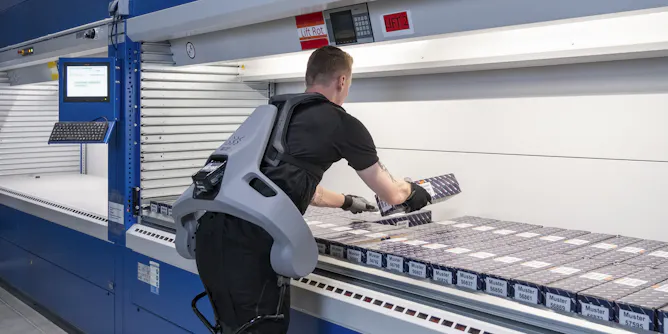
Powered robotic devices designed to enhance the wearer’s physical capabilities are being developed for an increasing range of uses.
Articles on Mechanical engineering
Displaying all articles

The team printed a honeycomb and a Canadian maple leaf, both roughly the size of a single grain of sand.

Scientists are creating additional robotic arms, legs and thumbs to push the boundaries of what can be achieved by the human body.

How and why preterm birth happens is still unclear, in part because research on pregnancy tends to focus on developmental biology.
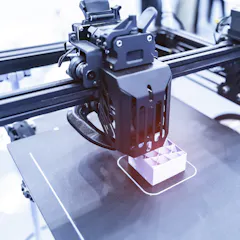
‘Energetic’ materials are ones that readily ignite or detonate. The shapes of those materials have a big effect on how they burn or blow up.
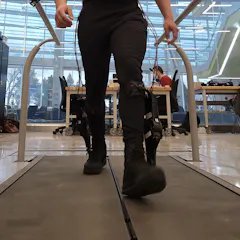
Asking users the dollar value of the costs and benefits of walking in exoskeletons is a better way of finding out how users feel about them than measuring calories saved.

You can squash small bugs by stepping on them, but can you crush even tinier microorganisms like viruses and bacteria? It turns out that you’d need to apply a lot of pressure.

Dramatic improvements in computing, sensors and submersible engineering are making it possible for researchers to ramp up data collection from the oceans while also keeping people out of harm’s way.

A mechanical engineer explains why you need to go with the flow. The TSA pronouncement that peanut butter is a liquid is scientifically sound.

Computer-based neural networks can learn to do tasks. A new type of material, called a mechanical neural network, applies similar ideas to a physical structure.

Understanding how brain folding works could help researchers better diagnose and treat neurodevelopmental disorders.
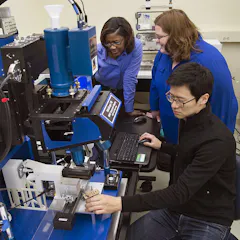
A mechanical engineer brings her personal experiences to address human-centered problems and encourage ‘compassionate design.’

Curved origami isn’t just elegant art. It’s also a versatile way to vary the amount of force applied by robots and other machines.

Leonardo’s interest in the human form and replicating human bodily movement foreshadow ideas present in modern robotics.
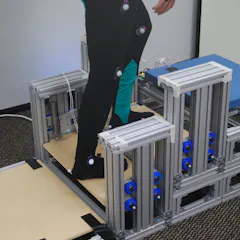
For those with reduced mobility and even just the normally aging, stairs can pose a big problem. A cheap and efficient new prototype could help.

Using a technique inspired by how human brains operate, researchers have found a way to help robots move more smoothly and more quickly.

One of the engineers behind Bloodhound, the UK’s anticipated world land speed record attempt, explains how they created a car to reach 1000mph.

The way sea lions swim is unique among fish and marine mammals. Their technique provides a biomechanical model to design agile underwater vehicles… but first we have to figure out how they do it.
Top contributors
-

Professor of Electrical and Computer Engineering, Duke University
-
Assistant Professor of Mechanical and Aerospace Engineering, George Washington University
-
Professor of Biomedical Engineering and Rehabilitation Medicine, Emory University
-
Assistant Professor of Computer Science and Electrical and Computer Engineering, Duke University
-
Head of structural testing, Advanced Manufacturing Research Centre, University of Sheffield
-
Associate Professor of Mechanical Engineering, Purdue University
-
Professor of Mechanical Engineering, Arizona State University
-
Director, Gender and Women's History Research Centre, Australian Catholic University
-
Associate Professor of Mechanical Engineering, Purdue University
-
Assistant Professor of Mechanical Engineering, Binghamton University, State University of New York
-
Professor of Biomedical Engineering, University of Wisconsin-Madison
-
Assistant Professor of Computer Science, Binghamton University, State University of New York
-
Professor of Mechanical Engineering, The University of Melbourne
-
Professor of Mechanical Engineering, Columbia University
-
Professor of Chemical and Biological Engineering, Colorado State University