
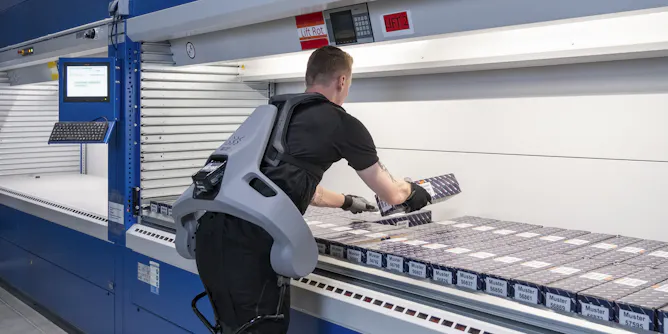
Powered robotic devices designed to enhance the wearer’s physical capabilities are being developed for an increasing range of uses.
Articles on Assistive technology
Displaying 1 - 20 of 23 articles

Scientists are creating additional robotic arms, legs and thumbs to push the boundaries of what can be achieved by the human body.

What if a robot could show us how the brain represents space and time to keep us balanced?

For AI to be beneficial in accessibility tech, the people who use it must be involved in its development.

Most updates on trains are only delivered by audio announcements. Automatically translating them into Auslan makes Deaf people feel safer and more independent.

While technology presents challenges around fairness, it also offers solutions.

Disabled people are experts in using – and designing – assistive technologies. They have lessons to offer everyone about keeping control when help is offered.

Assistive technology like screen readers for the blind help people with disabilities use computers and smartphones, but they can be tripped up if webpages or documents are improperly formatted.
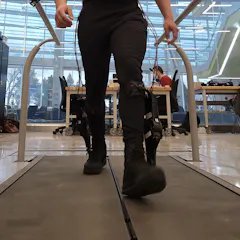
Asking users the dollar value of the costs and benefits of walking in exoskeletons is a better way of finding out how users feel about them than measuring calories saved.

Plans to use buying power to save money on assistive technology for NDIS participants should be approached with caution. Otherwise, savings may come at the cost of a person-first approach.
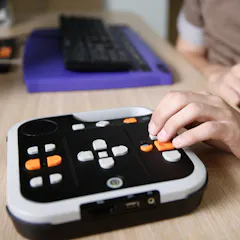
The WHO has released a major report on assistive technology. It says almost 1 billion children and adults can’t get the glasses, wheelchairs, technology, devices or other supports they need.
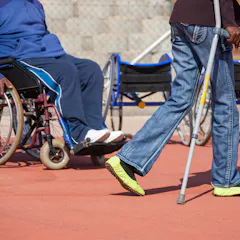
The WHO estimates that only about 15% to 25% of those in need of assistive technology products in Africa have access to them.

Audiologists recommend enhanced communication strategies in the time of coronavirus to help the nearly 60 million Americans living with hearing loss in one or both ears.
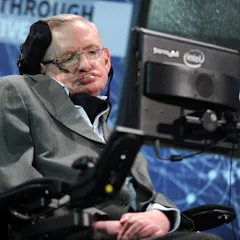
Despite his fears artificial intelligence might one day overtake humanity, Stephen Hawking knew from his own life how profoundly AI could improve humans’ daily lives.
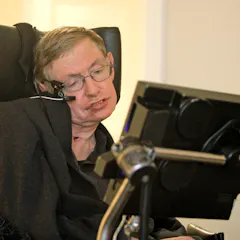
You can probably hear Hawking’s famously computer-generated voice in your head. His example showed tech as a tool that enables people with disabilities to fully participate in and contribute to the world.

Robots could free human carers to focus on the more personal parts of the job.
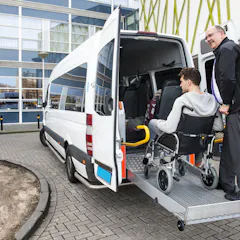
Depending on where you live, having a disability can cost thousands of additional dollars per year. Government programs often don’t account for that.

Not everyone agrees on how artificial intelligence will change the way we live. But it’s not all doom and gloom either.
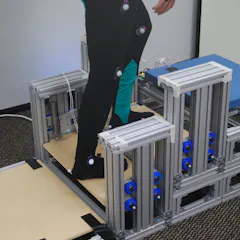
For those with reduced mobility and even just the normally aging, stairs can pose a big problem. A cheap and efficient new prototype could help.
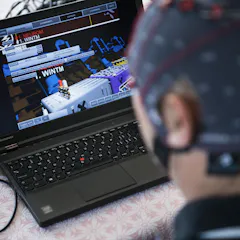
After the Paralympics comes the Cybathlon, where disabled athletes use bionics to compete.
Top contributors
-

Senior Research Fellow: Rehabilitation, Ageing and Independent Living Research Centre, Monash University
-
Professor, Rehabilitation, Ageing and Independent Living Research Centre and Occupational Therapy Department, School of Primary and Allied Healthcare, Monash University
-
Executive Director of the Rural Institute for Inclusive Communities, and Associate Professor of Teaching and Learning, University of Montana
-
Research Associate, University of Bath
-
Professor of Law, Villanova University
-
Professor of Sensory-Motor Systems, ETH Zurich
-
Assistant Professor of Design and Robotics, Trinity College Dublin
-
Senior Physiotherapist, Royal Children's Hospital
-
Assistant Professor, Black Hills State University, Fordham University
-
Professor of Biomedical Engineering and Rehabilitation Medicine, Emory University
-
Principal Research Associate in Epidemiology and Public Health, UCL
-
Post-doctoral Researcher, University of Essex
-
Professor, Director of the Centre for Robotics, Queensland University of Technology
-
Professor Emeritus, Swinburne University of Technology
-
Professor of Economics, Fordham University